Case Study from HydroFLOW Canada
Belt press struvite control at Guelph WWTP
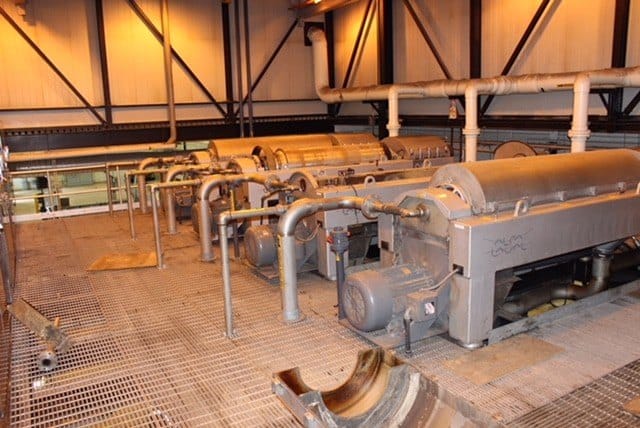
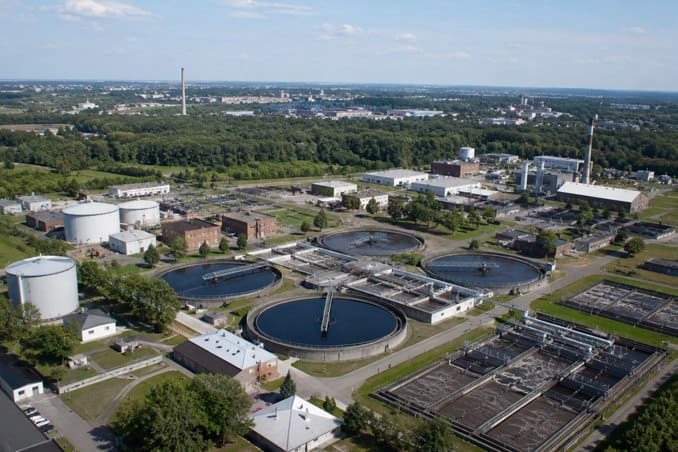
Belt press struvite control was costing Guelph Wastewater Treatment Plant days of downtime. The plant serves the City of Guelph and the surrounding Guelph and Eramosa townships in Ontario and dewaters its sludge on Ashbrook belt presses, where hard struvite built up on rollers, drains, bearings, pistons and drums, and the six-inch centrate discharge piping could block completely. One HydroFLOW® i160 was installed on the steel feed pipe upstream of a belt press for a 60-day trial. No new struvite build-up was reported over more than 60 days of continuous running, maintenance downtime fell from three days to six hours, and outside pressure-wash contractors were no longer needed.
The Challenges
- Belt press struvite control was needed to cut costly, labour-intensive maintenance
- Six-inch centrate discharge piping could block completely
- Deposits built up on rollers, drains, bearings, pistons and drums
- Removing hard deposits meant extensive cleaning and shutdowns of up to three days
- Outside pressure-wash contractors cost $16,000 to $40,000 a year
The Solution
- Unit installed: one HydroFLOW® i160
- Installation point: steel feed pipe upstream of the Ashbrook belt press inlet
- Pipe: 150 mm (6 in) OD steel
- Trial: 60 days of continuous operation
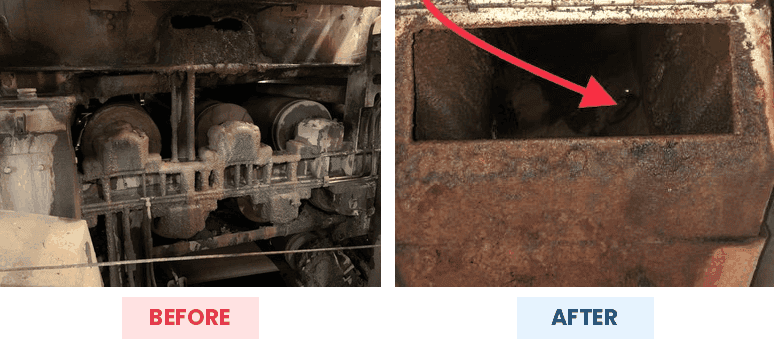
For belt press struvite control without changing the dewatering process, the i160 was fitted to the steel feed pipe just upstream of the press inlet, so the sludge was treated before it reached the press and the centrate discharge system. The press then ran continuously for 60 days, and its drains, drum openings and pipework were inspected and photographed at the end.
Testimonial
“After 60 days of continuous operation the result was significantly positive, the build-up of Struvite was eliminated”
— Rony George, Plant Maintenance Supervisor