
Spray Nozzle Scale & Misting System Water Treatment
Keep Every Nozzle Spraying Stop Scale at the Aperture Fewer Cleans
HydroFLOW® conditions spray water electronically: no chemicals, no salt, no cut into the pipe, fitted with the line running. Scale stops bonding at the aperture, so nozzles, spray bars and misting lines run far longer between cleans.
Results from documented case studies; they vary by water quality, nozzle type, pressure and installation point. View all misting and spray case studies →
Hard Water Blocks the Smallest Hole First: Your Spray Nozzles
Water leaving a nozzle drops in pressure, warms and evaporates in the same instant, and dissolved minerals come out of solution right at the aperture. On fine nozzles that happens fast: on a UK crisp production line, 200-micron outlets blocked every week and required a three-hour acid-bath clean, with the line stopped. Heat and a steep pressure make it worse: a cement plant spraying water from 45–60 bar into hot kiln gas was cleaning four to eight nozzles a day. And because misting systems make breathable droplets, a dirty system is a water-safety question too.
Typical signs your spray or misting system is scaling up:
- Nozzles clogged or blocked, with a white crust round the tip
- Uneven or broken spray patterns, dry patches and dripping heads
- Nozzles out for a vinegar soak or acid bath on a regular schedule
- Strainers and cartridge filters ahead of the nozzles clogging too
- Spray bars or headers replaced, rodded or hydroblasted to restore flow
- Marks or spotting on the product, glass or vehicles the spray reaches

What Does a Blocked Nozzle Really Cost?
A nozzle costs little. The line it stops does not. Spray systems cool steel and kiln gas, wash product and packaging, wet conveyors, humidify rooms and water crops, so when the spray fails, production, quality or both go with it. Where a system makes a fine mist people can breathe, the duty side applies too: in the UK, HSE treats any system that creates breathable droplets as a Legionella risk system to be assessed and controlled.
About US$125,000 an hour
A global survey of 3,215 maintenance decision-makers put the typical cost of unplanned downtime for an industrial business at about US$125,000 an hour. A spray line that stops for a weekly nozzle clean is paying a share of that every time.
69% stop at least monthly
The same survey found 69% of plants have an unplanned outage on critical equipment at least once a month. Nozzles that block on a schedule turn a random failure into a predictable one, but it is still a stoppage.
Off-spec spray is expensive
Spraying Systems Co. works through an example where nozzles spraying 15% over their rated capacity cost US$182,800 a year in water and chemicals on a single 100 gpm system. Scale pushes the pattern the other way, starving coverage instead, and quality pays.
Sources: ABB, Value of Reliability survey report (fielded July 2023) · Spraying Systems Co., Cost of Poor Spray Performance · HSE, Other systems that can create a risk of legionella. Survey and worked-example figures are estimates; individual sites vary.
Why Nozzles Block, and What Changes
A blocked nozzle is rarely one problem. Fine apertures, heat, pressure, recycled water and slime each block nozzles in their own way. Here is how each one played out on site.
Fine Misting & Irrigation Sprayers Clogging
Hard water, such as well water, scales the smallest apertures first, so sprayers come off to be dismantled, descaled and refitted.
Pressure Drop & Heat Scaling Nozzles Daily
When water leaves a nozzle and its pressure falls suddenly, into hot gas, it sheds its minerals right at the tip.
Spray Bars & Headers Blocked by Recycled Water
Process water high in dissolved solids leaves deposits through bars, nozzles and headers, so whole bars get swapped on a cycle.
Slime at the Nozzle & Marks on the Product
Biofilm clogs wash-line nozzles while minerals dry onto the product, and dosing gets added to cope.
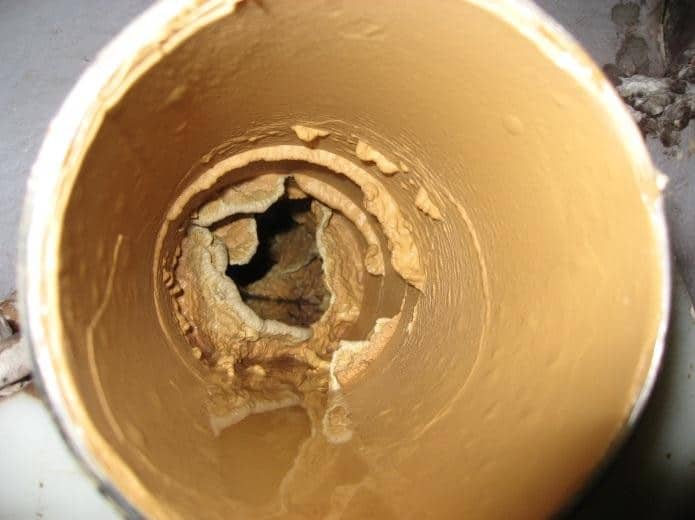
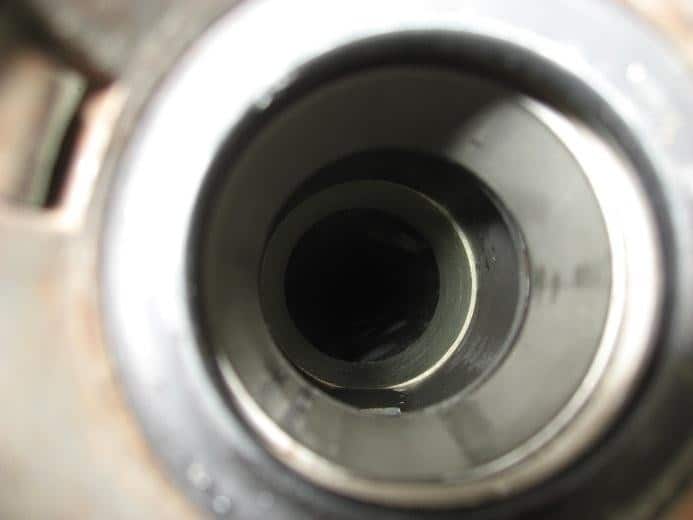
Boise Paper, Wallula, USA: two bleach plant shower units after the same 11 weeks, one left untreated and one treated by a HydroFLOW® Custom 8" fitted about 30 ft upstream. The treated nozzles stayed substantially clearer and needed no hydroblasting. Read the case study →
Where the Savings Add Up
Scale at the nozzle costs in cleaning time, stopped lines, spare nozzles and bars, chemicals and product quality. These are the six places our case studies measured it.
Fewer Nozzle Cleans & Stoppages
Cleaning becomes the exception. A UK crisp line's weekly-blocking nozzles stayed clear for 24 weeks, around 147 hours a year of stopped line avoided, and a cement plant cleaning four to eight nozzles a day cleaned none in a one-year test.
Fewer Hydroblasts and Bar and Nozzle Replacements
Hardware lasts when deposits stop bonding. An Ontario steel mill had been changing all six spray bars every three weeks; after fitting, it reported a year with no blockages. Boise Paper's treated shower unit needed no hydroblasting after 11 weeks.
Less Acid & Dosing to Buy
No descale means no descaler. The crisp line saved roughly 196 litres of acid solution a year, and a Puglia food plant stopped dispersant dosing and cut surfactant by 80% on its jar-washing line.
Even Spray, Better Product
When the pattern holds, so does quality. Puglia's jars dried mark-free within 7 days, a Palm Springs car wash cut mineral spotting sharply, and a Washington orchard expected over 90% top-grade apples, up from around 50%.
Filters & Valves Stay in Service
Scale that does not form cannot block the kit around the nozzle either. The cement plant's cartridge filters stopped clogging, and at an Italian Cycas nursery, valves and hydraulic rails stopped dripping on 350 ppm well water.
Fast Return on Investment
One fitting, no consumables. The Ontario mill's own analysis put savings at $35,000 a year, with a calculated three-month payback; Puglia reported nine months and Palm Springs estimated a year.
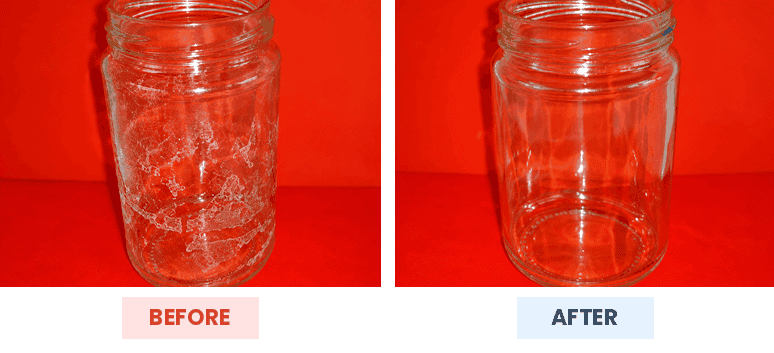
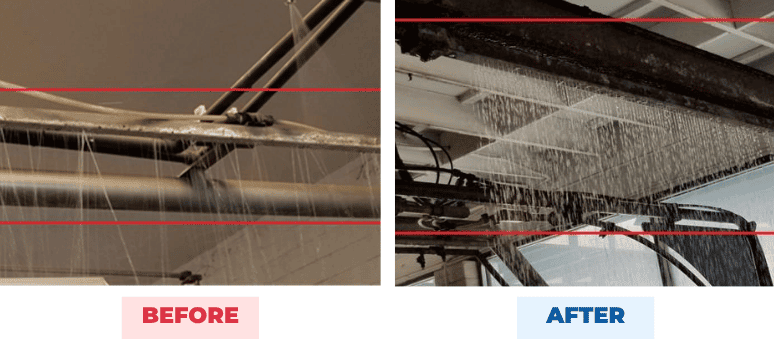
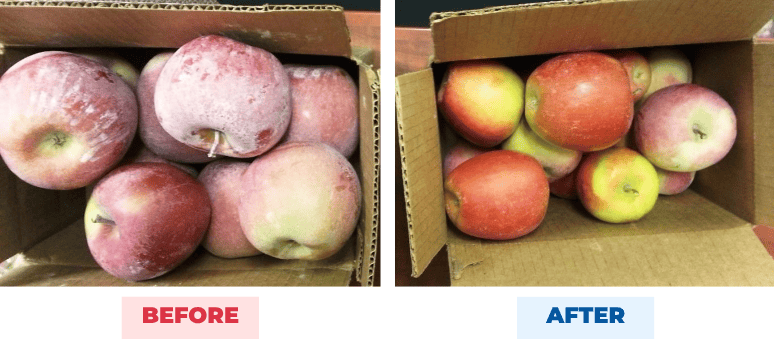
Puglia, Italy: a preserves maker washing filled jars with 190 ppm well water saw white mineral marks on dried jars and slime clogging the spray nozzles. Within 7 days of fitting one HydroFLOW® i45, dried jars showed no mineral marks; dispersant dosing stopped and surfactant was cut by 80%.
Puglia jars before and afterDon’t take our word for it. Test it on one line.
Treat one spray line, leave a similar one untreated, and compare them with your own cleaning logs, stoppage hours and nozzle spend. That is exactly how Boise Paper ran its trial, and we will set out the testing protocol with you.
Get a Free Spray System Assessment
Spray Nozzle Scale Control: Physical, Not Chemical!
A physical scale inhibitor for spray bars, headers, misting lines and process sprays, powered by a patented electronic signal
HydroFLOW® induces a patented ~150 kHz signal into the water through the pipe wall. The signal changes how dissolved minerals behave: instead of bonding to the aperture as hard calcium carbonate, calcium and magnesium ions form loose clusters. When the water hits the pressure drop, heat or evaporation at the nozzle, those clusters crystallise in suspension and leave with the spray.
That is scale control at the exact point nozzles fail, with no salt, no dosing and no cut into the pipe. The signal travels in both directions through the water, so one unit before the branch can treat every nozzle line beyond it. Fitting point matters: at the Ontario steel mill, the unit did its work on the pump output line feeding the header.
Won't the crystals block the nozzles instead? They form as fine particles carried by the flow, not as a bonded layer, and what remains is soft: Ontario's remaining deposits were loose and fluffy rather than concrete-like. Keep your strainers, because HydroFLOW® is not a filter, and where your fog or humidifier maker specifies reverse osmosis or demineralised water, keep that too.
Learn More About Our TechnologyCleaner Nozzles, Fewer Interruptions
From 200-micron food-line nozzles to 45–60 bar rings in a cement plant, one fitting changes how often the line stops.
Scale Stops Bonding at the Tip
Minerals crystallise in the water instead of on the aperture, so the opening keeps its size and the spray keeps its pattern. At On a UK crisp line, 200-micron nozzles that blocked weekly stayed clear for 24 weeks.
Gradual and Safe by Design
Existing deposits soften and come away over time, with no acid bath and no stripped nozzles. Expect loosened scale at strainers and nozzle tips in the first weeks: check and rinse them then. That is the system clearing, and it settles.
Measured Under Heat and Steep Pressure Drop
At a cement plant, 24 nozzles spraying from 45–60 bar into hot kiln gas went from four to eight cleans a day to none in a one-year test, and a second production line was then fitted.
How the Options Compare
HydroFLOW® set against descaling, strainers, softening and reverse osmosis, including the two jobs it does not do.
| HydroFLOW®Physical conditioner, no chemicals | Acid or vinegar descaling | Strainers & cartridge filters | Salt water softener | Reverse osmosis | |
|---|---|---|---|---|---|
| How it works | Electronic signal makes minerals crystallise in the water so they leave with the spray instead of bonding at the aperture | Nozzles come off and soak until the deposit dissolves | Mesh or cartridge traps particles before the nozzle | Swaps calcium and magnesium for sodium by ion exchange | Membrane removes most dissolved minerals; a share of the feed goes to drain |
| Stops scale forming at the nozzle | Yes Measured on 200-micron nozzles, spray bars and 45–60 bar rings in the case studies | No Removes it after the spray has already failed | No Dissolved minerals pass straight through and scale after the filter | Yes For hardness scale, while salt and regeneration are kept up | Yes The fog-system standard, at a capital and running cost |
| Catches particles & debris | No Not a filter: keep your strainers | n/a Cleans what is already lodged | Yes Its whole job, so it needs changing or cleaning | No Needs its own pre-filter | Pre-filter Membranes need filtered feed |
| Removes existing scale | Gradually Old deposits soften and come away; check strainers in the first weeks | Yes With the line stopped at every clean | No | No Prevention only, downstream | No Prevention only, downstream |
| Consumables & waste | None No salt, no acid, no cartridges | Acid or vinegar, neutralising and labour at every clean | Replacement cartridges and cleaning time | Salt deliveries, regeneration water and brine to drain | Membranes, pre-filters and reject water to drain |
| High-pressure fog where RO is specified | Not a substitute Where the system maker specifies RO or demineralised water, keep it | n/a | Partial Usually part of the RO train | Partial Often not enough for fog nozzles on its own | Yes What fog makers typically ask for |
| Downtime to fit | None Installs around the existing pipe, line running | Line stopped for every clean | Housing cut into the line | Cut-in installation, drainage and power | Plant skid, drainage, power and commissioning |
Swipe sideways to compare all five methods →
Comparison reflects typical products in each category; individual systems vary. HydroFLOW® is not a filter and not a biocide: strainers, cleaning and disinfection, any Legionella risk assessment, and RO or demineralised water where your equipment maker specifies it all remain in place.
Applications
Where spray and misting systems scale up
From process lines to glasshouses. Each application links to its sector page.
Food & Beverage Production
Process-line spray bars, jar and bottle washers, product rinses and humidification sprays, where a blocked nozzle stops the line or marks the product.
Steel, Cement, Paper & Mining
Cooling sprays on rolling and galvanising lines, gas conditioning towers, paper machine showers and dust-suppression sprays running hot, high-pressure or on recycled water.
Agriculture & Horticulture
Nursery sprayers, glasshouse misting and orchard overhead sprays on hard well or borehole water, where clogged heads mean uneven beds and marked fruit.
Commercial HVAC & Humidification
Spray humidifiers, air washers and evaporative pre-cooling. Mist that people breathe sits inside your water-safety regime, which stays in place.
Hotels, Resorts & Hospitality
Outdoor cooling mist on terraces, pool decks and restaurants in hot, hard-water climates, alongside the hotel's hot water, kitchens and laundry.
Data Centres
Adiabatic and evaporative cooling that sprays or wets media with mains water, where scale on nozzles and pads costs cooling capacity.
The problems behind the blockage have pages of their own: limescale, biofouling and slime and Legionella control. For the units themselves, see industrial products.
Process Overview
Simple Installation. No Line Stoppage.
Our patented technology fits around your existing pipework while the spray system keeps running.
The Fit
The HydroFLOW® unit installs around your existing pipework, usually after the pump and before the branch to the nozzle lines, with no cutting and the line running. Typically under an hour.
The Signal
A patented electronic signal travels in both directions through the water, treating every header, spray bar and misting line beyond the fitting point. It works through steel, copper and plastic pipe alike.
The Results
Marks and spotting can change within days, as Puglia's jars did in 7. Nozzle records build over weeks, as at Boise Paper (11 weeks), and the proof that counts runs a year, as at the cement plant.
Proven On Site
Real Spray Lines. Real Results.
Drawn from Hydropath installations and our customers’ own records across food, steel and cement production.
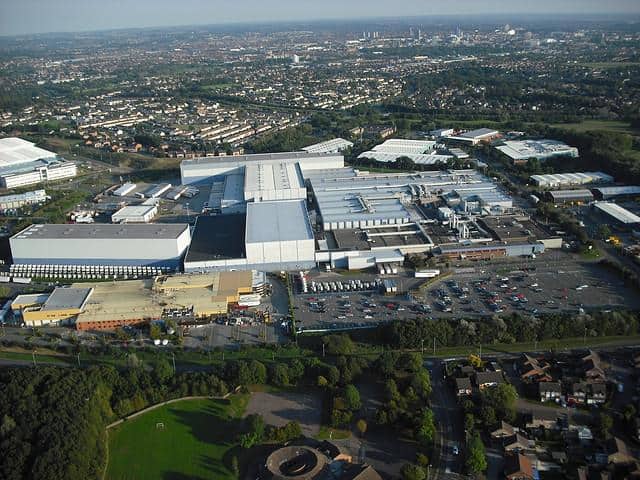
PepsiCo Walkers: 24 Weeks of Clear 200-Micron Nozzles
PepsiCo Walkers in Leicester kept 200 micron spray nozzles clear for 24 weeks with one HydroFLOW® i45, ending weekly acid cleaning and production stoppages.

Ontario Steel Mill: Spray Line Clogging Cut From 65% to 10%
One HydroFLOW® i100 cut supply-line clogging on a steel mill's galvanising spray bars from 65% to 10%, with no blockages reported for a year.
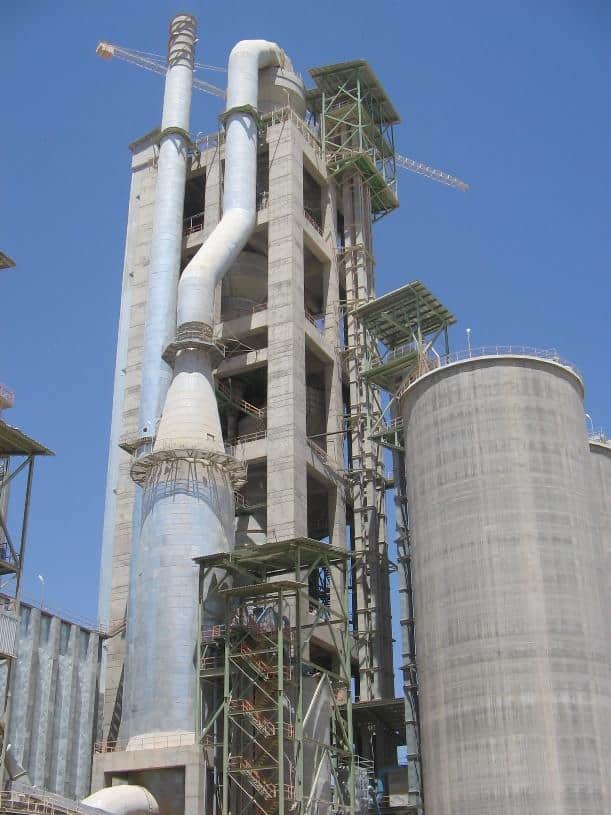
Middle East Cement Plant: Daily Nozzle Cleaning Eliminated
A Middle East cement plant stopped daily cleaning of 24 gas conditioning tower nozzles using a HydroFLOW C120 unit.
Support & FAQ
Frequently Asked Questions
What causes spray and misting nozzles to clog?
Spray nozzle scale is mineral deposit, mainly calcium carbonate, that forms at and inside the aperture when hard water drops in pressure, warms or evaporates as it sprays. Because apertures are tiny, often under a millimetre, even a thin layer distorts the spray pattern, cuts flow and then blocks the nozzle. The second cause is biofilm: soft slime that grows in warm, slow-moving feed lines and clogs nozzles from the inside, as it did on a Puglia food plant’s jar-washing line. Particles such as rust, sand and pipe debris are the third, and that is what strainers are for.
Why do my misting nozzles keep clogging even with a filter?
Because a filter catches particles, not dissolved minerals. Hardness passes straight through the mesh or cartridge and only turns into scale at the nozzle tip, after the filter. Filters ahead of the nozzles often scale up too: at a cement plant, the cartridge filters were clogging alongside four to eight nozzles a day, and both stopped once scale stopped forming. Keep the filter for debris and deal with the scale separately.
How long should you soak nozzles in vinegar or descaler?
For light scale, misting installers commonly suggest a soak in white vinegar or a manufacturer-approved descaler, then a thorough rinse before refitting. Take the soak time from your nozzle maker’s guidance, especially for brass. But if soaking has become a weekly job, the water is the problem, not the nozzle. A UK crisp manufacturer had to stop its line every week for a three-hour acid-bath clean; after treatment, the same 200-micron nozzles stayed clear for 24 weeks.
Does hard water affect misting systems?
Yes. Hard water scales the nozzles first, then the pump, check valves and the small-bore lines, and leaves white marks wherever the spray dries. The harder the water and the finer the nozzle, the faster it happens. Our case studies cover hard well water at 190 ppm (Puglia) and 350 ppm (an Italian Cycas nursery, where no blocked nozzles were reported after several months) as well as mains and recycled process water.
How do you prevent spray nozzle scale without chemicals?
There are four main routes. Salt softening removes hardness by ion exchange but needs salt, regeneration water and drainage. Reverse osmosis removes most dissolved minerals and is what many high-pressure fog makers specify, at a capital and running cost. Strainers catch particles but not scale. A physical conditioner such as HydroFLOW® changes how minerals behave so they crystallise in the water and leave with the spray instead of bonding at the aperture, with no salt, acid or cartridges. At an Ontario steel mill, reported supply-line clogging fell from 65% to 10%, with no reported blockages for a year.
Is it scale or biofilm blocking my nozzles?
Look at what comes out. Scale is white or grey, hard and gritty, and it fizzes in vinegar. Biofilm is soft, slimy, often brown or green, and may smell. Many systems have both, with slime sheltering in scale. HydroFLOW® helps with both: at the Puglia food plant, no slime was observed on the spray nozzles after 60 days. For slime problems in wider pipework, see biofouling.
Can water misting systems carry Legionella?
Yes, potentially. Any system that creates breathable droplets can spread Legionella if the water it holds is contaminated, which is why the UK HSE treats humidifiers, air washers and similar systems as risk systems, and why US public-health guidance stresses regular cleaning of produce misters. Keep your risk assessment, cleaning, disinfection and sampling. HydroFLOW® is not a disinfectant and makes no Legionella claim on this page; our evidence for building water systems is on the Legionella control page.
Does HydroFLOW work on high-pressure misting and fogging systems?
It has worked on high-pressure systems: the cement plant sprayed through 24 nozzles from 45–60 bar with no nozzle cleaning in a one-year test, and a UK crisp line’s nozzles had 200-micron outlets. But where your fog or humidifier maker specifies reverse osmosis or demineralised water, for performance or for the warranty, keep it. HydroFLOW® is not a substitute for a manufacturer’s water specification.
Do electronic water conditioners really work on nozzles?
Scepticism is fair: the market is full of cheap wrap-around descalers, and results also depend on the water and on where the unit is fitted. At the Ontario steel mill, the first installation point gave limited results until the unit was moved to the pump output line. So judge by controlled comparisons. At Boise Paper, a treated shower unit stayed substantially clearer than an untreated one over the same 11 weeks. On a UK crisp line, nozzles that blocked weekly stayed clear for 24 weeks. Treat one line, leave one untreated, and compare.
Will existing scale come loose and block anything?
It can, for a short while. As treated water softens old deposits, loosened scale can reach strainers and nozzle tips in the first weeks. Plan a strainer and nozzle check soon after installation and rinse what you find. It is the system clearing, and it settles.
Can it be fitted without stopping the line?
Yes. HydroFLOW® installs around the existing pipe, with no cutting, no drain-down and the line running, usually in under an hour. Fitting point matters more than speed: after the pump and before the branch to the nozzle lines is typical, so the signal reaches every header and spray bar beyond it.
Ready to Stop Cleaning Nozzles on a Schedule?
Tell us about your spray or misting system: the nozzles, the water and how often they block. Our team will recommend the right unit and fitting point and set out what to expect, including where our assessment is that we cannot help.
Ready to explore sustainable water treatment?
Get in touch to find out how HydroFLOW® can work for you.

© 2026 Hydropath Technology Ltd. All rights reserved