
Food Industry Water Treatment
Keep Plate Packs Clean Cut CIP Acid Protect Production
HydroFLOW® conditions process and wash water electronically — nothing added to the water, no cut into the pipe, fitted while the plant runs. Plate packs stay clean, CIP needs less acid, and sanitisers work on the organisms instead of the scale.
Results from documented case studies; vary by water hardness, process and baseline operation. View all food & beverage case studies →
Hard Water Costs a Plant Twice — Equipment and Hygiene
A processing plant takes the water its site is on. Whether the supply is mains or borehole, for many plants it arrives hard — carrying dissolved calcium and magnesium that precipitate wherever water is heated or forced through an orifice. In a food or beverage plant that means on the surfaces that matter most: pasteuriser plate packs, steam boilers, spray bars, bottle washers and the CIP circuit itself. On a milk line the mineral scale binds with protein into milkstone, which neither caustic nor sanitiser alone will shift. The direct consequences are rising differential pressure, blocked nozzles and acid washes that come round more often every season.
The second cost is hygienic rather than mechanical. Biofilm forms wherever water, nutrients and a surface meet — and scaled surfaces, rough and porous, give it the easiest hold. It shelters bacteria from the chlorine, PAA and caustic intended to control them, so sanitiser demand rises while confidence in the result falls. Chemical control also has hard limits in a food plant: dosing can only go so high in wash water, and barely anywhere in the product line itself, where a chemical clean knocks counts down only for them to climb back within days. Every extra acid wash is also production time lost and chemistry to store, handle and document for the audit. Address the deposits — scale and biofilm both — and the chemistry can do its job at the intended dose.
Typical signs scale and biofilm are taking hold:
- Differential pressure rising across plate heat exchangers, with acid washes needed more often
- Milkstone returning between cleans despite an unchanged CIP programme
- Spray nozzles, jets and bottle-washer heads blocking on a regular cycle
- Boiler flue temperature creeping up and blowdown increasing between services
- Chlorine or PAA demand rising in wash, flume and hydro-cooler water while counts stay stubborn
- Bacterial counts that fall after every chemical clean of the line, then return to the same high level within days
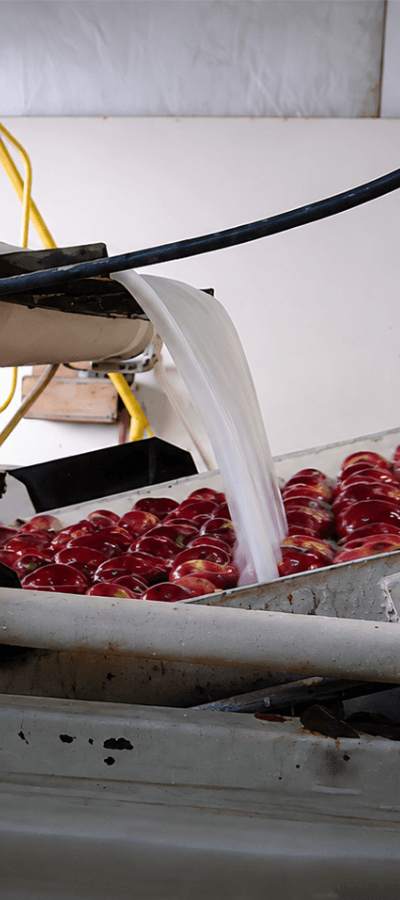
How Much Water Does Food Production Actually Use?
Water runs through every stage of food and beverage manufacture — as an ingredient, as wash and flume water, as steam, as cooling, and as the carrier for every CIP cycle. The law sets the floor: under assimilated Regulation (EC) 852/2004, water used in food production must be potable, and audit schemes such as BRCGS Global Standard Food Safety (Issue 9, clause 4.5) require the supply to be monitored and verified. What the regulations do not count is how much of that potable water a plant spends cleaning itself: in dairy processing, cleaning is the single largest use of water in the plant.
4–10 litres per litre of beer
A brewery typically uses between 4 and 10 litres of water for every litre of beer produced — leading sites manage under 3. Most of the difference is cleaning, rinsing and utility water, not the beer itself.
~70% of dairy plant water goes on cleaning
Cleaning operations, including CIP, are directly responsible for around 70% of a milk processing plant's water requirement — which is why scale that slows cleaning raises the whole site's water bill.
1.2–3.4 litres per litre of milk
Processing a litre of milk typically consumes 1.2–3.4 litres of water across reception, pasteurisation, cooling and cleaning — a multiple of the product itself, before the parlour is counted.
Sources: Grundfos, How much water is used for beer brewing? · Singh et al. (2024), Water Footprints of Dairy Milk Processing Industry, Water 16(3):435 — cleaning/CIP share and litres-per-litre ranges · Regulation (EC) 852/2004 on the hygiene of foodstuffs, legislation.gov.uk · BRCGS Global Standard Food Safety, Issue 9. Figures are study- and agency-reported estimates; individual plants vary.
The True Cost of Untreated Water
The cost of untreated water is distributed across several budget lines — energy, chemicals, labour, lost production and audit exposure — which is why it is rarely quantified as a single figure. The sections below set out where it accumulates.
Scale & Milkstone on Plate Heat Exchangers
Pasteurisers and plate coolers scale fastest of all, because heat drives minerals out of solution onto the very surfaces that transfer it. The cost is incurred twice: extra energy through the scale layer on every cycle, then acid, labour and lost production to strip it off.
Spray Nozzles & Jets Blocking
Every litre that evaporates at a nozzle leaves its minerals at the smallest orifice on the line. Production-line spray bars, bottle washers and steam jets block first, and each clean means stopping the line and soaking parts in acid.
Biofilm in Process & CIP Lines
Warm, nutrient-rich lines grow biofilm even inside the cleaning system itself. It shelters bacteria from caustic and sanitiser, seeds recontamination after every clean — counts fall, then climb back within days — and the chemical answer is capped: dosing can only go so high in wash water, and barely anywhere in the product line itself.
Sanitiser Demand in Wash & Flume Water
Recirculated wash, flume and hydro-cooler water carries soil, sugars and organic load, so chlorine and PAA are consumed faster than they can work. Counts stay stubborn, dosing creeps upward, and the chemical bill rises with it.
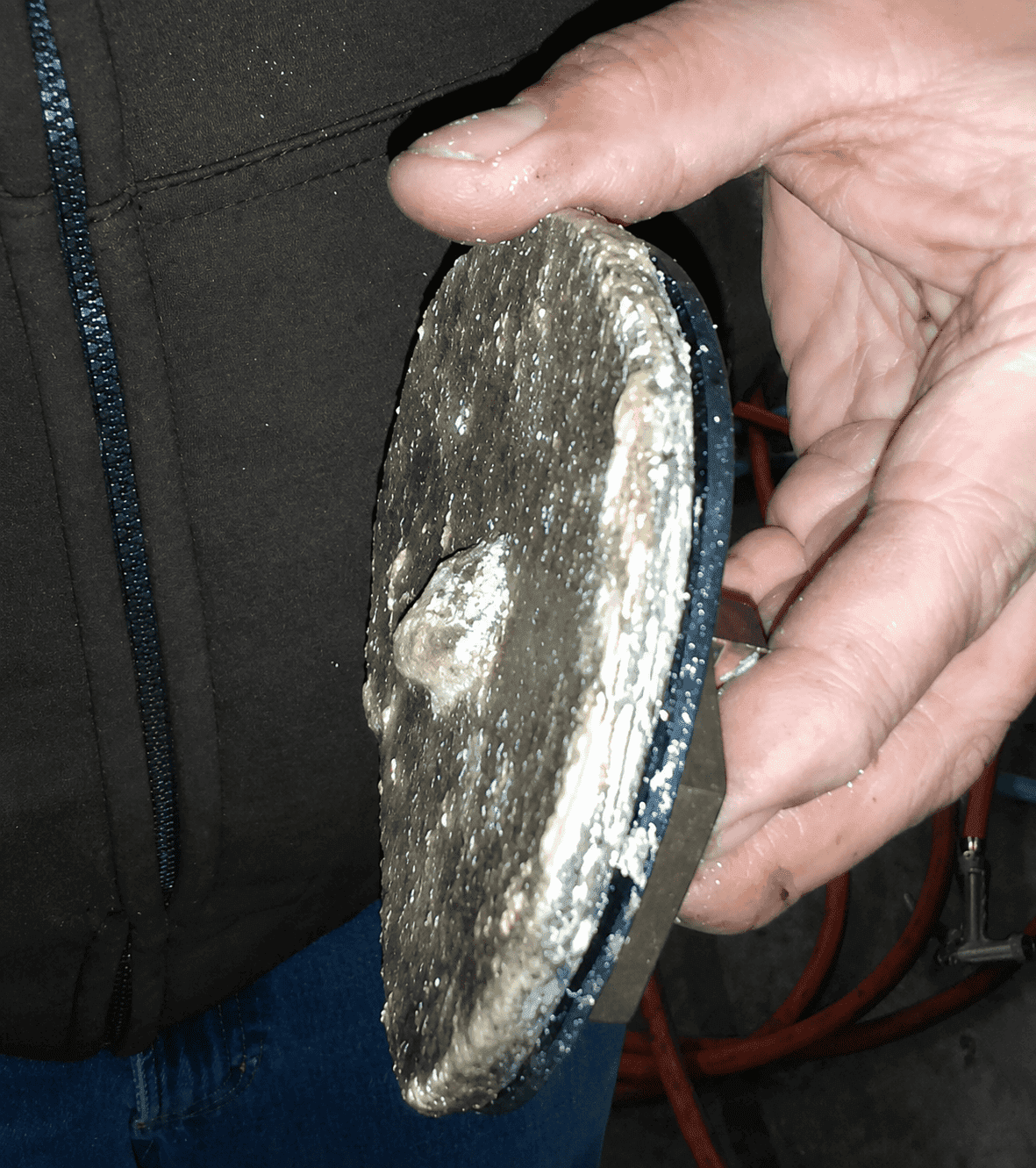
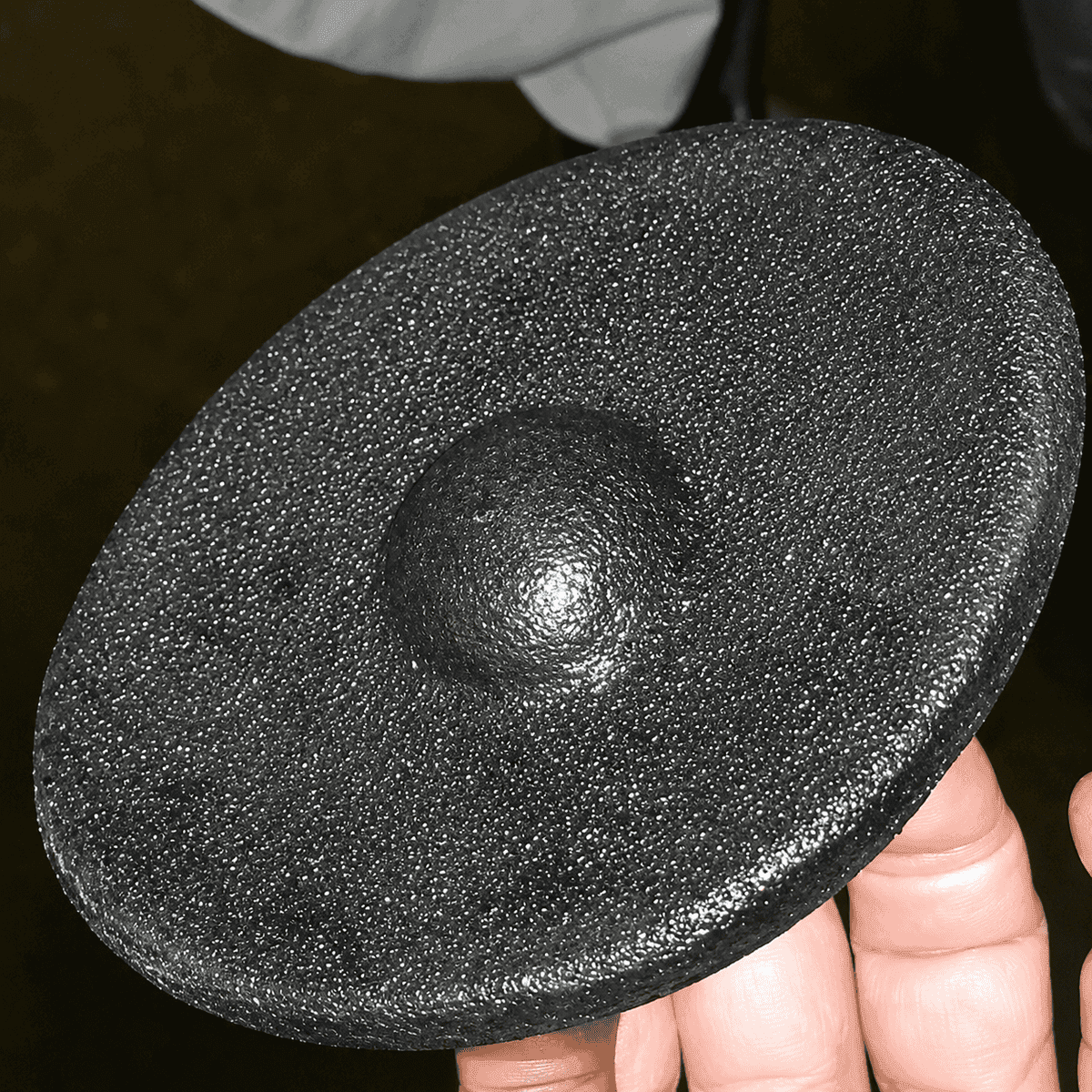
Apple packhouse, US Northwest: the same component from a water heater serving the apple washing nozzles, before and after treatment. Limescale on the tubes and tank walls fell by over 70% within three months, and the heaters — already near the end of their expected life — stayed in service a further fourteen years before replacement in 2025. Read the case study →
Where the Savings Add Up
Scale and biofilm carry a continuous cost across a plant’s water — chemicals, energy, cleaning time, equipment life and audit confidence. Hydropath addresses six of the most significant recurring costs.
Reduced Acid & CIP Chemicals
Less scale bonded to surfaces requires less chemistry to remove it. Tims Dairy halved the phosphoric acid in every milk-line clean — and halved the cleans. At a UK crisps factory, retiring the weekly nozzle acid bath saved around 196 litres of acid solution a year.
Lower Sanitiser Demand
Cleaner surfaces let the dose work on the organisms instead of the deposit. A US apple packhouse held non-detect counts at 10 ppm chlorine, down from 40–50, and at the Obolon brewery in Kyiv filter function was restored within 30 days without chemical or manual cleaning.
Lower Energy Costs
Scale insulates heat-transfer surfaces — around 1 mm can reduce heat transfer by about 7%. A Taiwan food-grade steam system raised steam 20% faster with no chemicals — and has run since 2011 without a descale.
Reduced Maintenance & Downtime
Deposits soften instead of bonding, so cleaning stops shrink. At a South African dairy plant, existing scale came away by hand from a condenser that had relied on continuous dosing, and G & G Orchards ran twelve months with blowdown below once a month — descalant, biocide and anti-corrosion chemicals all discontinued.
Lower Wastewater Treatment Costs
Better flocculation means less dosing at the back of the plant. Maple Leaf cut ferric sulphate 50% and saved $47.5k a year; a Texas DAF ran on half the chemical at six times the cleaning interval; and an Italian meat processor cut polyelectrolyte dosing 20% with clearer discharge water.
Fast Return on Investment
A single fitting, no consumables, no servicing schedule and a power draw comparable to a small lamp. At a US apple packhouse, water heaters already near the end of their expected life had their limescale cut by over 70% in three months — and stayed in service a further fourteen years before replacement in 2025. Once installed there are no recurring purchases, so each season's savings go straight to margin.
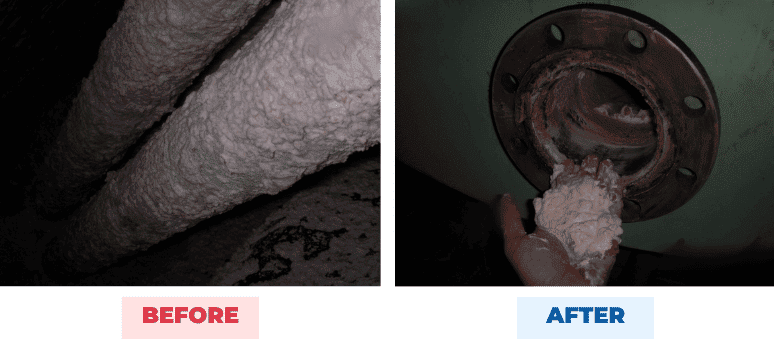
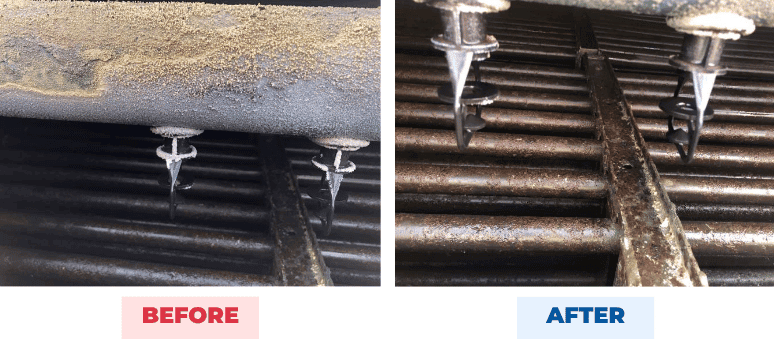
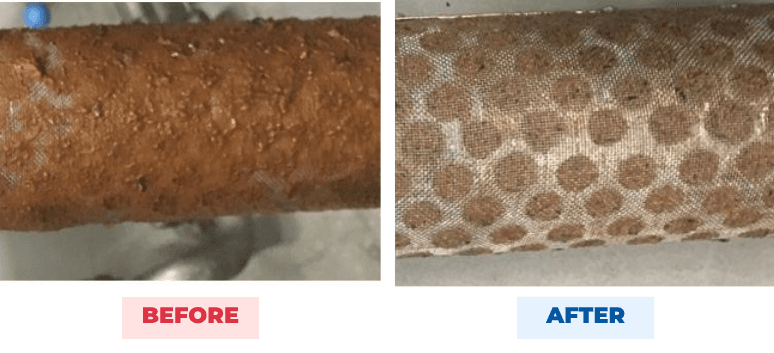
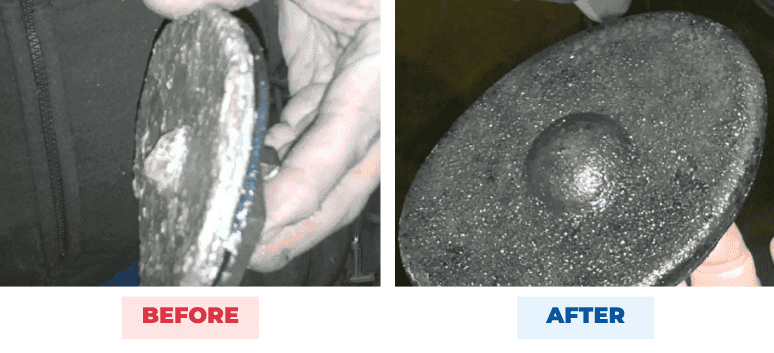
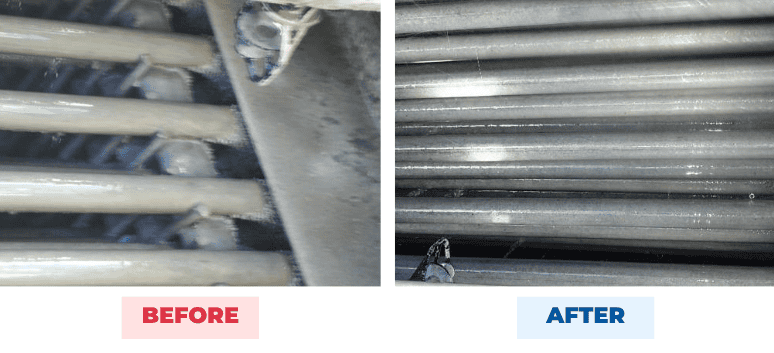
Food-grade steam system, Taiwan: scale was building critically and chemical descaling was prohibited under food rules. One P Range unit fitted in 2011 removed the existing deposits without chemicals — steam release speeds rose 20%, scale-related safety valve failures ended, and the system has run since without descaling.
Taiwan steam system pipework before and afterDon’t take our word for it — test it on your own plant.
Every chemical, energy and downtime figure on this page is designed to be independently verified using a documented, step-by-step testing protocol run on your own pasteurisers, boilers, CIP circuit and wash lines.
Get a Free Plant Water Assessment
Food Industry Water Treatment Physical, Not Chemical!
A physical scale inhibitor for pasteurisers, boilers, CIP circuits and wash water, powered by a patented electronic signal
HydroFLOW® induces a patented ~150 kHz signal into the water through the pipe wall. The signal changes how dissolved minerals behave: instead of bonding to plate packs, nozzles and boiler tubes as hard calcium carbonate scale, calcium and magnesium ions form loose clusters in the water. Where the water concentrates — at a heated plate, a spray orifice, a boiler surface — those clusters crystallise in suspension, as fine particles carried through the system rather than fouling the surfaces they pass.
The result is scale control at the point where deposits are born — the moment of crystallisation — with no salt, no dosing and no cut into the pipe. The signal propagates in both directions through the pipework, so a single unit on the incoming main or a process feed protects the circuit beyond it. It works on stainless, copper and plastic alike, and it continues working on water standing between production runs and CIP cycles, which is exactly when deposits and biofilm consolidate.
Because the treatment alters how minerals behave rather than what the water contains, nothing enters the water and its composition is unchanged — no residue, no taste or recipe effect, and nothing new to declare in the site's water treatment schedule. Your potable-water duty and sampling regime stay exactly as they are; we can supply the technical documentation your auditor or certification body asks for.
Learn More About Our TechnologyOne Technology — Clearer Plate Packs, Leaner CIP
Across pasteurisers, boilers, CIP circuits and wash lines, one fitting changes what your water costs you.
Treated Water Redissolves Deposits
Because new scale stops forming, the water regains capacity to dissolve minerals — and slowly draws existing calcium carbonate and milkstone back into solution, layer by layer, from plate packs, boiler tubes and nozzles alike.
Gradual and Safe by Design
Progressive removal avoids the risks of acid descaling: no concentrated acid to handle, no metal thinned by the descale itself, and no line taken out of production. Expect loosened material at the strainers and filters in the first weeks — that is the system clearing, and it settles.
Measured in a Working Packhouse
At G & G Orchards the evaluation ran twelve months with a logged data table: chemical treatment was eliminated, blowdown fell to less than once a month, and conductivity held below 1,600 µS throughout. "My cooling towers were never this clean when they were on chemicals," the owner reported. See the record.
A Different Approach to Process Water
How HydroFLOW® compares with the usual ways of protecting food and beverage plant from hard-water scale.
| HydroFLOW®Physical conditioner — no chemicals | Salt water softener | Antiscalant / chemical dosing | Acid descaling | |
|---|---|---|---|---|
| How it works | Electronic signal crystallises minerals in suspension so they cannot bond as scale on plate packs, nozzles and boiler surfaces | Removes calcium & magnesium from the supply by ion exchange, substituting sodium | Dosed chemistry interferes with crystal growth or holds minerals in the water | Acid strips deposits after they have formed |
| Effect on product & recipe water | None Nothing added; water composition and taste unchanged | Altered Raises sodium — changes recipe and liquor water, and adds a salt stream to manage | Managed Dosed product upstream of the process; residues and dose control to manage | None Lines rinsed before return to service |
| Consumables | None No salt, no acid, no dosing | Regular salt refills and regeneration water | Continuous chemical purchase, storage and COSHH handling | Acid, neutralising and labour at every clean |
| Removes existing scale | Yes Gradually redissolves deposits | No Prevention only, downstream of the unit | Partial Depends on dose and programme | Yes But with downtime and metal loss at every clean |
| Biofilm & bacterial counts | Helps directly Disrupts biofilm and keeps working on standing water; treats lines where dosing is capped or excluded | No Hardness removal only — no effect on biofilm or counts | Capped Dose limits in wash water, little to none tolerated in product lines | Temporary Counts fall after the clean, then climb back within days |
| CIP compatibility | Works alongside Keeps the circuit cleaner between cycles, so acid demand falls — CIP programme stays in place | Indirect Softened water aids detergency but does not touch existing scale or biofilm | Parallel A second chemical programme to run alongside the first | It is the cost Acid cycles are the downtime the plant is trying to reduce |
| Audit & HACCP evidence | Nothing to declare No input enters the water; technical documentation supplied for your water safety file | Declarable Regeneration chemistry and sodium change to document | Declarable Dosed input with COSHH and residue records | Declarable Cleaning chemistry to record every cycle |
| Downtime to fit | None Clamps onto the existing pipe; production stays live | Cut-in installation, drain-down and power | Injection point, dosing pump, tank and monitoring | Lines offline for every clean |
Swipe sideways to compare all four methods →
Comparison reflects typical products in each category; individual systems vary. HydroFLOW® is not a filter and not a disinfectant — filtration, sanitiser dosing and the site's potable-water and HACCP duties remain in place.
Applications
Key applications for food & beverage plants
A plant’s water challenge runs from the incoming main to the effluent line. Each application links to its dedicated treatment page.
Heat Exchangers & Pasteurisers
Keeps plate and shell-and-tube exchangers clean in dairies, breweries and beverage plants, protecting heat transfer and cutting acid cleaning.
Steam & Boilers
Controls boiler scale in steam raising for cooking, sterilisation and processing — protecting fuel efficiency and cutting blowdown and salt.
Limescale & Scale Control
The wider limescale picture — how calcium carbonate forms across process and wash water systems, and how it is treated and gradually removed.
Biofouling & Biofilm
Helps disrupt biofilm in process and product lines, CIP circuits and recirculated wash and flume water — including where dosing is capped or excluded — so sanitisers work on organisms instead of deposits.
Cooling & Refrigeration
Protects condensers, cooling towers and chillers behind cold stores, hydro-coolers and process refrigeration from scale and biofouling.
Wastewater & DAF
Improves flocculation in dissolved air flotation and effluent treatment, cutting coagulant and polymer dosing at the back of the plant.
Growing, irrigation and the milking parlour are covered on our Agriculture page — this page covers everything after the farm gate, from packhouse to bottling line.
Process Overview
Simple Installation. No Interruption to Production.
Our patented technology retrofits onto your existing pipework while the plant stays live.
The Fit
The HydroFLOW® unit installs around your existing pipework — incoming main, process feed or CIP line — with no cutting, no draining and no interruption to production. Typically under an hour, with the plant live throughout.
The Signal
A patented electronic signal propagates in both directions through the water, treating the circuit from a single point. It works through stainless, copper and plastic alike, and continues on water standing between production runs and CIP cycles.
The Results
Wash-water counts and dosing typically respond within days — the apple packhouse trial shifted in its first week. Nozzle blocking and plate-pack pressure ease over weeks, and existing scale releases over the following months.
Proven On Site
Real Plants. Real Results.
Drawn from Hydropath installations and our customers’ own feedback across dairies, breweries, snack factories and packhouses.
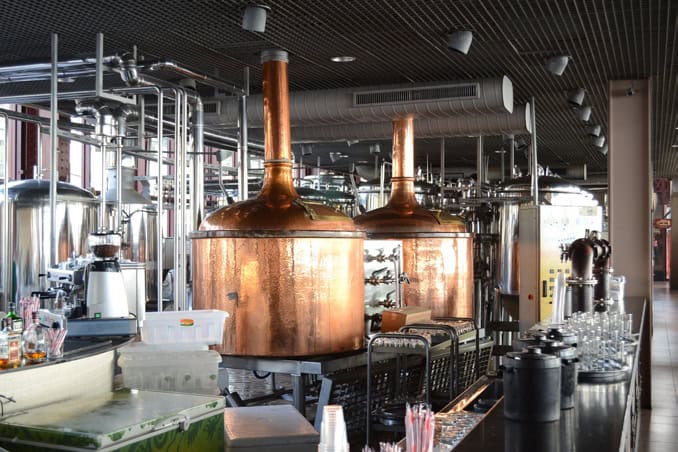
Kyiv Brewery: Filter Contamination Cut 60%, No Chemicals
Obolon Brewery in Kyiv cut mechanical filter contamination by 60% and cleared black biofouling across three cooling water trials with one HydroFLOW® unit.
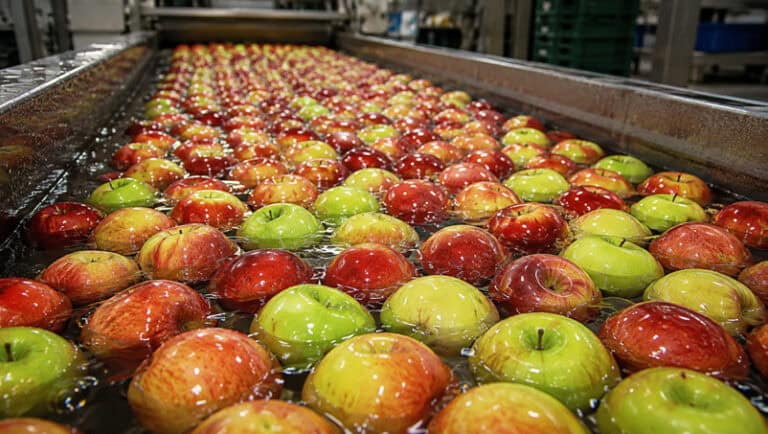
US Apple Flume: Non-Detect Held at 10 ppm Chlorine
A US apple packing facility held non-detect microbial results at 10 ppm chlorine, down from 40-50 ppm, with one HydroFLOW® unit on its flume water.
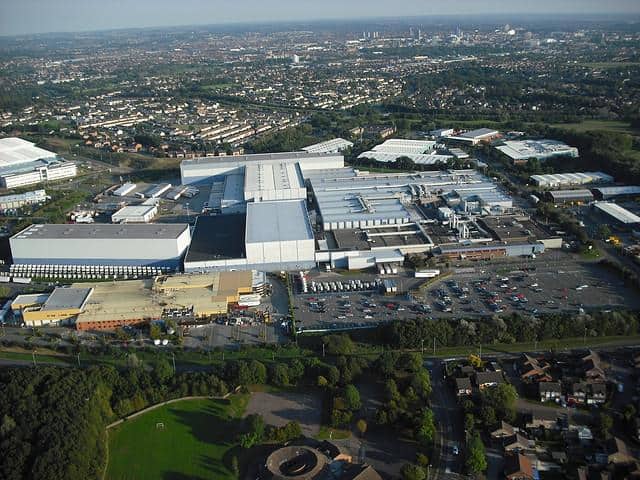
PepsiCo Walkers: 24 Weeks of Clear 200-Micron Nozzles
PepsiCo Walkers in Leicester kept 200 micron spray nozzles clear for 24 weeks with one HydroFLOW® i45, ending weekly acid cleaning and production stoppages.
Support & FAQ
Frequently Asked Questions
What is food industry water treatment?
Food industry water treatment is the set of measures that keep a plant’s water fit for production — meeting the legal requirement that water used in food manufacture is potable, managing hardness and limescale on pasteurisers, boilers and wash lines, and controlling the biofilm that undermines sanitiser dosing. The duty comes from Regulation (EC) 852/2004 and is checked by audit schemes such as BRCGS Global Standard Food Safety, which requires the water supply to be monitored and verified.
HydroFLOW® adds a chemical-free physical layer inside that framework: it changes how minerals behave in the water so scale and biofilm stop forming on the surfaces where they cost you energy, chemicals and cleaning time. It is not a disinfectant and does not make water potable — those duties stay with the site.
How do you stop limescale in food processing equipment?
Scale forms where water is heated or forced through an orifice — pasteuriser plate packs, boiler tubes, spray nozzles and bottle washers. Softening and dosing manage it by changing what is in the water; acid washing removes it after it has formed. HydroFLOW® works at the point where scale is born: an electronic signal makes the minerals crystallise in suspension, as fine particles carried through the system instead of bonding to hot surfaces. On a milk line the same mechanism limits milkstone, the mineral–protein deposit that neither caustic nor sanitiser alone will shift. At Tims Dairy in Buckinghamshire, plate-pack cleaning fell from twice weekly to once, at half the acid each time. More on limescale and heat exchangers.
How do you reduce acid use in CIP cleaning?
The acid stage of a CIP cycle exists to dissolve mineral deposits — so the less scale bonds to the circuit between cleans, the less acid the cycle needs. With HydroFLOW® treating the line, minerals stay in suspension and rinse out with the flow, and the treatment keeps working on water standing in the circuit between cycles, which is when deposits consolidate. Tims Dairy halved the phosphoric acid in every milk-line clean and halved the cleaning frequency. At a UK crisps factory, spray nozzles that had needed a three-hour acid bath every week ran 24 weeks clear, saving about 196 litres of acid solution a year. At the Obolon brewery in Kyiv, filter function was restored within 30 days without any chemical or manual cleaning. Your CIP programme stays in place — it simply has less work to do.
Does hard water affect brewery equipment?
Yes — but separate the two halves of brewery water treatment. Brewing liquor chemistry — the calcium, sulphate and chloride balance that shapes the beer — is a recipe decision, and HydroFLOW® does not touch it: nothing is added and the water’s composition is unchanged. The utility side is where hard water costs money: scale on the hot liquor system, heat exchangers, keg and bottle washers, and biofouling in cooling circuits. That is where physical conditioning belongs. At the Obolon brewery in Kyiv, one month of treatment cleared biological deposits from a heat-exchanger tube sheet, filter contamination fell 60%, and existing deposits loosened enough to remove by hand.
Does hard water damage steam boilers and pasteurisers?
It is the most expensive place scale can sit. Around 1 mm of scale can cut heat transfer by about 7%, and on a boiler or pasteuriser that surcharge is paid on every heating cycle — visible as creeping flue temperature and rising fuel use. At a food-grade steam system in Taiwan, where chemical descaling was prohibited under food rules, one unit removed the existing deposits without chemicals — steam release speeds rose 20%, scale-related safety valve failures ended, and the system has run since 2011 without descaling. At a South African dairy plant, no new scale formed on cleaned heat-transfer surfaces and the condenser ran without chemical dosing, against an untreated reference unit alongside it. More on steam and boilers.
How do you keep packhouse wash and flume water clean?
Recirculated dump-tank, flume and hydro-cooler water carries soil and organic load, so chlorine and peracetic acid are consumed faster than they can work. The conventional answer is to dose more. An independent consultant’s controlled trial at a US apple packhouse showed the alternative: with HydroFLOW® on the recirculation line, total bacteria and mould in the dump tank fell from the 10³–10⁷ cfu/mL range to 10¹–10³ despite lower PAA doses, and in the treatment tank microbial counts held at non-detect while total chlorine was cut from 40–50 ppm to 10 ppm. When the unit was switched off, counts became detectable again at the same dose. Cleaning crews also reported the flume walls easier to clean. The sanitiser programme stays — it simply works at the dose intended.
Is it safe to use in a food plant — does it add anything to the water?
Nothing enters the water. The unit clamps around the outside of the pipe and induces an electronic signal through the pipe wall — there is no contact with the water, no dosing, no residue, and the water’s composition, hardness reading and taste are unchanged. That is a different position from any dosed product: there is no new input to enter in your water treatment schedule and no withdrawal or residue consideration for product contact. Units run on plants producing yoghurt, crisps, beer, bread and fresh produce. We can supply the technical documentation your hygiene or certification auditor asks for. More on how the signal works.
Does it replace CIP or chlorine dosing?
No. HydroFLOW® is not a disinfectant and does not sanitise water or surfaces — your CIP programme, sanitiser dosing and validation stay exactly where they are. What changes is how hard they have to work. Scale and biofilm shelter bacteria from chlorine, PAA and caustic; when those deposits stop forming, the same hygiene result needs less chemistry, less heat and fewer cleaning stops. The case studies on this page show doses falling while results hold — never the programme being removed.
Does it replace filtration or make water potable?
No to both. HydroFLOW® is not a filter and does not remove sand, silt or suspended solids — mechanical and cartridge filtration stay in place, and the legal duty that water used in food production is potable remains the site’s, met through your existing supply and sampling regime. Expect the opposite of a filter in the first weeks, in fact: as existing scale releases, loosened material appears at strainers and filters before the system settles. If your primary problem is sediment or supply quality rather than scale and biofilm, filtration and supply treatment are the answer and we will tell you so. See wastewater and filtration.
What evidence can I show a BRCGS or HACCP auditor?
Three things. First, the technical documentation for the unit — what it is, how it works, and confirmation that nothing is added to the water, which means there is no new input to declare in your water treatment records. Second, your existing monitoring: because the treatment changes nothing in the water’s composition, your potable-water sampling and CIP validation carry on unchanged, and improvements show up in your own trend data — counts, dosing records, cleaning logs and energy use. Third, the published case studies, several of which are named sites with measured before-and-after data, including an independent consultant’s controlled packhouse trial and a twelve-month evaluation with a logged data table. BRCGS Issue 9 clause 4.5 asks you to demonstrate your water supply is monitored and fit for purpose; HydroFLOW® sits alongside that duty rather than altering it.
How quickly will I see results?
It depends what you are measuring. Wash-water dosing and counts respond fastest — the apple packhouse trial shifted within its first week. Nozzle blocking and plate-pack differential pressure ease over weeks: the Walkers nozzles ran clear from the day the weekly cleans stopped, and Tims Dairy’s halved cleaning schedule held from the first weeks. Existing scale releases over months — an apple packhouse saw limescale on its heater tubes fall by over 70% in three months, the Obolon inspection ran at one month, and the G & G Orchards evaluation logged twelve months of data. Boiler and softener changes are staged over about three months.
Ready to Cut Scale, Acid and Downtime?
Tell us about your plant — your process, your water source and what fails first — and our team will recommend the right units and set out what to expect — including where our assessment is that we cannot help.
Ready to explore sustainable water treatment?
Get in touch to find out how HydroFLOW® can work for you.

© 2026 Hydropath Technology Ltd. All rights reserved