
Dissolved Air Flotation (DAF)
Lower Dosing Steadier Effluent Fewer DAF Cleans
HydroFLOW® conditions the water feeding your dissolved air flotation unit electronically, with nothing added and no cut into the pipe. Fine particles floc more readily, so sites have lowered coagulant and polymer in stages while effluent quality held.
Results from documented case studies; they vary with the wastewater, the DAF design and how dosing is reduced. View all DAF case studies →
A DAF Pays for Its Chemistry Twice: in the Dose and in the Float
Dissolved air flotation only works when fine particles have been gathered into flocs, and that takes coagulant and polymer on every litre. Because influent loads swing, doses are routinely set high to cover the worst hour of the week. The plant pays first in chemical: Maple Leaf Foods' Hamilton plant ran its DAF on a fixed 200 ppm of ferric chloride, its largest effluent chemical cost. It pays again downstream, in sludge to dewater and haul, cleaning, and water replaced. At a Texas packaging plant, every attempt to dose its way out of murky, foul-smelling water brought the odour back.
Typical signs a DAF is running on too much chemistry:
- Coagulant, ferric or polymer dose fixed high and never revisited
- Turbidity or TSS peaks in the discharge that arrive without warning
- Murky recirculating water and a foul smell from the tank
- Cleaning and water replacement on a weekly cycle
- Wet, heavy float and a sludge disposal bill to match
- Discharge results that sit close to the consent or by-law limit
What Does DAF Chemistry Really Cost?
Dissolved air flotation (DAF) lifts solids, fats, oils and grease to the surface on microbubbles, but only after coagulant and polymer have gathered them into flocs. That makes chemistry the running cost of every DAF, and peer-reviewed research lists high chemical cost among its known weaknesses. Your discharge limits stay the same whatever the dose.
100 to 500 mg/L of flocculant
That is the normal range for flocculant doses in DAF, according to Hach's application guidance. At plant flows of thousands of cubic metres a day, it adds up to tonnes of chemical a month before coagulant and pH correction are counted.
About $200,000 a year, as an example
Hach's worked example: a DAF treating 4,000 m³ a day at a 40 ppm chemical feed, at $3.40 per kg, spends around $200,000 a year on that one chemical. A reduction of a few percentage points is real money; the sites on this page cut 20% to 50%.
20% to 30% from better dose control
Hach puts the saving from more accurate, sensor-led dosing at 20% to 30% of chemical consumption, because operators overfeed to cover load swings. The waste is widely recognised. The question is how much of the dose the flocs actually need.
Sources: Hach, DAF suspended solids application note (2020) · Saththasivam et al., Journal of Water Process Engineering (2022). Hach supplies dosing-control equipment; its figures are industry guidance, and individual sites vary.
The True Cost of DAF Chemical Dosing
Coagulant and polymer are dosed for the worst load of the week, and paid for on every litre in between. These are the four places the waste shows up, and what changed when sites conditioned the feed.
A Coagulant Bill That Only Goes Up
Ferric and alum are dosed for compliance, so the dose is set high and left there.
Murky Water, Odour and Weekly Cleans
Recirculating DAF water turns murky and foul, and more chlorine and polymer only buys a few days.
Turbidity Peaks Nobody Saw Coming
Effluent quality swings with the load, and a single peak can put the discharge near its limit.
Fine Particles That Won't Floc
The smallest particles resist coagulation, so the dose climbs to catch them.
200 → 100 ppm
Ferric chloride, lowered in stages over a 90-day trial
- 50%less ferric
- Withindischarge limits throughout
- $47.5kchemical saving a year
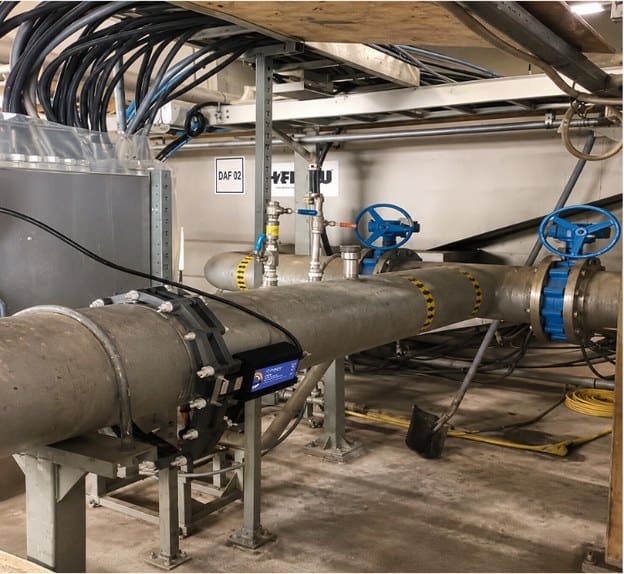
Maple Leaf Foods, Hamilton, Canada: two HydroFLOW® Custom units were fitted on the feed lines to both DAFs. Ferric came down from 200 to 100 ppm in stages over 90 days, with discharge kept within municipal limits. Read the case study →
Where the Savings Add Up
A lower dose saves more than the chemical itself. It shows up in cleaning, water, odour, sludge and carbon too.
Lower Coagulant & Polymer Spend
The biggest line on most DAF budgets. Maple Leaf Foods halved its ferric chloride and saved $47,500 a year; an Italian meat processor cut polyelectrolyte 20%.
Fewer Cleans, Less Water Replaced
Cleaner water keeps the tank cleaner. At a Texas packaging plant, cleaning and water replacement went from every week to every six weeks over a 14-week evaluation, with the water savings that come with it.
Steadier Effluent Quality
Consistency matters as much as the average. The Italian flotation unit's discharge turbidity fell from 76 to 43 NTU and the peaks stopped; Maple Leaf's discharge stayed within municipal limits at every step.
Less Odour Around the Tank
Odour is often what gets a DAF noticed. The Texas plant reported the foul odour and chlorine smell reduced dramatically, alongside clearer recirculating water, while it was dosing less.
Drier Sludge to Handle
Every kilo of float has to be dewatered and hauled. Texas reported better TSS separation and a drier cake, and on the Mainvilliers sludge centrifuges the treated line used 19.7% less polymer.
Fast Payback, Lower Carbon
One fitting, no consumables. The Italian plant recovered its investment within 18 months on chemical savings alone, and Maple Leaf's lower ferric use cut about 8.9 tonnes of CO₂-equivalent a year.
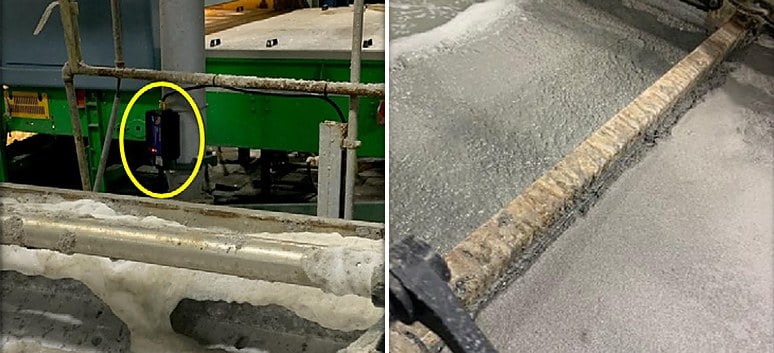
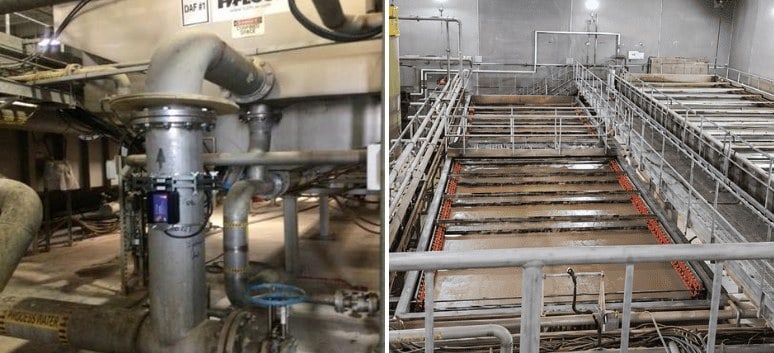
Houston, Texas: a HydroFLOW® i150 on the recirculating line entering the DAF tank of a plastics packaging plant. Over a 14-week evaluation, polymer and chlorine fell roughly 50% and cleans went from weekly to every six weeks.
HydroFLOW unit on a DAF in TexasDon’t take our word for it. Test it on your own DAF.
Fit a unit to the DAF feed line, then lower the dose one step at a time, checking your own turbidity, TSS and discharge results after each step. You keep every number, and you decide how far the dose comes down.
Get a Free DAF Assessment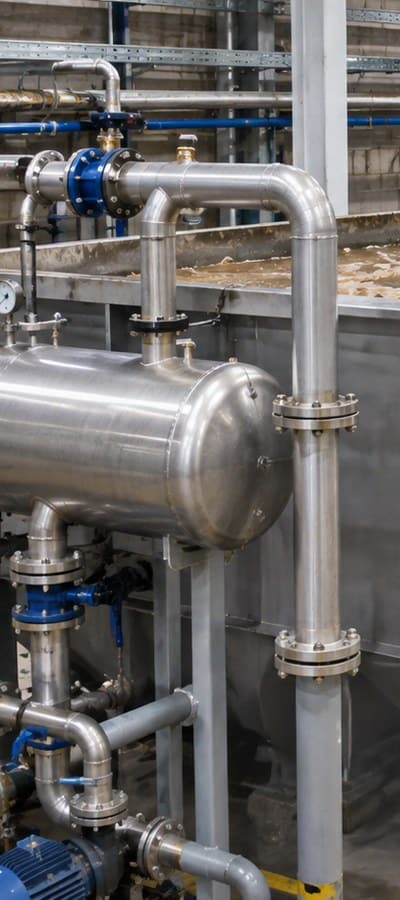
DAF Water Treatment Physical, Not Chemical!
A physical conditioner for the feed to your dissolved air flotation unit, powered by a patented electronic signal
Fine suspended particles carry like charges, so they repel each other and stay apart. Coagulant neutralises that charge and polymer bridges the particles into flocs big enough for the microbubbles to lift. HydroFLOW® induces a patented ~150 kHz signal into the water through the pipe wall, which alters the charge environment around those particles and encourages them to combine into larger clusters before the chemistry is added.
Fitted to the DAF feed or recirculation line, ahead of the dosing point, the unit hands the coagulant and polymer water that is already partly conditioned. That is why sites have been able to lower the dose and keep effluent quality: an Italian meat processor saw turbidity fall within hours of fitting a unit ahead of its polyelectrolyte dosing. It installs around the existing pipe, with no cutting, nothing added to the water and no change to the process.
The fair question is what happens to compliance when the dose comes down. The answer is that your own tests decide. Maple Leaf Foods lowered ferric in steps over 90 days and checked discharge results at every step before taking the next. The DAF, its chemistry, your jar tests and your consent limits all stay exactly as they are; only the dose moves, and only as far as your results allow.
Learn More About Our TechnologyOne Technology — Lower Dose, Same Limits
How sites have reduced DAF chemicals without putting their discharge at risk.
Better-Conditioned Feed
Fine particles start clustering before the dosing point, so the coagulant and polymer have less to do. At an Italian meat processor's flotation unit, polyelectrolyte came down 20% within hours, with clearer discharge.
Staged and Safe by Design
Lower the dose one step at a time and test after each. Cut too far or too fast and carryover and turbidity rise before anyone notices, so your jar tests and discharge results set the pace, and the dose only comes down as far as they allow.
Measured on a Working DAF
At Maple Leaf Foods' Hamilton plant, ferric chloride was lowered in stages from 200 ppm to 100 ppm over a 90-day trial on two DAF feed lines, with discharge parameters within municipal limits throughout. See the record.
A Different Approach to DAF
How adding HydroFLOW® compares with the usual ways of controlling coagulant and polymer use. They work best together.
| HydroFLOW® + your dosingPhysical conditioning ahead of the dose | Fixed coagulant & polymer dosing | Automated dose control | Jar testing & manual optimisation | |
|---|---|---|---|---|
| How it works | Electronic signal encourages fine particles to cluster before the chemistry is added, so less dose does the same job | A set dose of ferric, alum or PAC, then polymer, sized for the worst expected load | Sensors (streaming current, turbidity, TSS) trim the dose to the incoming load in real time | Periodic bench tests reset the dose to match the current wastewater |
| Chemical use | Reduced 20% to 50% at the sites on this page, taken in steps | High Overdosing is routine to cover load swings | Reduced Hach claims 20% to 30% from better control | Varies Good on the day of the test, drifts between tests |
| Effluent consistency | Steadier Italy's turbidity peaks stopped; Maple Leaf held its limits at every step | Load-dependent Peaks when the influent changes faster than the dose | Steadier Responds to load changes as they happen | Load-dependent Only as current as the last test |
| Compliance risk while cutting dose | Managed Dose lowered one step at a time against your own discharge results | n/a The dose is not being cut | Depends on tuning Needs calibrated sensors and good control logic | Manual Relies on operators acting on each result |
| Running cost | Low No consumables; the saving is the chemical you no longer buy | The full chemical bill, plus storage and handling | Sensor maintenance and calibration, plus the reduced chemical bill | Lab time, plus the chemical bill |
| Fitting & downtime | None Installs around the existing feed pipe; no cutting, no shutdown | Dosing pumps, tanks and injection points already in place | Sensor installation, control integration and commissioning | None to fit |
| Combines with the others | Yes Works alongside dosing, dose control and jar testing | Yes The base every option builds on | Yes | Yes |
Swipe sideways to compare all four approaches →
Comparison reflects typical approaches; individual plants vary. HydroFLOW® is not a DAF unit, not a coagulant and not a filter. Your DAF, its coagulant and polymer, your monitoring and your discharge consent or sewer-use limits all remain in place.
Applications
Where DAFs run, and where the float goes next
The sectors that rely on dissolved air flotation, and the sister applications either side of it.
Food & Beverage Production
Meat, poultry, dairy and ready-meal plants, where DAF strips fats, oils and grease from effluent. Two of the three DAF results on this page come from food plants.
Wastewater & Water Utilities
Treatment works using flotation for thickening and clarification, alongside polymer-hungry dewatering and struvite-prone sludge lines.
Manufacturing & Industrial Effluent
Packaging, recycling, paper and process plants with a DAF on the effluent line, like the Texas packaging plant on this page.
Flocculation & Filtration
How the signal helps fine particles form flocs in clarifiers, lamella separators and filters, the same mechanism behind this page's results.
Polymer Reduction in Dewatering
Where DAF float and other sludge go next: belt presses, screw presses and centrifuges, with results on polymer dose and cake dryness.
Desalination & Seawater Intakes
Plants that clarify seawater ahead of membranes, and the intake lines that feed them, where biofouling and scale build up.
Related applications: biofouling & biofilm, struvite and reverse osmosis. For the units themselves, see industrial products.
Process Overview
Simple Installation. No DAF Out of Service.
Our patented technology fits around your existing DAF feed pipe while the plant keeps running.
The Fit
The HydroFLOW® unit installs around your existing DAF feed or recirculation pipe, ahead of the dosing point, with no cutting and no shutdown. The DAF keeps running throughout, and nothing changes in its process.
The Signal
A patented electronic signal conditions the water as it passes, encouraging fine particles to cluster before the coagulant and polymer arrive. It works through steel, stainless and plastic pipe alike, and needs no consumables.
The Results
Clarity can move within hours, as it did at the Italian meat processor. Cutting the dose takes weeks of small steps: Maple Leaf took 90 days to halve its ferric. And it lasts: the Italian unit has run since 2013.
Proven On Site
Real Systems. Real Results.
From Hydropath installations and our customers’ own records across food, meat processing and recycling plants.
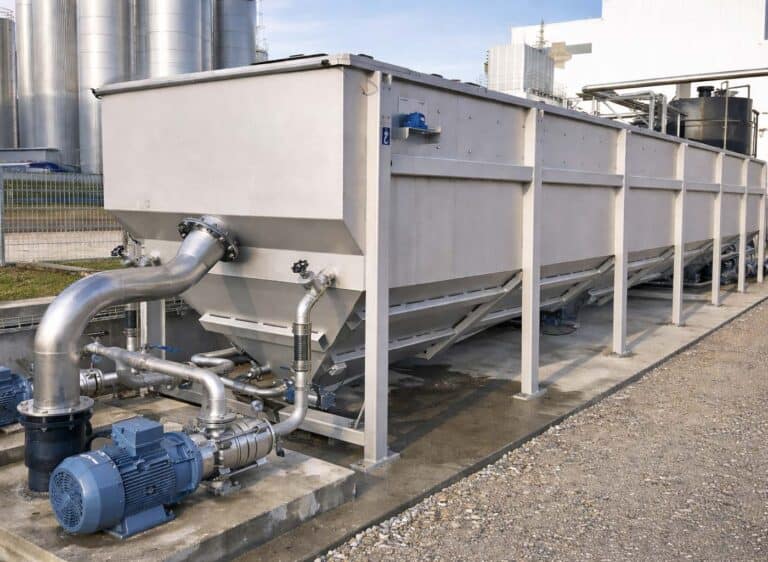
Italy Flotation Plant: 20% Less Chemical, Clearer Water
A HydroFLOW P60 unit cut polyelectrolyte use 20% and reduced turbidity at Global Carni's flotation plant in Italy.

Texas DAF: 50% Less Chemical, 6x Cleaning Interval
A Houston packaging facility cut polymer and chlorine by roughly 50% and extended its DAF cleaning cycle from 1 to 6 weeks.
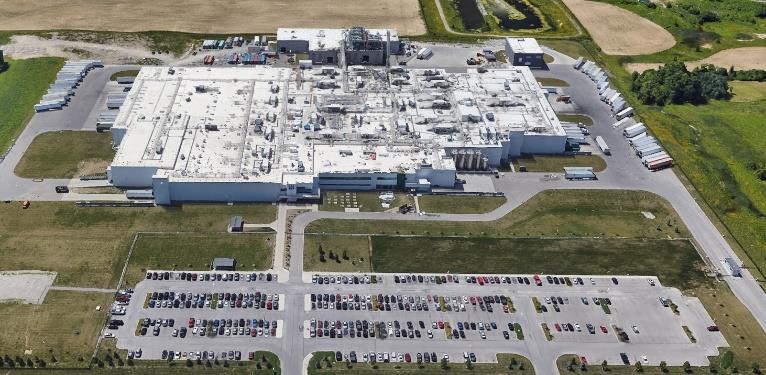
Maple Leaf Canada: 50% Ferric Cut, $47.5k Saved
Two HydroFLOW Custom units cut ferric chloride dosing up to 50% while holding discharge compliance at a Hamilton food WWTP.
Support & FAQ
Frequently Asked Questions
What is dissolved air flotation (DAF)?
Dissolved air flotation (DAF) is a wastewater treatment process that removes suspended solids, fats, oils and grease. Coagulants and flocculants first gather fine particles into flocs. Water saturated with air under pressure is then released into the tank, where microbubbles attach to the flocs and float them to the surface for skimming.
How does a DAF system work?
In four steps. Coagulant (ferric, alum or PAC) neutralises the charge on fine particles, and polymer bridges them into flocs. Part of the clarified water is pressurised with air in a saturator. When that recycle stream is released into the flotation tank, the drop in pressure forms millions of microbubbles that attach to the flocs and lift them. A scraper skims the float off the surface, and the clarified water leaves from below.
What are the downsides of dissolved air flotation?
The main ones are chemical cost and handling, the volume of float sludge to dewater and dispose of, the energy to run the saturator, and sensitivity to changing loads, which is why doses are often set high. Chemical cost is the one HydroFLOW® addresses. On the sites on this page, coagulant or polymer came down by 20% to 50% with effluent quality held.
Why does a DAF need so much coagulant and polymer?
Fine particles carry like charges and repel each other, so they will not form flocs on their own. Coagulant neutralises that charge and polymer bridges the particles into flocs big enough to float. Because the influent changes through the day and the week, the dose is usually set to cover the worst load, so for much of the time the plant is dosing more than it needs.
How can you reduce chemical costs in a DAF?
Start with the usual levers: regular jar tests, accurate pH control and automated dose control, which instrument makers put at 20% to 30% savings. Physical conditioning ahead of the dosing point is another lever that works alongside them. Maple Leaf Foods halved its ferric chloride from 200 to 100 ppm, a Texas packaging plant roughly halved polymer and chlorine, and an Italian meat processor cut polyelectrolyte by 20%.
What is the difference between a coagulant and a flocculant?
A coagulant, such as ferric chloride, alum or PAC, neutralises the electrical charge that keeps fine particles apart. A flocculant, usually a polymer, then bridges those destabilised particles into larger, stronger flocs. Most DAFs use both. For more on the flocculation side, see flocculation and filtration.
What is DAF sludge, and does less chemical change it?
DAF sludge, or float, is the layer of solids, fats and oils skimmed from the top of the tank. Metal-salt coagulants add their own solids to it. The Texas plant reported better TSS separation and a drier cake while it dosed less, though it did not measure sludge volume. For what happens to the float next, see polymer reduction in dewatering.
Where is HydroFLOW® installed on a DAF?
On the pipe feeding the DAF, or on its recirculation line, ahead of the chemical dosing point. Maple Leaf fitted units to its 12 and 14 inch DAF feed lines, the Italian plant to the input line before polyelectrolyte dosing, and the Texas plant to the 6 inch recirculation pipe entering the tank. HydroFLOW® is not a DAF unit and does not replace one.
Does HydroFLOW® replace coagulants or polymers?
No. Every site on this page still doses. What changed is how much: reductions of 20% to 50%, taken one step at a time and checked against effluent results after each step. Cut too far or too fast and carryover and turbidity rise before anyone notices, so your own tests decide how far the dose comes down.
Do electronic water conditioners really improve flocculation?
Scepticism is fair. The mechanism is still debated, results vary with the wastewater, and the market includes cheap devices that do little. That is exactly why we recommend reducing dose in stages against your own turbidity and discharge results, rather than taking any figure on trust. The site records are specific: ferric halved at Maple Leaf Foods with discharge within municipal limits throughout, turbidity from 76 to 43 NTU on 20% less polyelectrolyte in Italy, and polymer and chlorine roughly halved at a Texas packaging plant, with DAF cleans stretched from weekly to every six weeks.
Can it be fitted without stopping the DAF?
Yes. The unit installs around the outside of the existing pipe, with no cutting, no drain-down and no interruption to the process. Nothing is added to the water. That makes a trial simple: fit one unit, then lower the dose in steps against your own results.
Ready to Run Your DAF on Less Chemical?
Tell us about your dissolved air flotation system, what you dose and what your limits are, and our team will recommend the right units and a staged plan for lowering the dose, including where our assessment is that we cannot help.
Ready to explore sustainable water treatment?
Get in touch to find out how HydroFLOW® can work for you.

© 2026 Hydropath Technology Ltd. All rights reserved