
Sludge Dewatering Polymer Reduction
Less Polymer Steadier Floc Drier Cake
HydroFLOW® uses electronic water-conditioning technology to influence sludge treatment processes on the feed line to a press or centrifuge. Working alongside the existing chemical dosing process, a single installation can help reduce struvite build-up and optimise polymer consumption while maintaining effective flocculation and cake dryness. Together, these benefits can deliver significant savings in chemical costs, maintenance and downtime, improving the overall return on investment.
Results from documented trials; they vary with sludge type, machine and baseline dosing. View all polymer reduction case studies →
Too Much Polymer Costs You Twice: Polymer and Haulage
Every belt press, screw press and centrifuge depends on polymer (polyelectrolyte) to bind fine solids into a floc that will give up its water. Cut the dose and the floc breaks, the cake turns wet and the centrate dirties, so most works dose high to stay safe: at Yorkshire Water's Esholt works, any cut risked floc loss while cake had to stay near 21% for the thermal hydrolysis plant. Wet cake then costs twice, in haulage and disposal by the tonne, as Mainvilliers' damp, putty-like cake showed. And every litre dosed is a chemical the works must account for at the outfall.
Typical signs a dewatering line is paying too much for its floc:
- Polymer is the largest chemical line on the works budget, and it keeps creeping up
- Operators run the poly dose high because the floc breaks when they turn it down
- Wet, sloppy cake that pushes up haulage and disposal costs per tonne
- Dirty centrate or filtrate returning solids to the head of the works
- Belt press tracking and stability problems whenever the sludge changes
- Struvite blocking centrifuge ports, belt press drums and centrate lines
What Does Polymer Cost a Dewatering Plant?
Sludge dewatering turns liquid sludge into a cake that is cheaper to move and dispose of. Belt presses, screw presses and centrifuges do the mechanical work, but almost every plant first conditions the sludge with a cationic polymer that neutralises the particles' charge and bridges them into flocs. The polymer bill, the cake's dryness and the quality of the water sent back to the works are tied together, which is why the dose is usually set high and left there.
1 to 10 kg of polymer per tonne of dry solids
US EPA data for belt filter presses puts typical polymer doses at 1 to 10 g per kg of dry solids, for cake between 12% and 30% dry depending on the sludge. On a works dewatering tens of tonnes a day, every gram per kilo is a recurring line on the chemical budget.
Toxic to fish from 300 µg/l
The Environment Agency notes that cationic polyelectrolytes are highly toxic to fish, with acute toxicity from 300 micrograms per litre, and requires works that dose them to meet the environmental quality standard in the receiving water. Less polymer in means less to account for at the outfall.
Often quoted as up to half of operating cost
Sludge treatment is often quoted as accounting for up to half of a works' operating spend, and one engineering textbook puts dewatering and disposal as high as 65% for a medium activated-sludge plant. The figures are old and vary widely by site, but the direction is consistent: what leaves on the lorry is where the money goes.
Sources: US EPA, Biosolids Technology Fact Sheet: Belt Filter Press (EPA 832-F-00-057) · Environment Agency, Water companies: control of chemicals used for dosing at waste water treatment works · Cambi, An introduction to sewage sludge and sludge treatment · Water Technology (2nd ed.), Sludge treatment and disposal. Figures are agency and industry estimates; individual works vary.
The True Cost of Dewatering Polymer
Polymer is paid for on every tonne of dry solids, then again in haulage, centrate and cleaning. Each problem below is matched to a site where the numbers changed.
Polymer Dosed High to Protect the Floc
Operators run the dose above what the sludge needs, because a broken floc costs more than the extra polymer.
Belt Presses That Go Unstable at Lower Doses
Turn the poly down on a belt press and the floc breaks, the belt tracks badly and the press has to be nursed.
Cake Specifications You Cannot Miss
When cake feeds a digester, dryer or thermal hydrolysis plant, a wetter cake is a process problem as well as a haulage bill.
Struvite in Ports, Drums and Centrate Lines
On digested sludge, struvite blocks centrifuge ports and belt press drums, and every blockage stops the line.
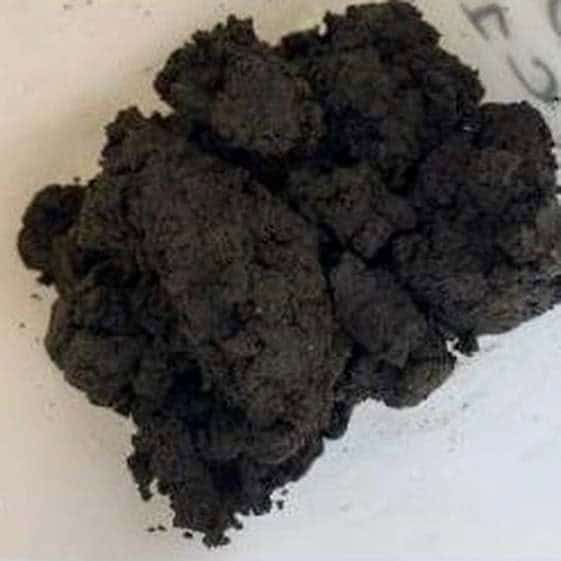
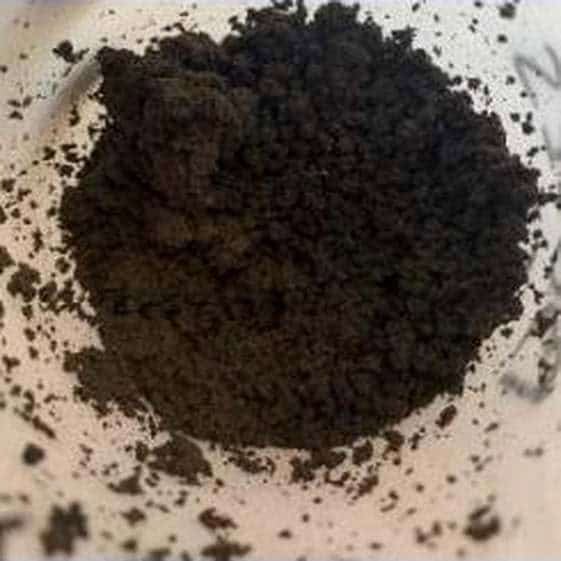
Mainvilliers WWTP, France: cake from two centrifuges run at equal settings. The treated one produced drier, granular cake and half the centrate suspended solids (40 against 80 mg/L), and optimising the dose then cut polymer use by 19.7%. Read the case study →
Where the Savings Add Up
Polymer is the biggest chemical line, but it is not the only cost a better floc touches. Six of those costs, each with a measured site behind it.
Lower Polymer Spend
The largest chemical line on most dewatering budgets. Mainvilliers cut centrifuge polymer by 19.7%, Esholt by 11% on matched runs, and Water Conserv II's belt press by about 20% a day on average.
Drier Cake, Fewer Lorries
Cake dryness sets haulage and disposal by the tonne. Mainvilliers' cake rose from 18.31% to 20.68% dry at equal settings, and Banbury held 18% cake solids while saving 200 l/hr of polymer.
Cleaner Centrate
What the machine sends back is load on the works. At Mainvilliers, centrate suspended solids halved, 80 to 40 mg/L, and COD fell from 255 to 173 mg/L; Esholt's centrate stayed within process limits at the lower dose.
Less Cleaning and Downtime
On digested sludge, struvite stops the line. Guelph cut belt press downtime from three days to six hours, and a Utah screw press went from up to 30 hours of pressure washing to under four, with its anti-scalant dosing stopped.
Less Wear on the Machine
Struvite and an unsettled floc both cost machine life. Woodward Avenue stopped slot-ring damage, where one barrel rebuild costs over $70,000, and Esholt's treated centrifuge ran at a higher differential speed, suggesting lower stress.
Fast Payback
One fitting, no consumables. Mainvilliers projected a ten-month payback and the operator bought three units; Woodward Avenue estimated payback under a year per unit, and HERA bought its trial units.
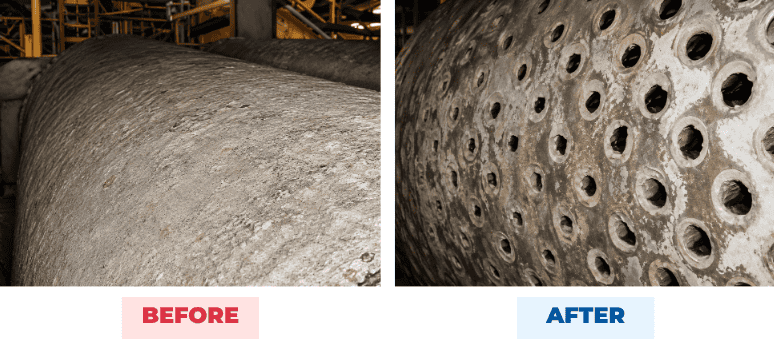
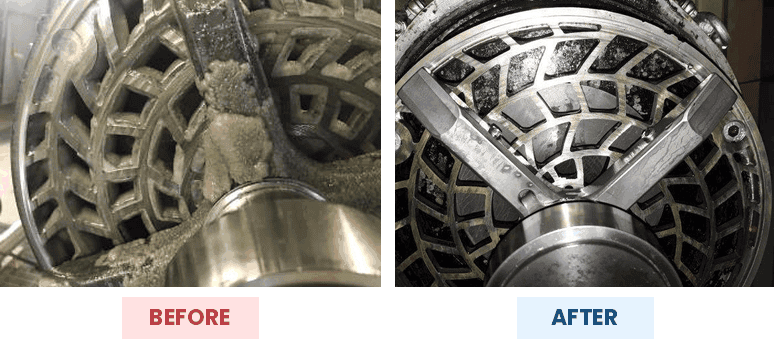
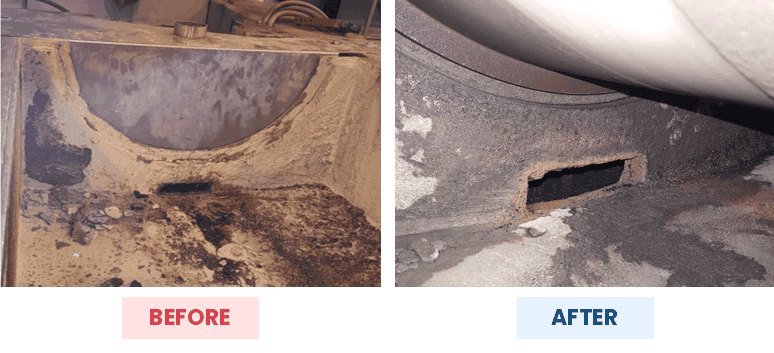
Water Conserv II, Orlando: a custom HydroFLOW® unit on the belt press influent, downstream of polymer injection, ran 150 days without a scale clean. Pan scale fell from 5 mm to 1 mm and average daily polymer use dropped by about 20%.
Belt press drum before and after, Water Conserv IIDon’t take our word for it. Test it on your own dewatering line.
One unit on one press or centrifuge, the dose stepped down under your operators' control, and the result read from your own polymer, cake, centrate and cleaning logs. Switch the unit off and watch the floc: that is the check Banbury and Esholt used.
Get a Free Dewatering Assessment
Dewatering Polymer Control — Physical, Not Chemical!
A physical conditioner on the sludge feed that works alongside your polymer programme, powered by a patented electronic signal
HydroFLOW® induces a patented ~150 kHz signal into the sludge through the pipe wall. Fitted on the sludge feed ahead of polymer injection, the signal improves flocculation: the particles come together more readily, so the floc forms and holds with less polymer. The same signal changes how struvite and other minerals crystallise in the line, so deposits in ports, drums and centrate pipework soften and build up far less.
Nothing is added to the sludge, nothing is cut into the pipe and there is no consumable. The unit installs around the existing feed pipe, steel or plastic, and the signal propagates along the pipework in both directions from that point. It works continuously, through changes in sludge type and feed solids, and alongside your existing polymer, make-down and dosing control.
The usual worry is the process. Nothing changes on day one: the saving is found by stepping the dose down while your operators watch floc, cake and centrate, and stopping where the line is comfortable. At Esholt, cake held near 21% for the thermal hydrolysis plant with no change to the centrifuge settings. And the effect is easy to test: at Banbury and Esholt, the floc broke down rapidly when the unit was switched off.
Learn More About Our TechnologyOne Technology — Stronger Floc, Fewer Cleans
Across belt presses, screw presses and centrifuges, one fitting changes how much polymer your floc needs.
A Floc That Holds at a Lower Dose
The signal improves flocculation on the sludge feed, so the polymer that is dosed works harder and less of it is needed. The proof is cause and effect: at Thames Water's Banbury belt press, the floc broke down rapidly when the unit was switched off.
Stepped Down, Under Your Control
Nothing changes on day one. The dose comes down in steps while operators watch floc, cake and centrate, and stops where the line is comfortable. Where the line carries struvite, expect softened deposits to come away from ports, drums and strainers in the first weeks: check them after install.
Measured Against an Untreated Machine
At Mainvilliers, AQUALTER ran a treated centrifuge against an untreated one at equal settings: drier cake (20.68% against 18.31%), half the centrate solids, and 19.7% less polymer once the dose was optimised. Chartres Métropole bought three units.
A Different Approach to Dewatering Polymer
HydroFLOW® against dosing control, jar testing, machine upgrades and pre-treatment. It works alongside them, not instead of them.
| HydroFLOW®Physical conditioning on the sludge feed | Dosing controlInline sensors, automatic dosing | Jar testingPolymer selection and set-up | Machine upgradeSettings or new equipment | Pre-treatmente.g. thermal hydrolysis | |
|---|---|---|---|---|---|
| How it works | Electronic signal on the sludge feed improves flocculation, so the floc forms and holds with less polymer | Sensors on feed solids or centrate adjust the dose automatically | Lab tests pick the polymer product and starting dose for the sludge | Bowl speed, differential, belt tension or a new machine raise cake dryness | Thermal or other pre-treatment changes the sludge before it reaches the machine |
| What it changes in the polymer bill | Lowers the dose 11% to about 20% on the sites on this page, stacked on top of whatever optimisation is already in place | Trims excess polymer Removes the safety margin operators add by hand | Sets the baseline Right product and dose for today's sludge; repeated as the sludge changes | Indirect Can raise or lower polymer demand depending on the change | Varies Changes dewaterability; polymer demand can move either way |
| Effect on cake and centrate | Held or better Mainvilliers: drier cake and half the centrate solids at equal settings; Esholt and Banbury held their cake | Steadier Tracks changes in feed | Optimised For the conditions on the test day | Drier cake The main aim of the change | Drier cake At significant capital and energy cost |
| Works with existing polymer and machine | Yes Same polymer, same make-down, same machine | Yes Added instrumentation and control logic | Yes | Partly Settings yes; an upgrade replaces kit | New plant A process stage of its own |
| Struvite on the same line | Treated too Deposits in ports, drums and centrate lines soften and new build-up falls (Woodward Avenue, Guelph, HERA) | No effect | No effect | No effect | Varies Digestion releases phosphate and ammonia; struvite risk depends on the process |
| Capital and consumables | One unit No consumables, no servicing schedule | Sensors, calibration and maintenance | Lab time and repeat testing | Contractor time, or a new machine | Major capital project |
| Downtime to fit | None Installs around the existing feed pipe while the line runs | Short shutdown to fit instruments | None | Shutdown for adjustment or replacement | Construction project |
| How you prove it | Switch-off test Step the dose down, switch the unit off and watch the floc (Banbury, Esholt) | Dose logs before and after | Repeat jar tests | Cake dryness before and after | Plant performance before and after |
Swipe sideways to compare all five methods →
Comparison reflects typical approaches in each category; individual works vary, and the methods can be combined. HydroFLOW® does not replace polymer: your polymer, make-down, dosing control and jar testing stay, and so do your permit's discharge duties. It is not a thickener, a filter or a press.
Applications
Where sludge dewatering is treated
Sludge dewatering sits beside struvite, flotation and flocculation on the same works. Each card links to its dedicated page.
Centrifuges
Treats scale and struvite in decanter centrifuges, ports and centrate pipework, and supports flocculation on the feed.
Struvite Control
Softens struvite and reduces new build-up in centrate lines, belt press drums, screw presses and sludge pumps, without acid cleaning.
Flocculation & Filtration
The same flocculation effect on clarifiers, settling tanks and filters, where better floc means clearer water and longer filter runs.
Dissolved Air Flotation (DAF)
Lower coagulant and flocculant dosing on DAF units in food, dairy and industrial effluent plants.
Wastewater Treatment Works
The whole works view: struvite, polymer, biofouling and scale from the inlet to the cake pad.
Food & Beverage Effluent
Effluent plants in food and drink production, where dewatering, flotation and CIP water all carry cost.
Also relevant: manufacturing & mining process water, the i range industrial units used on every site on this page, and how the technology works.
Process Overview
Simple Installation. No Press Out of Service.
Our patented technology installs around your existing sludge feed pipework while the press or centrifuge keeps running.
The Fit
The HydroFLOW® unit installs around your existing pipework on the sludge feed, ahead of polymer injection, with no cutting and no press out of service. Mainvilliers tested two positions and kept the better one.
The Signal
A patented electronic signal improves flocculation from the moment it is on. You can see it: at Banbury, switching the unit off made the floc break down rapidly, and switching it back on restored it.
The Results
The floc responds in days. The dose comes down in steps over weeks, as in Esholt's two-month trial. Struvite and cleaning records build over months: 65 days at HERA, 150 at Water Conserv II.
Proven On Site
Real Works. Real Results.
Drawn from Hydropath installations and our customers’ own records across wastewater works in the UK, France, Italy and North America.

Mainvilliers WWTP: 19.7% Less Polymer, Drier Cake
At the Mainvilliers wastewater plant, one HydroFLOW® i190 cut centrifuge polymer use by 19.7%, with drier cake and half the centrate solids in matched tests.
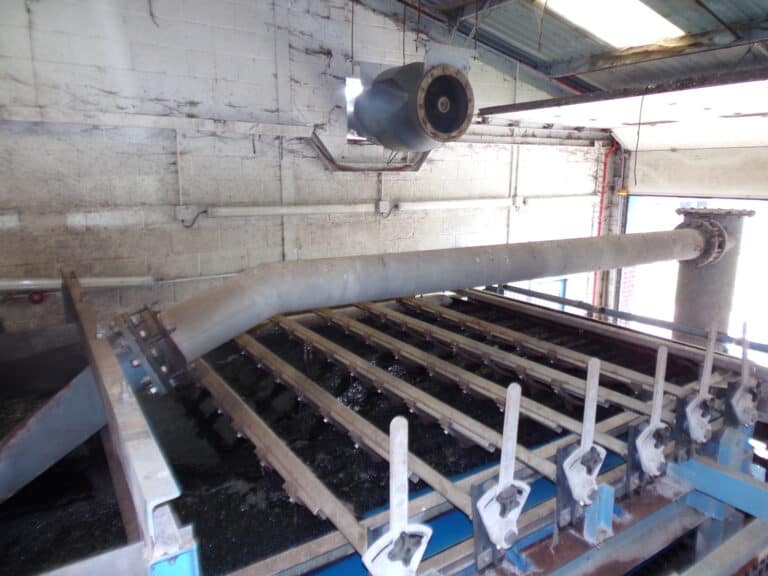
Banbury UK WWTP: 200 l/hr Polymer Saved on Belt Press
A HydroFLOW i120 trial at Thames Water Banbury improved belt press floc stability, cutting polymer dosing while maintaining operation.
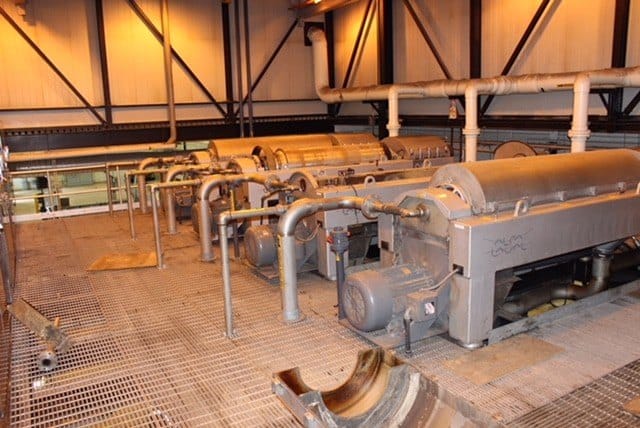
Woodward Avenue WWTP: Centrifuge Ports Kept Clear of Struvite
A HydroFLOW® i160 kept centrifuge ports and centrate pipework clear of struvite at Hamilton’s Woodward Avenue WWTP, with payback under a year.
Support & FAQ
Frequently Asked Questions
What is sludge dewatering?
Sludge dewatering removes water from wastewater sludge so it becomes a cake that is cheaper to transport and dispose of. Belt presses, screw presses and centrifuges do the work, but most plants first dose a polymer (polyelectrolyte) to bind fine solids into flocs that release their water. Cake typically leaves the machine at somewhere between 12% and 44% dry solids, depending on the sludge and the machine.
Why is polymer used in sludge dewatering?
Sludge particles are small and carry a negative charge, so they repel each other and hold on to their water. A cationic polymer, often called polyelectrolyte or simply poly, neutralises that charge and bridges the particles into larger flocs. Water drains from a good floc on a belt press and separates from it in a centrifuge; without one, the cake stays wet and the centrate carries solids back to the works.
How much polymer does sludge dewatering use?
It depends on the sludge and the machine, and it is usually set by jar tests and machine trials. US EPA data for belt presses gives typical doses of 1 to 10 g of polymer per kg of dry solids, in other words 1 to 10 kg per tonne of dry solids (EPA fact sheet). Digested sludges and waste activated sludge sit towards the top of that range. Plants often run above the jar-test figure, because the cost of a broken floc is higher than the cost of the extra polymer.
How can I reduce polymer consumption in sludge dewatering?
Start with the basics: jar test regularly, check make-down and ageing, use dosing control that follows feed solids, and set the machine properly. Those steps take out waste. HydroFLOW® is a further lever on top of them: fitted on the sludge feed ahead of polymer injection, it improves flocculation, so the floc forms and holds at a lower dose. Sites have then stepped the dose down by 11% to about 20%: 19.7% on a centrifuge at Mainvilliers, 11% at Esholt, about 20% on a belt press at Water Conserv II, and 200 l/hr at Banbury.
What happens if you dose too much polymer?
You pay for polymer that does no work, and it can do harm. Sludge given too much polymer can turn slimy, blind belts and screens, and carry polymer into the filtrate or centrate. Cationic polyelectrolytes are also highly toxic to fish, and the Environment Agency requires works that dose them to meet the environmental quality standard in the receiving water (Environment Agency guidance). Most of that extra polymer is a safety margin against a breaking floc, which is exactly the margin a more stable floc lets you take back.
Does reducing polymer make the cake wetter?
Normally, yes: that is why plants add extra polymer. With the signal on the feed, sites have cut polymer without losing cake. At Mainvilliers, the treated centrifuge produced drier cake than the untreated one at equal settings, 20.68% against 18.31% dry solids, and centrate solids halved. Esholt held its cake near 21% for the thermal hydrolysis plant with 11% less polymer, and Banbury held 18% cake solids. These are site results; your cake is the measure, and the dose stops coming down when the cake says so.
Does it work on belt presses, screw presses and centrifuges?
Centrifuges and belt presses, yes, with measured polymer results: centrifuges at Mainvilliers and Esholt, belt presses at Banbury and Water Conserv II. On screw presses our evidence so far is struvite, not polymer: a Utah screw press went from up to 30 hours of pressure washing to under four. We would size and position a unit for a screw press the same way, and measure polymer on your line rather than promise a figure we have not recorded.
Can it also help with struvite in the dewatering line?
Yes, and it is a separate effect from the same unit. On digested sludge, struvite blocks centrifuge ports, belt press drums and centrate pipework. At Woodward Avenue the ports and centrate pipes stopped blocking, at Guelph belt press downtime fell from three days to six hours, and at HERA Bologna a sludge shredder ran at least 65 days where struvite had stopped it every 20 to 30. Expect softened deposits to come away from ports, drums and strainers in the first weeks, and check them after install. See struvite control.
Do electronic water conditioners really reduce polymer?
Be sceptical; we would be. Results vary with the sludge, no site on this page stopped dosing polymer, and a claim like this should be tested on your own line. What we can show is measured, site by site: Mainvilliers compared a treated centrifuge with an untreated one at equal settings, Esholt compared matched runs, and at Banbury and Esholt the floc broke down rapidly when the unit was switched off. A saving that disappears when the unit is off and returns when it is on is the check a process engineer should ask for, and it is the one we offer.
Does HydroFLOW replace polymer or the dosing system?
No. Polymer, make-down, dosing control and jar testing all stay. HydroFLOW® lowers the dose the floc needs; it does not condition the sludge on its own. The saving is found by stepping the set-point down under your operators’ control and stopping where floc, cake and centrate say to stop. It is also not a thickener, a filter or a press, and your permit’s discharge duties are unchanged.
Can it be fitted without stopping the press or centrifuge?
Yes. The unit installs around the outside of the existing sludge feed pipe, steel or plastic, ahead of polymer injection: no cutting, no shutdown and nothing added to the sludge. Position matters, so we may test more than one point; Mainvilliers tried two on its 140 mm PVC line and kept the upstream one. That also makes a trial simple: one unit on one machine, measured against your own dose, cake and centrate logs.
Ready to Get Ahead of Your Polymer Bill?
Tell us about your dewatering line: the machine, the sludge and what the polymer costs you. Our team will recommend the right unit and fitting point and set out what to expect, including where our assessment is that we cannot help.
Ready to explore sustainable water treatment?
Get in touch to find out how HydroFLOW® can work for you.

© 2026 Hydropath Technology Ltd. All rights reserved