
Flocculation and Filtration in Water Treatment
Clearer Filtered Water Less Coagulant & Polymer Less Backwash Water
HydroFLOW® helps fine particles cluster before they reach your clarifier, flotation cell or filter, with nothing added to the water, no cut into the pipe and the plant running throughout. Sites have stepped coagulant and polymer down, backwashed less often and held turbidity and discharge within their limits.
Results from documented case studies; they vary with the water, the solids load, the separation stage and how dosing is controlled. View all flocculation & filtration case studies →
Fine Particles Cost a Plant Twice: in Chemicals and in Backwash
Particles too fine to settle carry a charge that keeps them apart, so plants dose coagulant and polymer to make them clump, then pay again to wash out what the filter catches. At a drinking water plant in the Hula Valley, fine particles were hard to catch by sand filtration alone, inlet turbidity swung with the seasons, and alum in the backwash water was an environmental concern. At a public indoor pool in Colmar, the filters were washed 78 times a year, each wash sending 52.5 m³ of heated, chlorinated water to drain. Dosing harder holds turbidity but adds sludge and cost; washing more often holds pressure but throws water away.
Typical signs that flocculation and filtration are costing more than they should:
- Coagulant or polymer set-points creeping up to hold the same turbidity
- Filters reaching their pressure limit sooner, so backwashes come closer together
- Cloudy water slipping through the filter when the raw water changes
- Floc that shears or breaks up as soon as dosing is turned down
- Wet, putty-like sludge cake and dirty centrate or filtrate
- Heated or treated water going to drain with every wash
What Does Poor Flocculation Cost a Treatment Plant?
Flocculation sits in front of almost every separation stage: rapid sand filters at a drinking water works, dissolved air flotation at a food plant, belt presses and centrifuges at a sewage works, sand filters under a pool. Its costs land on separate budget lines (coagulant and polymer, backwash water and heat, sludge disposal, discharge compliance), which is why they are rarely added up. The duty side is fixed: drinking-water coagulants and polymers must be approved products, acrylamide in drinking water is limited to 0.10 µg/l in the UK and EU, and backwash from commercial pools and spas counts as trade effluent.
About a quarter of a pool’s water goes on backwash
US EPA figures put filter backwashing at 23% of commercial pool water use, behind evaporation at 56%. Every litre of it was heated and treated before it went to drain, and its replacement is heated and treated again.
0.10 µg/l: the acrylamide limit polymer users work to
Polyacrylamides are the polymers most often used in drinking water treatment, and the UK and EU limit the acrylamide they can leave behind, controlled through product specification. Every litre of polymer dosed is bought, stored, specified and accounted for.
Sludge: widely put at up to half of operating cost
Sludge handling is often estimated at up to 50% of a wastewater works' operating cost, and polymer conditioning sits directly in front of it. Wetter cake means more tonnes hauled, and polymer dosed with a safety margin to stop the floc shearing adds to the bill.
Sources: US EPA WaterSense at Work, Commercial Pools and Spas (2023) · Water Supply (Water Quality) Regulations 2016, Schedule 1 · EU Drinking Water Directive 2020/2184 · US EPA Six-Year Review 4: acrylamide (2024) · Spinosa et al., Sustainable and Innovative Solutions for Sewage Sludge Management, Water (2011) · US EPA Filter Backwash Recycling Rule guidance (2002). Figures are agency or published estimates; individual sites vary.
The True Cost of Poor Flocculation
Poor flocculation is paid for on several budget lines at once: coagulant and polymer, backwash water and heat, sludge disposal and discharge compliance. Here are four of the most common, each with the site that measured a way out.
Coagulant Doses That Only Go Up
Ferric, alum and PAC are dosed for compliance, so set-points rise after every bad week and rarely come back down.
Excess Polymer Needed to Maintain the Floc
On belt presses and centrifuges, polymer is dosed with a safety margin to stop the floc shearing, so nobody dares turn it down.
Filters Washed Too Often
Fine particles bed deep into the media, pressure climbs, and every wash sends treated water to drain.
Turbidity Peaks You Can't Dose Out
When the incoming load changes, discharge turbidity spikes before dosing can catch up.
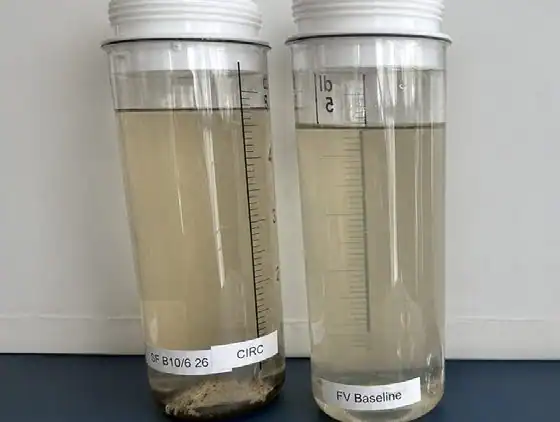
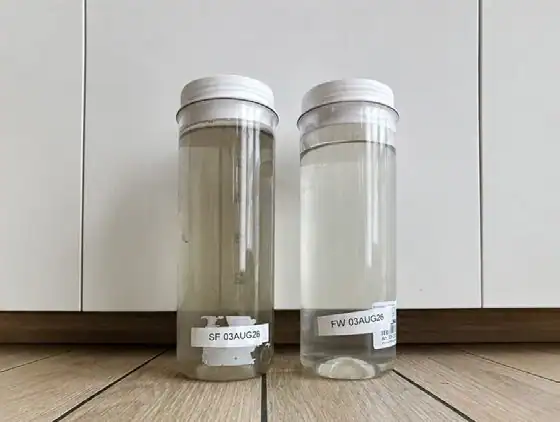
Car wash, Denmark: dirty pit water (left) and reuse water (right) at week 0 and week 8, with two HydroFLOW® i45 units on the wash-water hoses and no chemicals added. In a 0.45 µm field filter test, the volume passing before the filter blocked rose from 20 ml to 70 ml. Read the case study →
Where the Savings Add Up
Better flocculation pays back across six running costs, each with a measured site behind it.
Less Coagulant & Ferric
Coagulant is dosed for compliance, so any cut has to hold turbidity and discharge. Maple Leaf Foods halved ferric on its DAF, worth $47,500 a year, and a drinking water plant in the Hula Valley used no alum through winter, with brief 2 ppm doses at the spring peaks.
Less Polymer in Dewatering
Polymer is usually a dewatering plant's largest chemical line. A Yorkshire works cut centrifuge polymer 11% with cake held near 21%, Mainvilliers cut it 19.7% with drier cake, and Orlando's belt press used about 20% less a day.
Water & Heat Saved
Every litre that stays in circulation is a litre not reheated or retreated. Colmar's indoor pool saved 2,535 m³ of backwash water a year and cut heat loss by 41,275 kWh, and a Swiss spa reported fresh water falling from 100 to 60 litres per guest, 8,400 m³ a year.
Less Backwashing & Cleaning
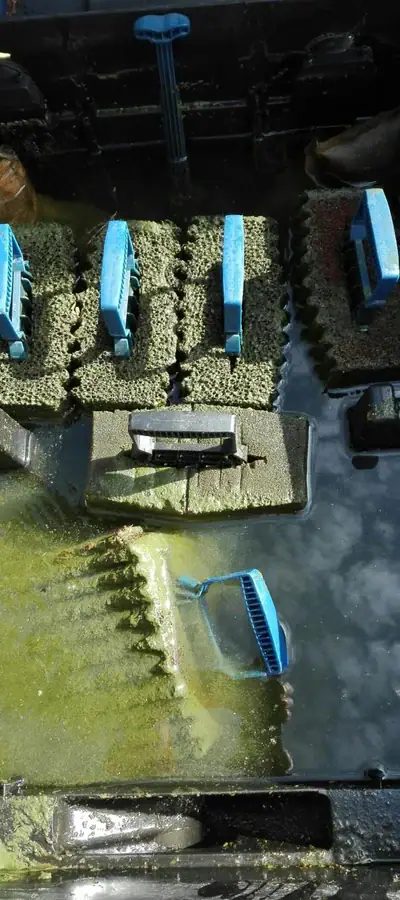
Cleaner separation means less time and water spent keeping equipment clean. Two pools in India went from a backwash every two days to one a week, a Texas plant's DAF went from a weekly clean to one every six weeks, and a garden pond's eight filters were cleaned in the time one used to take.
Clearer Water, Sooner
Turbidity is what an operator is judged on. An Italian flotation plant's discharge fell from 76 to 43 NTU with the peaks gone, a Danish car wash had clearer reuse water within a week, and a 620 m³ wave pool was clear in 12 days.
Fast Return on Investment
One fitting, no consumables and nothing added to the water. Colmar paid back in 0.7 years, the Italian flotation plant in 18 months, and Mainvilliers projects a 10-month payback; its operator went on to buy three P150 units.
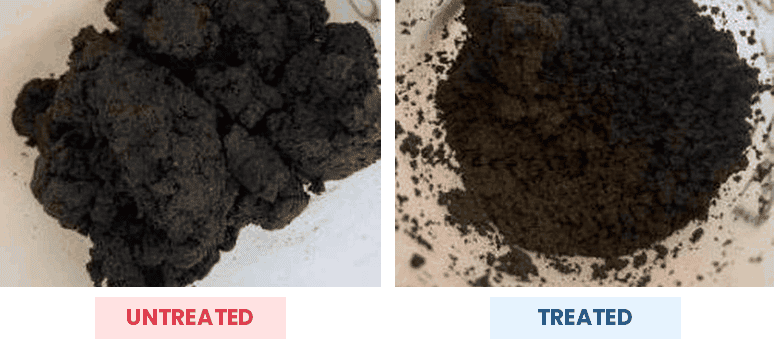

Mainvilliers WWTP, France: cake from the untreated centrifuge (left) and the treated one (right), run at the same settings. One HydroFLOW® i190 on the 140 mm PVC feed line cut polymer by 19.7%; the treated cake was 20.68% dry against 18.31%, and centrate solids halved from 80 to 40 mg/L.
Mainvilliers sludge cake, untreated and treatedDon’t take our word for it. Test it on your own filters.
Fit one unit ahead of one filter, clarifier, DAF or press and measure it against the records you already keep: turbidity, filter pressure, backwash frequency and length, dosing set-points and cake dryness. Dosing comes down in stages against your own limits, and we provide a documented step-by-step testing protocol.
Get a Free Site Water Assessment
Flocculation & Filtration Physical, Not Chemical!
A physical flocculation aid for filters, clarifiers, DAF units and dewatering presses, powered by a patented electronic signal
HydroFLOW® induces a patented ~150 kHz signal into the water through the pipe wall. Fine suspended particles stay apart because they carry like charges. As the water passes the unit, the signal changes the charge they carry, so they cluster into larger, denser flocs. Larger flocs settle and float faster, and in a filter bed they are caught at the surface instead of deep inside the media, so they wash off with less water.
Fitted ahead of the dosing point or the separation stage, it lets the coagulant or polymer work on better-conditioned water, which is how sites have stepped their dose down. The signal travels in both directions from a single point and works through steel and plastic alike: at Mainvilliers the unit sat on a 140 mm PVC line upstream of the polymer pump, and at the Hula Valley plant about 6 m ahead of the first sand filter, where it kept working as the river water changed through a full year.
It is not electrocoagulation: there are no electrodes in the water, nothing dissolves into it and nothing is added. Your coagulants and polymers stay the approved products they are, dosed through the equipment you already have, and your turbidity, discharge and cake limits stay exactly where they are. We can supply the technical documentation your process engineer or regulator asks for.
Learn More About Our TechnologyOne Technology: Clearer Water, Lighter Dosing
From the clarifier to the sand filter to the belt press, one fitting changes what your solids cost to remove.
Particles Cluster Before the Filter
Flocs form ahead of the separation stage, so the clarifier, flotation cell or filter receives particles it can actually catch. At a Danish car wash, the reuse water passing a 0.45 µm filter before it blocked rose from 20 ml to 70 ml: far fewer fine particles left in it.
Expect a Dirtier Filter First
Better flocculation means the filter catches more, so in the first weeks it can look dirtier: watch pressure and cleaning intervals, and expect loosened deposits from old pipework too. Dosing then comes down in steps, led by your own tests. At a garden pond in Germany, filter loading rose before all eight filters were cleaned in the time one used to take.
Proved With the Unit Switched Off
At a UK sewage works, belt-press polymer was stepped down until the press ran stably at 745 litres an hour, a saving of 200 litres an hour. Then the unit was switched off and the floc broke down rapidly. A Yorkshire works recorded the same on a centrifuge.
A Different Approach to Flocculation
How HydroFLOW® compares with the usual ways of getting fine particles out of water.
| HydroFLOW®Physical conditioner, nothing added | Coagulant & polymer dosing alone | Natural flocculantsChitosan, starch, tannins | Electrocoagulation | Filter & backwash optimisation | |
|---|---|---|---|---|---|
| How it works | An electronic signal through the pipe wall helps fine particles cluster ahead of the separation stage | Coagulant neutralises particle charge; polymer bridges the particles into flocs | Plant- or shell-based polymers do the bridging in place of some synthetic polymer | Aluminium or iron electrodes dissolve under current, releasing coagulant into the water | Backwash triggered by turbidity or pressure, air scour, filter-to-waste control |
| Added to the water | Nothing No chemical, no metal, no residue | Dosed Approved products; residual acrylamide controlled by product specification | Dosed Biodegradable product, still bought, stored and dosed | Metal ions Dissolved aluminium or iron from the electrodes | Nothing Changes how and when filters are cleaned |
| Effect on chemical dose | Reduced at sites 11–50% where measured, stepped down against each site's limits | Baseline Set-points tend to rise with the load | Substitutes Replaces part of the synthetic polymer; results vary with the water | Replaces coagulant Purchased coagulant swapped for electrode metal and power | Indirect No direct effect on dosing |
| Backwash & water | Less water at sites 2,535 m³ a year saved at a public pool; every two days to weekly at two others | Depends Good floc helps the filter; dose control decides it | Similar Behaves much like conventional dosing | Separate stage Flocs still need settling, flotation or filtration downstream | Main lever Washes only when the filter needs it |
| Consumables & upkeep | None No chemicals, no electrodes, no servicing schedule | Continuous purchase, storage, dosing pumps and COSHH handling | Continuous purchase and storage, with shelf life to manage | Electrodes replaced as they dissolve; power and electrode cleaning | Instruments and controls to maintain and calibrate |
| Fit to existing plant | No shutdown Installs around the existing pipe, steel or plastic | Already installed at most sites | Jar tests and dosing changes on the same equipment | A reactor stage added into the flow, with its own power supply | Control changes; air scour may need a retrofit |
| Works alongside the others | Yes Runs with your dosing and filter controls in place | Yes The standard route | Yes Often blended with synthetic polymer | Partly Takes over chemical coagulation at that stage | Yes Complements any of the others |
Swipe sideways to compare all five approaches →
Comparison reflects typical products and approaches in each category; individual plants vary. HydroFLOW® is not a coagulant, a flocculant, a filter, a disinfectant or electrocoagulation. Your dosing system, filters, monitoring and discharge consents stay in place, and dosing is reduced only in stages against your own limits.
Applications
Flocculation & filtration, sector by sector
Every sector separates solids from water, each with its own load and limits. Each card links to its dedicated page.
Water & Wastewater Treatment Works
Supports clarification, filtration and sludge treatment at municipal and industrial works, helping cut coagulant and polymer while holding discharge limits.
Dissolved Air Flotation (DAF)
Helps solids flocculate ahead of the flotation cell, so ferric and polymer can be stepped down and the float separates more cleanly.
Sludge Dewatering
Helps the floc stay intact on belt presses and centrifuges at a lower polymer dose, with drier cake and cleaner centrate.
Swimming Pools & Spas
Helps sand and cartridge filters catch the finest particles, for clearer water, shorter or fewer backwashes and less heated water sent to drain.
Food & Drink Effluent
Supports DAF and flotation stages treating fats, proteins and solids from processing, with less chemical and steadier discharge.
Manufacturing & Mining Process Water
Supports filtration and solids separation in process and recycled water, where fine particles load filters and drive flocculant use.
Related problems have pages of their own: centrifuges, struvite in sludge lines, reverse osmosis pretreatment, cooling towers and biofouling. For the units themselves, see industrial products.
Process Overview
Simple Installation. No Plant Shutdown.
Our patented technology installs around your existing pipework while the plant keeps running.
The Fit
The HydroFLOW® unit installs around your existing pipework ahead of the dosing point or the separation stage, with no cutting and no shutdown. At Mainvilliers it went on a 140 mm PVC feed line; at the Hula Valley plant, about 6 m before the first sand filter.
The Signal
The signal works continuously from a single point, through steel and plastic alike. Dosing stays where it is at first, then comes down in steps against your own limits, as Maple Leaf Foods lowered ferric stage by stage over a 90-day trial.
The Results
Dosing can move within hours, as at an Italian flotation plant, and clarity within a week, as at a Danish car wash. Chemical savings are proved over weeks to months, and water savings over a year of backwash logs, as Colmar's were.
Proven On Site
Real Plants. Real Results.
Drawn from Hydropath installations and operators’ own records across drinking water, wastewater, food processing and pools.
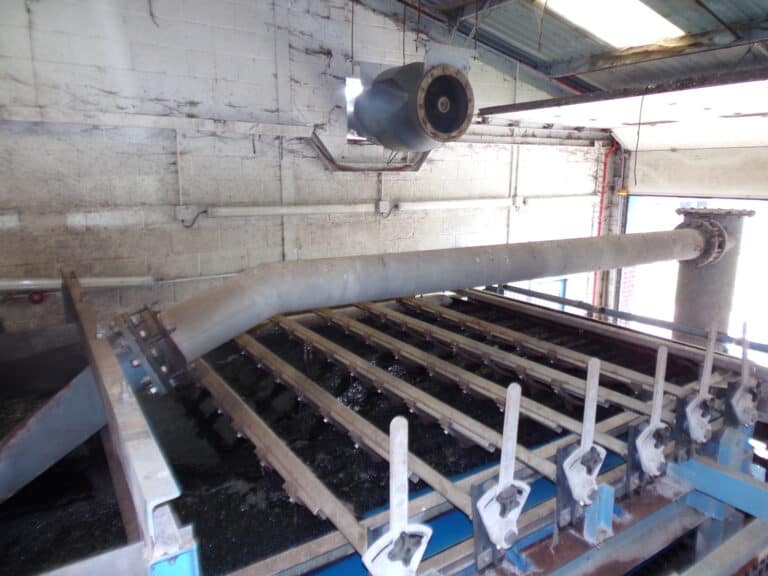
Banbury UK WWTP: 200 l/hr Polymer Saved on Belt Press
A HydroFLOW i120 trial at Thames Water Banbury improved belt press floc stability, cutting polymer dosing while maintaining operation.
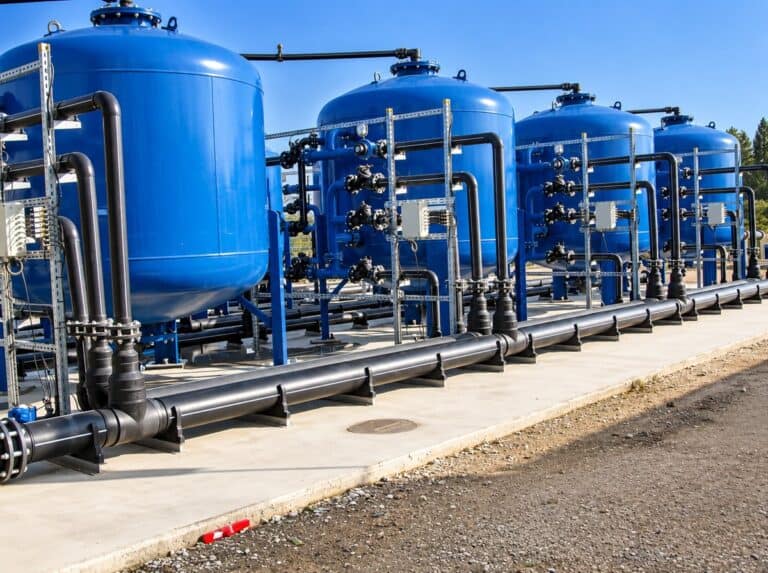
Hula Valley, Middle East: Low Turbidity With Almost No Alum
A HydroFLOW® Custom 8” kept filtered-water turbidity low all year at Hula Valley's drinking water plant, with no alum in winter and very little in summer.
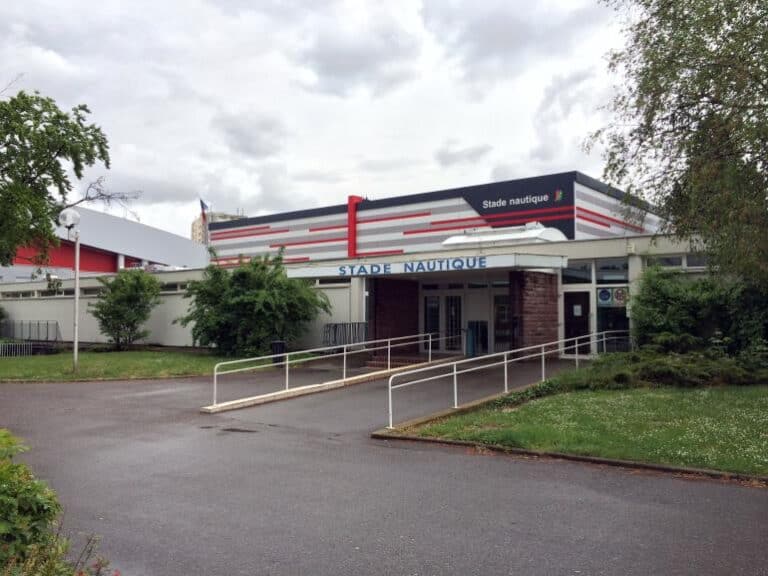
Colmar Pool: 2,535m³ Water Saved, 0.7-Year ROI
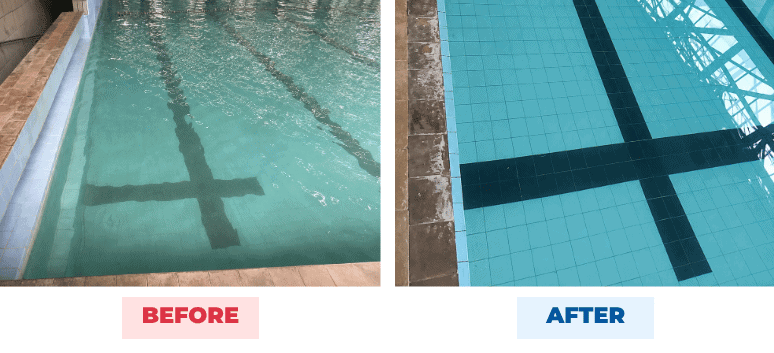
Colmar Nautical Stadium in France cut backwash water by 2,535m³ a year and filter-wash chlorine use by 15% with a HydroFLOW P160 unit.
Support & FAQ
Frequently Asked Questions
What is flocculation in water treatment?
Flocculation is the water-treatment step in which fine suspended particles collide and bind into larger clumps called flocs. It usually follows coagulation, where a chemical neutralises the particles’ charge. Larger flocs settle faster and are caught at the filter surface, so water clears and filters clean more easily. HydroFLOW® supports that step physically, ahead of the clarifier, flotation cell or filter a site already runs.
What is the difference between coagulation and flocculation?
Coagulation comes first: a coagulant such as alum, ferric or PAC is mixed in fast to neutralise the charge that keeps fine particles apart. Flocculation follows: gentle mixing, often with a polymer, lets the destabilised particles grow into flocs big enough to settle, float or be filtered. HydroFLOW® works on the clustering side. Where a process needs coagulant, the coagulant stays, and sites have then been able to use less of it, as Maple Leaf Foods did with ferric on its DAF.
What is the most commonly used flocculant?
Synthetic polyacrylamide (PAM) polymers are the most widely used flocculants, and the US EPA notes they are the polymers most often used in drinking water treatment. Alum, ferric salts and polyaluminium chloride are the common coagulants used with them. Plants look to use less of both for cost, for the sludge they add, and because polymer products carry residual-monomer limits: acrylamide in UK and EU drinking water is limited to 0.10 µg/l through product specification.
Are flocculants harmful to the environment?
Used as approved, at approved doses, coagulants and polymers are an accepted part of water treatment, and regulators control them through product approval and specification. The practical concerns are what ends up in sludge and backwash water, and the residual monomer in polyacrylamide. Using less helps on both counts. At a drinking water plant in the Hula Valley, alum in the backwash water was the site’s stated environmental concern, and no alum was used through winter once HydroFLOW® was fitted.
What are the alternatives to polymer flocculants?
Natural flocculants such as chitosan, starch and tannins can replace part of the synthetic polymer, with results that vary with the water. Electrocoagulation replaces purchased coagulant with metal dissolved from electrodes. Better process control (dosing to measured turbidity, regular jar tests, filter optimisation) often trims the dose too. HydroFLOW® is a physical option that works alongside any of them: it adds nothing to the water, and sites have used it to step polymer down, for example 19.7% less at Mainvilliers with drier cake.
How often should a filter be backwashed?
There is no fixed interval. Filters are backwashed when headloss reaches its limit, when filtered-water turbidity starts to break through, or at a maximum run time, whichever comes first, and pool codes set minimum frequencies of their own. What changes the interval is how the solids load the filter. Where flocs are caught at the surface, runs can lengthen: two pools in India went from a backwash every two days to once a week.
How can I reduce backwash water?
Start with control: trigger washes on turbidity or headloss rather than the clock, use air scour where the filter allows it, and tune filter-to-waste. Then look at what reaches the filter, because fine particles bedding deep into the media are what shorten runs. HydroFLOW® works on that second part. A public indoor pool in Colmar was washing its filters 78 times a year at 52.5 m³ a wash; after fitting, it saved 2,535 m³ of backwash water a year, cut heat loss by 41,275 kWh and paid back in 0.7 years.
Does HydroFLOW® replace coagulant or polymer dosing?
No, and it is not a filter or a disinfectant either. Dosing stays in place and comes down in steps, against your own limits, once the unit is running. Measured reductions include 11% polymer on a Yorkshire centrifuge, 20% polyelectrolyte at an Italian flotation plant, roughly 50% polymer and chlorine on a Texas DAF and half the ferric at Maple Leaf Foods. Two sites stopped a flocculant entirely: the Hula Valley plant through winter, and a private villa pool in Tunisia. Those are site results; your own trial sets the number.
Is HydroFLOW® the same as electrocoagulation?
No. Electrocoagulation passes current through metal electrodes in the water, and the aluminium or iron that dissolves acts as the coagulant, so the electrodes wear away and are replaced. HydroFLOW® has no electrodes in the water and adds nothing to it: it installs around the outside of the pipe and induces a signal through the pipe wall. Nothing dissolves and nothing needs replacing.
Do electronic water conditioners really improve flocculation?
Scepticism is fair. Plenty of devices sold as electronic water conditioners have no measured results behind them, no conditioner replaces a coagulation stage sized for heavy turbidity, and results vary with the water and the plant. What makes the HydroFLOW® results worth weighing is how they were tested. At a UK sewage works, polymer was stepped down until the belt press ran stably 200 litres an hour lower, then the unit was switched off and the floc broke down rapidly. At Mainvilliers, a treated centrifuge ran against an untreated one at the same settings, and the treated cake was drier on 19.7% less polymer.
Will my filters load up faster at first?
Often, yes. Better flocculation means the filter catches more of what used to pass through, so in the first weeks it can look dirtier and its pressure may climb sooner. Released deposits from older pipework can add to that. Watch pressure and cleaning intervals, and hold dosing where it is until the trend settles. The gain is that the dirt sits on the surface and washes off faster: at a garden pond in Germany, filter loading rose before all eight filters were cleaned in the time one used to take.
Can it be fitted without shutting the plant down?
Yes. The unit installs around the existing pipe, steel or plastic, with no cutting, no drain-down and no stop to the process. It goes ahead of the dosing point or the separation stage: at Mainvilliers on a 140 mm PVC line upstream of the polymer pump, and at Colmar upstream of the filters while the pool stayed open.
Ready to Cut Chemical and Backwash Costs?
Tell us about your plant: the separation stage, the water and what you dose today. Our team will recommend the right units and a staged trial against your own limits, and set out what to expect, including where our assessment is that we cannot help.
Ready to explore sustainable water treatment?
Get in touch to find out how HydroFLOW® can work for you.

© 2026 Hydropath Technology Ltd. All rights reserved