Belt press polymer saving through floc stability
A belt press polymer saving was out of reach at Banbury wastewater treatment works, because any cut in dosing risked floc breakdown and an unstable press. High polymer dosing was needed simply to hold the floc stable. One HydroFLOW® i120 was fitted to the sludge feed pipe and tested across stepwise dosing reductions. The floc held at lower dosing and belt press operation stayed stable throughout. When the unit was switched off, the floc broke down rapidly, which is the clearest demonstration a works can get that the effect is real. The saving reached 200 litres of polymer an hour.
The Challenges
- A belt press polymer saving was blocked by floc going unstable at lower dosing
- High polymer dosing was required to hold floc stability
- Any reduction in dosing risked floc breakdown
- Belt press operation became unstable when dosing dropped
The Solution
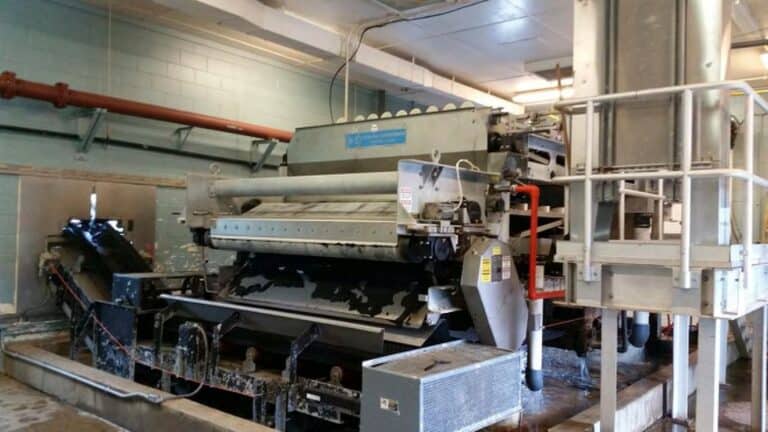
- Unit installed: one HydroFLOW® i120
- Installation point: sludge feed pipe to the belt press
- Trial: stepwise dosing reductions tested in sequence, then a switch-off check
To test whether a belt press polymer saving was real, the unit was fitted to the sludge feed pipe and polymer dosing was reduced in steps, tested in sequence. The signal improves floc stability, so the dewatering process holds at reduced polymer dosing. The unit was then switched off: the floc broke down rapidly, confirming the saving came from the treatment and not a coincidence.