
Microbiologically Influenced Corrosion (MIC) Control
Treats Under the Film Cut the Biofilm & Deposits No Extra Chemicals Added
HydroFLOW® controls biofouling electronically — no biocide, no anodes, no cut into the pipe, fitted while the system runs. Biofilm loses its grip, mussels and barnacles have nothing to settle on, and the chlorine you already dose reaches the bacteria it is aimed at.
Results from documented case studies; they vary with water chemistry, metallurgy, system design and the existing treatment programme. View all corrosion case studies →
Corrosion You Can’t See, Until It Leaks
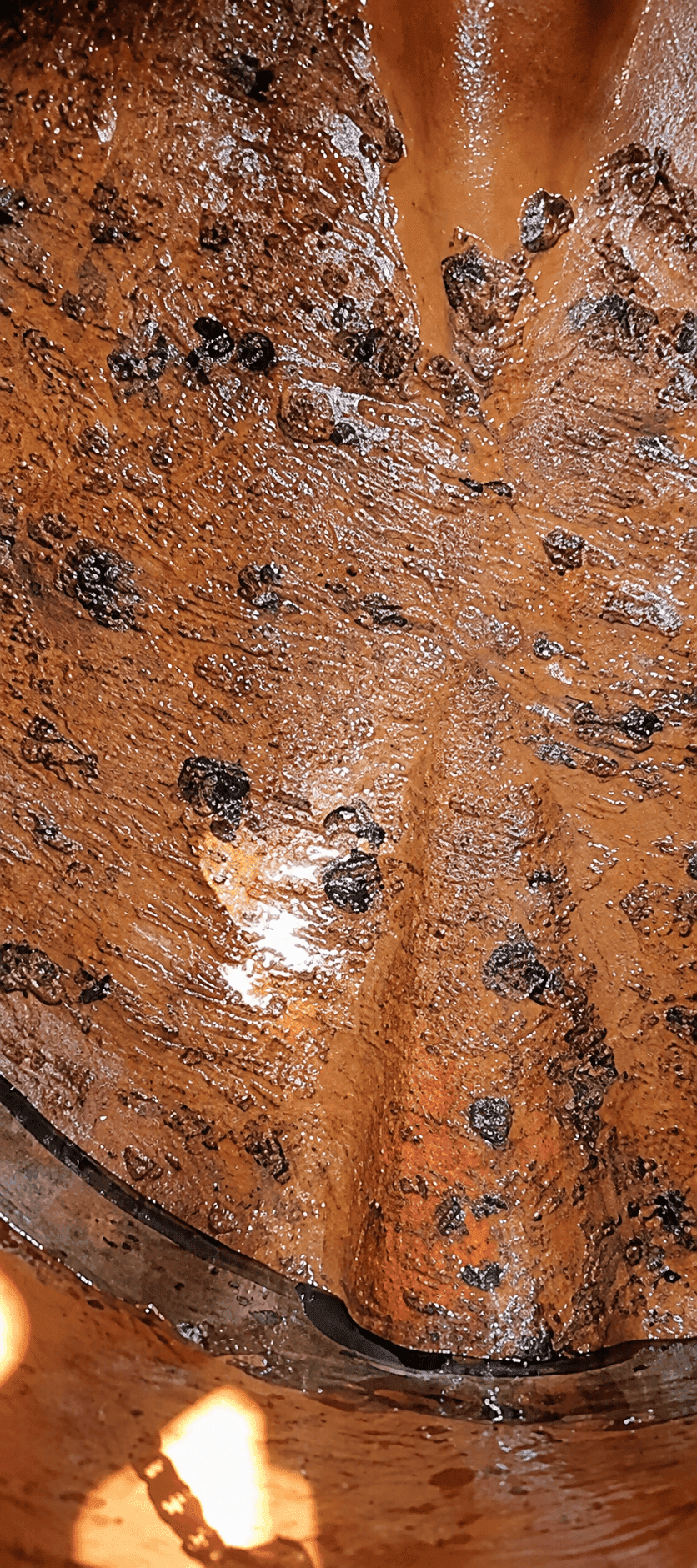
Most corrosion programmes treat the water. MIC happens under the biofilm on the metal, where sulphate-reducing and acid-producing bacteria change the chemistry and drive localised pits through pipe wall far faster than general corrosion. Scale and sediment do the same from the other side: deposits shelter bacteria and create the oxygen differences behind under-deposit attack. At Enaex's seawater intake in Chile, MIC tubercles built up across pipelines and strainers despite heavy chemical dosing for corrosion control. At a Milan hotel, the pipework was too old to risk dosing chlorine at all. The inhibitor protects the water; the damage happens underneath.
Typical signs that biofilm and deposits are driving corrosion:
- Pinhole leaks in pipework that looked sound at the last inspection
- Rust-coloured lumps (tubercles) in strainers, intakes and pipe spools
- Black slime or a rotten-egg smell when a system is opened
- Corrosion coupons passing while local pitting keeps turning up
- Heat exchangers and strainers opened more often to clean and inspect
- Chemical spend rising while inspection results stay the same
What Does Corrosion Cost, and What Can Be Avoided?
Corrosion is the slowest line in a maintenance budget and one of the largest: leaks, replacement pipework, exchanger retubes, unplanned shutdowns and the chemical programme meant to prevent them. In water systems, a good share of it starts where the chemistry does not reach: under biofilm and deposits on the metal. That is why MIC has to be confirmed by testing (ATP, qPCR, culture and coupons, following methods such as AMPP TM0212) rather than assumed from a water analysis.
An estimated US$2.5 trillion a year
The NACE IMPACT study put the global cost of corrosion at about US$2.5 trillion a year, around 3.4% of global GDP. The estimate uses 2013 data; it remains the most recent global study.
15–35% is avoidable with known practice
The same study estimates that existing corrosion control practices could save 15–35% of that cost, US$375–875 billion a year. Most of the saving is in doing known things consistently, not in new chemistry.
Corrosion rates are now in the UK guide
BSRIA BG 50/2021, the UK guide for closed heating and cooling systems, adds corrosion rates to its water-quality guidelines and expands corrosion monitoring. Treatment is judged by what the metal does, not only by what the water shows.
Sources: NACE International, IMPACT study executive summary · BSRIA, Water Treatment for Closed Heating and Cooling Systems (BG 50/2021) · AMPP (NACE) TM0212, detection and evaluation of MIC. Figures are published estimates; individual sites vary.
The True Cost of Corrosion
MIC and under-deposit corrosion start on the metal, not in the water. Each problem below is matched to a site where the conditions changed.
MIC Tubercles in Seawater Intakes
Warm seawater feeds biofilm and marine growth, and tubercles build up in intakes, strainers and exchangers despite chemical dosing.
Inhibitor & Biocide Bills in Cooling Towers
Towers concentrate minerals and bacteria by design, so the chemical programme grows with every cycle of concentration.
Under-Deposit Corrosion in Boilers & Exchangers
Scale and sludge trap water against the metal, and the pits form where nobody can see them.
Biofilm & MIC in Wells and Distribution Pipework
Low flow and long runs let biofilm settle, and MIC, clogging and acid cleaning follow.
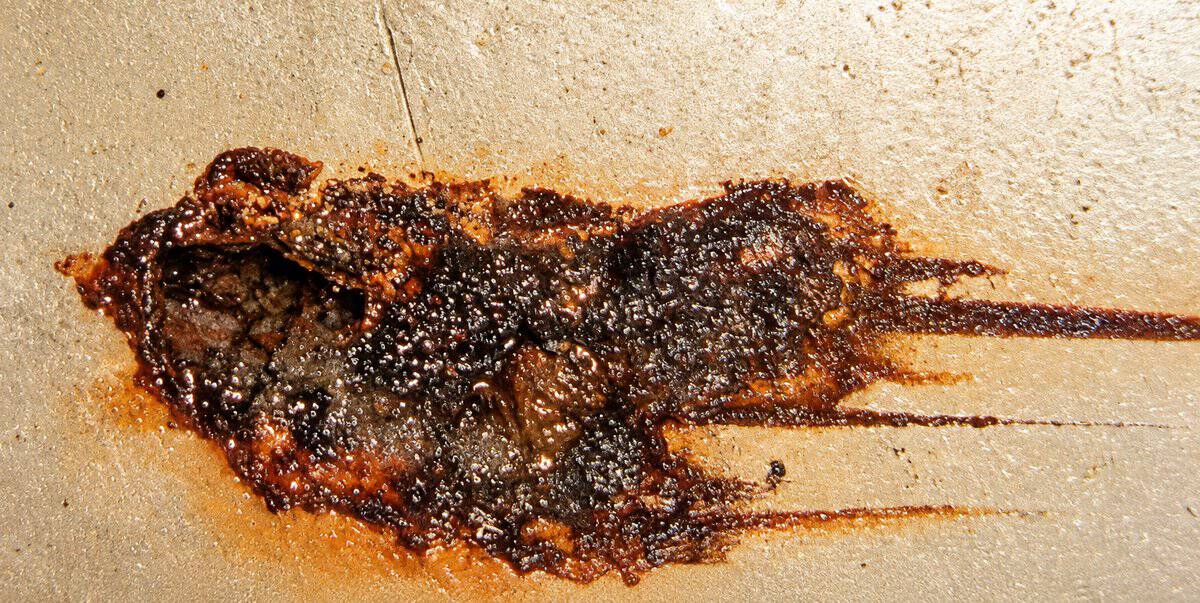
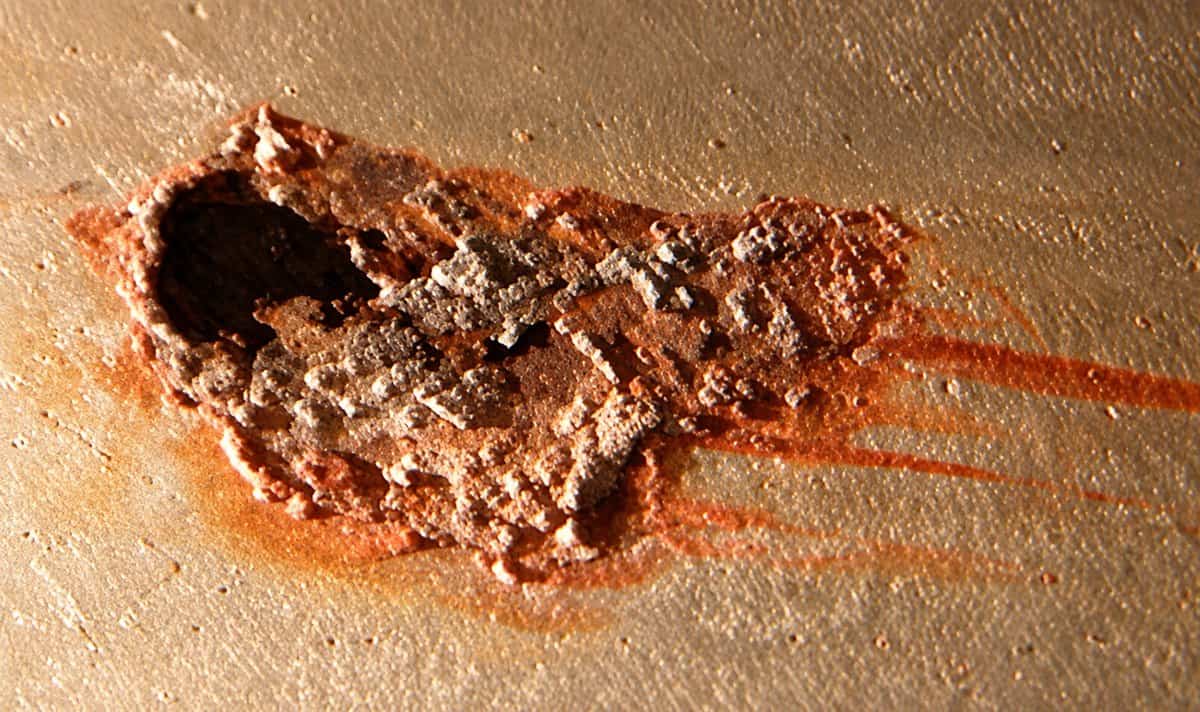
Boise Paper, Wallula, Washington: one of four MIC nodules tracked on a starch-line test spool. Over the 15-week trial no new nodules formed and this one broke down to a dry crust. The pit underneath was already there: treatment stops new damage, it does not restore lost metal. Read the case study →
Where the Savings Add Up
Corrosion costs you in openings, chemicals, heat transfer, water and replacement pipe. Six of those costs, each with a measured site behind it.
Fewer Openings & Inspections
Every opening is downtime and labour. Enaex opened its heat exchangers 80% less often, and a Tasmanian zinc smelter's seawater strainers went from cleaning every two weeks to every four to five months.
Less Chemistry to Buy & Handle
Cleaner surfaces need less chemistry to stay clean. A 700 MW plant cut scale and corrosion inhibitor use 75.5%, Yakima's condensers discontinued anti-corrosion dosing, and Enaex reports its dosing as "eliminated".
Longer Pipe & Plant Life
Metal lasts longer when nothing is living on it. Northview's boiler showed no tube corrosion at final inspection, and at Bucharest's Palace of Parliament, visual inspection found about 50% less biofouling in pipework over 30 years old.
Heat Transfer Restored
The deposits that hide corrosion also insulate: around 1 mm of scale can cut heat transfer by about 7%. A Middle East heat exchanger went from 200 to 500 kcal/h, with pressure drop down from 1.2 to 0.3.
Water Saved, Intakes Kept Clear
Clean systems run at higher cycles and waste less. The Great Lakes plant cut blowdown 60%, about 200 million gallons a year, and a Chilean desalination line ran 223 days without intake cleaning while the untreated control line grew mussels over 3 cm.
No Added Chemical Risk to Old Pipe
Nothing is added to the water, so ageing pipework takes no extra chemical load. A Milan hotel chose this route because chlorine risked corroding its pipes, and Enaex saves about $57k a year.
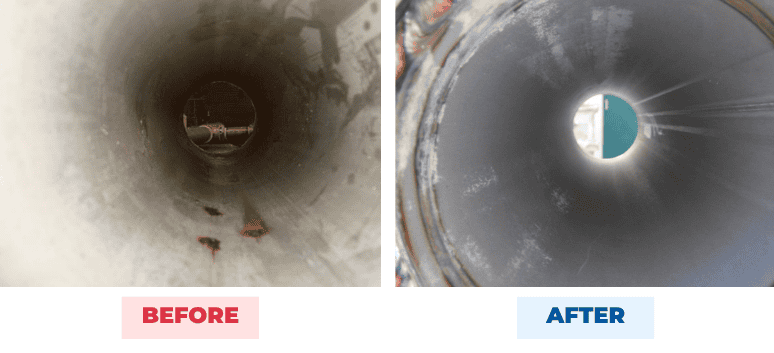
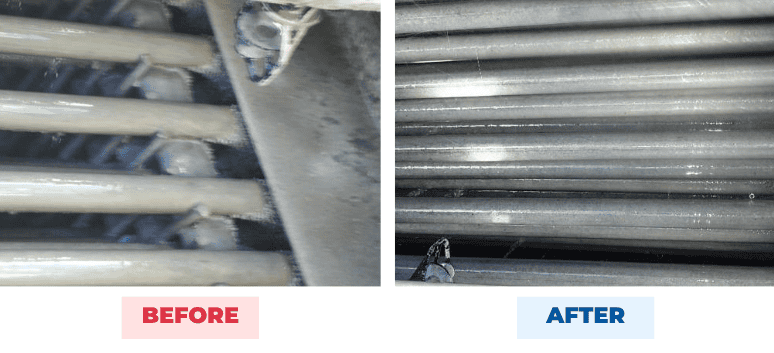
Boise Paper, Wallula, Washington: one HydroFLOW® i120 fitted about three metres upstream of test spools on the W3 starch line. Over a 15-week trial, no new MIC nodules formed on either spool, the existing nodules gradually broke down, and the clean spool stayed free of new corrosion.
Boise Paper pipe spool before and afterDon’t take our word for it. Test it on your own system.
Keep your corrosion coupons in. Fit one unit on one system and judge it against your own coupon results, inspection records and chemical spend, with a documented step-by-step testing protocol.
Get a Free Site Water Assessment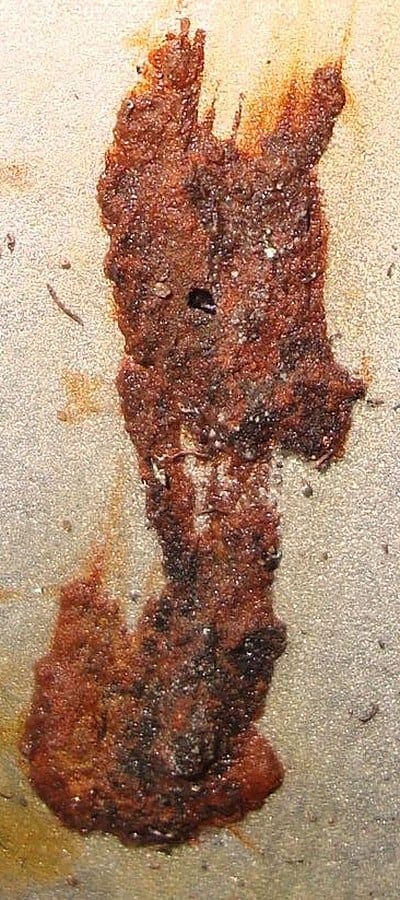
Corrosion Control Physical, Not Chemical!
A physical treatment for the biofilm and deposits behind MIC and under-deposit corrosion, powered by a patented electronic signal
HydroFLOW® induces a patented ~150 kHz signal into the water through the pipe wall. The signal disrupts the conditions biofilm needs to hold on to a surface, so the slime layer where sulphate-reducing and acid-producing bacteria live loosens and is carried away by the flow. Take away the film and you take away the protected space where MIC starts.
The same signal changes how dissolved minerals behave. Instead of bonding to pipe walls, tubes and strainers as hard scale, they crystallise in suspension and pass through, so there are fewer deposits for water and bacteria to sit under. The signal travels in both directions through the pipework, so one unit upstream treats the circuit beyond it, and it keeps working on water standing through low-flow periods and shutdowns, when biofilm settles fastest.
It is not a corrosion inhibitor. It does nothing for oxygen, pH or galvanic corrosion, so the inhibitor, biocide and corrosion monitoring your programme specifies stay in place. Because nothing enters the water, it adds no chemical load to ageing pipework, which is why a Milan hotel chose it over chlorine dosing.
Learn More About Our TechnologyOne Technology — Cleaner Lines, Fewer Cleans
What happens to existing biofilm and deposits once treatment starts, and what to check while it does.
Film and Deposits Come Away
With new deposits no longer bonding, biofilm loosens and existing scale is slowly drawn back into the water, layer by layer. At Bucharest's Palace of Parliament, visual inspection found about 50% less biofouling in six months, including in pipe over 30 years old.
Gradual, and Worth Watching
No acid, no drain-down, no metal thinned by a descale. But expect loosened material at strainers in the first weeks, and in old pipework, deposits that come away can reveal pits or weak joints that were already there. Plan a strainer, outlet and inspection check after fitting.
Judged on the Pipe Itself
At Boise Paper's Wallula mill, the same test spools and four individual nodules were photographed before and after a 15-week trial: no new nodules had formed, and the existing ones had gradually broken down.
How It Fits Your Corrosion Programme
HydroFLOW® compared with the usual ways of dealing with MIC. It works alongside most of them, not instead of them.
| HydroFLOW®Physical treatment, nothing added | Oxidising biocideChlorine, bromine, chlorine dioxide | Corrosion inhibitor programmeMolybdate, nitrite, phosphate, azoles | Mechanical cleaningPigging, brushing, strainer cleans | |
|---|---|---|---|---|
| How it works | An electronic signal disrupts biofilm and keeps minerals crystallising in the water instead of on the metal | Kills or suppresses bacteria in the water and, at enough dose, in the film | Forms a protective layer on the metal and slows the corrosion reaction | Physically removes film, deposits and tubercles |
| Acts on biofilm (MIC) | Yes Continuous, including in low-flow runs | Partly Film shields bacteria; dose has to penetrate it | No Not its job; MIC under film can continue | Periodic Clean on the day, regrows after |
| Acts on deposits (under-deposit) | Yes Fewer new deposits; existing ones slowly reduce | No Does not address scale | Partly Some programmes include scale inhibitor | Yes Until deposits return |
| Oxygen, pH & galvanic corrosion | No Not a corrosion inhibitor; keep yours where specified | No Can add to corrosion at high dose | Yes This is what inhibitors are for | No |
| Chemical load on the metal | None Nothing enters the water | Managed Oxidant residual to control and record | Managed Dose, residuals and discharge limits | None Mechanical wear instead |
| Consumables | None No chemicals, no dosing pumps | Continuous chemical purchase, storage and handling | Continuous chemical purchase, testing and top-ups | Labour and downtime at every clean |
| Corrosion monitoring | Still needed Coupons and testing are how you see the result | Still needed | Still needed | Still needed |
| Downtime to fit or apply | None Installs around the existing pipe, system in service | Injection point, dosing pump and control | Injection point, dosing pump and testing | System offline for every clean |
Swipe sideways to compare all four methods →
Comparison reflects typical products in each category; individual programmes vary. HydroFLOW® is not a corrosion inhibitor, not a biocide and not a filter. The inhibitor specified for closed loops, the biocide programme, corrosion monitoring and MIC testing all remain in place.
Applications
MIC & under-deposit corrosion control
The systems where biofilm and deposits drive corrosion. Each links to its own treatment page.
Cooling Towers & Condensers
Warm, aerated and concentrated: ideal for biofilm. Less film and scale means less inhibitor and biocide working against it.
Seawater Intakes & Cooling
Intakes, strainers and exchangers where marine growth and MIC tubercles build fastest, as they did at Enaex.
Heat Exchangers
Plate and shell-and-tube units, where deposits cut heat transfer and hide under-deposit corrosion.
Boilers & Steam Systems
Keeps tubes clear of the scale that insulates them and shelters the pits that form beneath it.
Pipelines & Distribution
Long runs, dead legs and low-flow sections, where biofilm settles and MIC starts out of sight.
Biofouling & Biofilm
The film behind MIC, treated in its own right: slime, marine growth and bio-counts in water systems.
By sector: power plants, marine, manufacturing & mining, commercial buildings and agriculture. Related problems: limescale and Legionella control.
Process Overview
Simple Installation. No Line Out of Service.
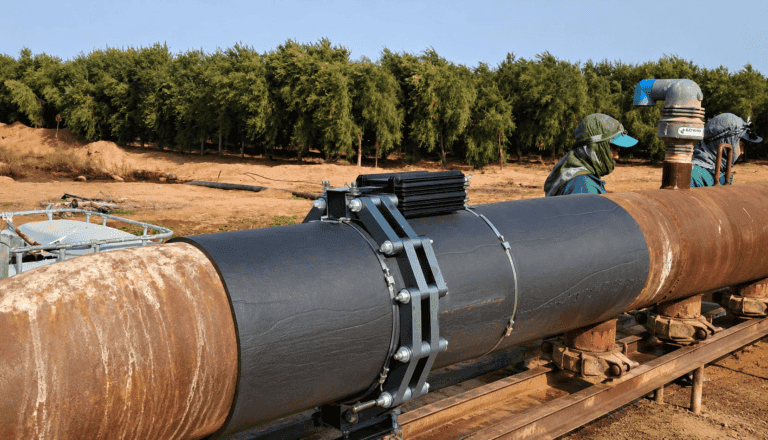
Our patented technology installs around your existing pipework while the system keeps running.
The Fit
The HydroFLOW® unit installs around your existing pipework, from small feeds to large intakes, with no cutting and no shutdown. Enaex fitted one unit on a 1,320 mm seawater main with the plant running.
The Signal
A patented electronic signal travels in both directions through the water, so one unit placed before the line splits treats every branch beyond it. It works through steel, copper and plastic, and keeps working on standing water.
The Results
New nodules can be watched for within weeks, as on Boise Paper's 15-week spool trial. Chemical programmes are reviewed over months, like the Italian food plant's 180-day trial. Corrosion rates need a year: Enaex's lab validation came after 12 months.
Proven On Site
Real Systems. Real Results.
Drawn from Hydropath installations and our customers' own records in seawater intakes, power-plant cooling and building plant.
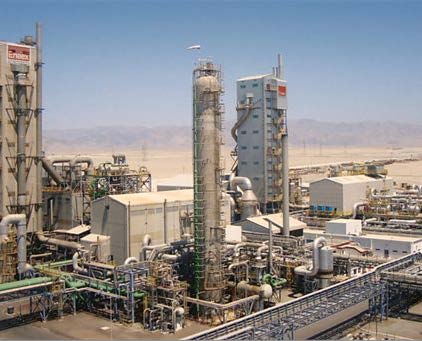
Enaex Chile: Seawater Intake Corrosion Cut 90%, $57k Saved
Enaex cut heat exchanger openings by 80% and MIC corrosion by 90% on a 1,320 mm seawater intake in Antofagasta with one HydroFLOW® Multihead, saving $57k a year.
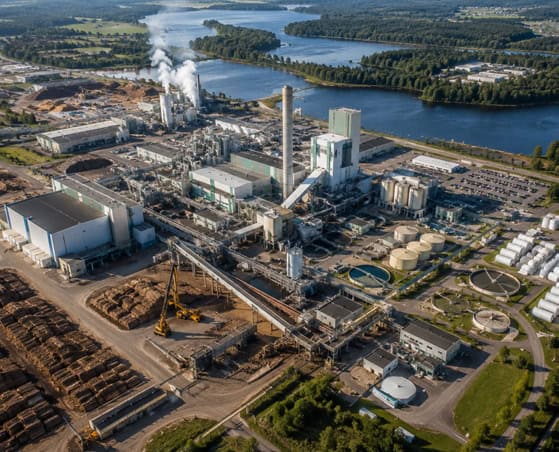
Boise Paper: Microbial Induced Corrosion Inhibited in 15 Weeks
A HydroFLOW i120 on Boise Paper's starch line prevented new MIC nodules for 15 weeks as existing ones broke down.
Saudi Olive Grove: Flushing Cut from 30 Minutes to 2
A 60,000 hectare farm in Al Jouf cut well restart flushing from 30 minutes to 2 and reduced emitter clogging risk by up to 50% with four HydroFLOW® units.
Support & FAQ
Frequently Asked Questions
What is microbiologically influenced corrosion (MIC)?
Microbiologically influenced corrosion (MIC) is corrosion caused or accelerated by microorganisms living in biofilm on a metal surface. Sulphate-reducing, acid-producing and iron-related bacteria change the chemistry under the film, causing localised pitting and tubercles that can perforate pipework far faster than general corrosion. It happens in cooling towers, seawater intakes, heat exchangers, closed loops, wells and long pipe runs: anywhere water sits or flows slowly over metal.
What does MIC look like in pipes?
The usual signs are rust-coloured or black lumps (tubercles) on the pipe wall, often with a pit underneath; black slime; a rotten-egg smell (hydrogen sulphide) when a system is opened; and pinhole leaks in pipe that looked sound. Strainers and intakes often show it first. At Enaex in Chile, MIC tubercles had built up across the seawater intake pipelines and strainers, and at Boise Paper in Washington, nodules had formed inside a steel starch line.
What causes MIC?
Biofilm. Bacteria settle on the metal, build a slime layer and change the conditions underneath it: oxygen is used up, acids or sulphides are produced, and the metal corrodes locally. Low flow, dead legs, warm water, deposits and intermittent use all make it worse. Sulphate-reducing bacteria (SRB, or sulfate-reducing in US usage), acid-producing bacteria and iron-related bacteria are the groups most often involved.
Is all rust caused by microbes?
No. Most general corrosion is chemical: oxygen, pH, dissimilar metals and temperature. MIC is localised and has to be confirmed by testing, typically ATP, qPCR or culture tests alongside corrosion coupons and inspection, following methods such as AMPP TM0212. HydroFLOW® does not diagnose MIC. If testing shows biofilm is part of the problem, that is where it can help.
How does scale cause under-deposit corrosion?
Scale, sludge and sediment trap water against the metal and shelter bacteria from flow and biocide. The chemistry under the deposit becomes different from the water above it, and that difference drives local attack. Deposits also insulate: around 1 mm of scale can cut heat transfer by about 7%. Keeping deposits from forming is why limescale control matters for corrosion too. At Northview REIT in Ontario, the final boiler inspection found no new scale and no tube corrosion.
How do you control MIC in cooling and seawater systems?
With a combination: keep water moving, keep surfaces clean, run a biocide programme, and monitor with coupons and MIC testing. HydroFLOW® adds a physical layer that reduces the biofilm and deposit load, so the chemistry has less to fight. At Enaex, one unit on the 1,320 mm seawater intake cut MIC tubercles by 90%, confirmed by laboratory validation after 12 months. At an Italian food plant, biocide, antiscalant and anticorrosion dosing were all stopped on a cooling tower and reported bacterial counts fell from 12,000 to 500 CFU/ml over 180 days.
Can corrosion be reversed?
No. Metal that has corroded away is gone, and no water treatment puts it back. What can change is the rate of new damage and the conditions that drive it. That is the honest aim here: less biofilm and fewer deposits on the metal, judged over months on your own coupons and inspections.
Does HydroFLOW replace corrosion inhibitors?
No. HydroFLOW® is not a corrosion inhibitor. In closed heating and cooling loops, the inhibitor specified for the metallurgy stays. In open systems, some sites have reduced chemistry as a result of cleaner surfaces: the Great Lakes plant cut scale and corrosion inhibitor use by 75.5%, an Italian food plant stopped anticorrosion dosing on a cooling tower, and orchard condensers in Yakima discontinued it over 12 months. Those are site results, measured against each site's own programme, not a promise.
Do electronic water conditioners prevent corrosion?
Not in general, and be wary of any that claim to. HydroFLOW® does not change oxygen, pH or galvanic corrosion, and it is not a substitute for an inhibitor. What it does is narrower: it disrupts biofilm and keeps minerals from depositing on the metal, which addresses the two causes of MIC and under-deposit corrosion. That narrower claim is measurable. At Enaex, laboratory validation after 12 months confirmed a 90% reduction in MIC corrosion tubercles, and on Boise Paper's starch line, no new nodules formed over a 15-week trial while the existing ones gradually broke down.
Can cleaning out scale and biofilm expose old corrosion?
Yes, and it is better to plan for it. As biofilm and deposits come away, material collects at strainers and outlets for a few weeks, and in old pipework the deposits may have been covering pits or weak joints that were already there. Plan a strainer, outlet and inspection check after fitting. At the Palace of Parliament in Bucharest, pipe over 30 years old carried rust layers and flakes, and at a Milan hotel, loosened deposits were seen at the outlets during the initial cleaning phase.
Can it be fitted without shutting the system down?
Yes. The unit installs around the outside of the existing pipe, with no cutting, no drain-down and the system in service. Units are sized to the pipe, up to large intakes: Enaex fitted one HydroFLOW® Multihead on a 1,320 mm seawater main, upstream of the point where it splits to the heat exchangers, so one unit treats every branch.
Ready to Get Ahead of Corrosion?
Tell us about the system, the water and what your inspections are finding. Our team will say whether biofilm and deposits are part of the problem, recommend the right unit and set out what to expect, including where our assessment is that we cannot help.
Ready to explore sustainable water treatment?
Get in touch to find out how HydroFLOW® can work for you.

© 2026 Hydropath Technology Ltd. All rights reserved