
Cooling Tower Water Treatment
Stop Wasting Water Revolutionise Your Cooling Tower
Cooling towers are essential in maintaining efficient operations across various industries by removing excess heat. HydroFLOW® provides chemical-free cooling tower water treatment that optimises performance, conserves water, and reduces the need for traditional cooling tower chemicals.
Results from named-site case studies; vary by site conditions and baseline operation. View all cooling tower case studies →
Cooling tower water treatmentScale and biofilm cost you three times
Conventional programmes keep the symptoms in check — and you pay for it in three places.
- Water. High blowdown to hold your conductivity set point. Every litre dumped was bought and treated.
- Chemicals. Inhibitor, biocide and acid dosing that climbs as your cycles of concentration fall.
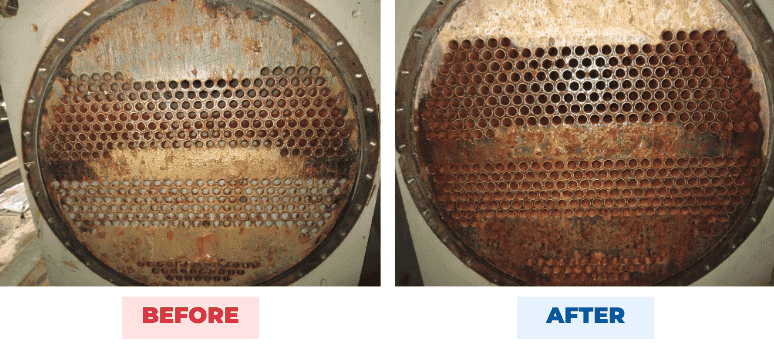
- Energy. A millimetre of limescale costs 7–9% of heat transfer. Biofilm, up to 50%.

Read the transcript
A cooling tower works by evaporation. Water leaves as vapour. The dissolved minerals stay behind.
So the longer the water circulates, the more concentrated it gets. Eventually, those minerals hit their saturation limit and precipitate as scale. Scale forms on the warmest surfaces first: your heat exchanger or condenser tubes, and your fill.
Scale isn't the only problem. In many towers, it isn't the main one. A cooling tower is close to an ideal environment for biological growth. Bacteria don't stay floating for long. They attach to surfaces, and they produce a protective gel. That gel shields them from the flow, and from chemical treatment. That layer is biofilm.
And biofilm insulates far better than scale. A millimetre of calcium carbonate costs you 7 to 9% of your heat transfer. A millimetre of biofilm can cost you up to 50%.
Both problems push you the same way: towards dumping water. Water evaporates. You bleed some to drain. Top up with fresh, and the concentration comes back down. That's blowdown. The total water discarded depends on how concentrated you let the water get first. And that is cycles of concentration. Three cycles means three times the dissolved load of the water you feed in.
The relation between cycles of concentration and blowdown is not linear. At two cycles, you bleed away as much as you evaporate. At three, half. At six, a fifth. The curve is steepest right at the start. And that's exactly where water chemistry tends to pin most towers.
So why not raise the set point? Because scale is a saturation problem. And the conventional answers work against the water, rather than with it. Strip the hardness out with a softener. Dose an inhibitor. Adjust pH. They all work, but only up to a point. Push far enough, and calcium carbonate still comes out.
The biology has its own version of the same trap. Biocide targets what's floating, and the exposed surface of the biofilm. The layers underneath can survive. They're sheltered by the gel, and by the dead cells above them. The system may appear clean according to free-floating bacteria levels. But within weeks, elevated counts can be back.
HydroFLOW takes a different route. It works like a transformer. The unit contains the primary winding. The secondary is both the water itself, and the pipe containing it. That's why the pipe material doesn't matter. Unlike a magnet, which treats only at one point, the signal travels. It runs both ways along the whole conductive path, at around 150 kHz, independent of flow rate. That means it reaches dead legs, and other places chemical cleaning and thermal treatment struggle with.
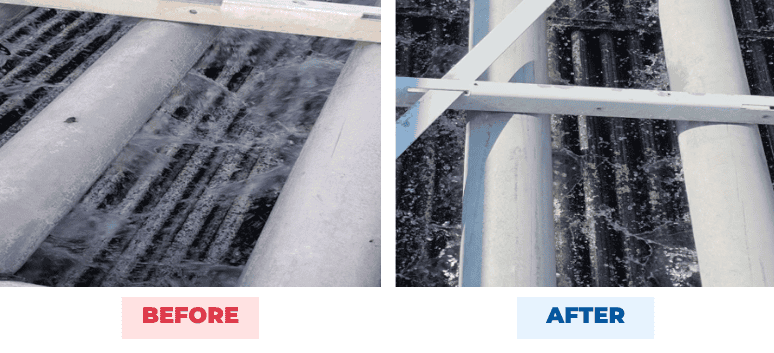
For scale, it encourages dissolved minerals to gather into suspended clusters. So when the water heats and becomes supersaturated, fine crystals grow on those clusters. They stay suspended, rather than sticking to your equipment or pipes.
For biofilm, the same signal destabilises the layer. Fragments detach and wash away. That removes the shelter the bacteria rely on.
At a Fortune 100 headquarters in Houston, HydroFLOW allowed the site to double its cycles of concentration, from 3 to 6, without scale accumulation. Blowdown fell by 85%. That helped save around $73,000 a year in water and energy.
A Texas factory was able to operate at 4,500 microsiemens, instead of 1,300. That's around three and a half times the previous level. Chemical use came down by 75%, and scale control held.
At a power station using seawater cooling, chemical dosing fell by 20%. And bacterial counts fell by 97%. Results vary according to site conditions and baseline operation.
And since nothing is added to the water, testing the water tells you only part of the story. The equipment is where you see the rest. The conductivity you can hold. Your approach temperature. Days between condenser cleans. Chemical consumption.
We'll go through those with you before anything goes on the pipe, so you know where you're starting from.
So if you're stuck at three cycles, or dosing more than you'd like, let's find out what your tower could actually do. Get in touch. Whatever the numbers say today, we'll watch them move with you.
The Hidden Cost of Cooling Tower Scale and Biofilm
Cooling towers are critical to operations across power generation, manufacturing, and industrial cooling systems. Without effective cooling tower treatment, the water circulating within them creates persistent challenges that erode performance over time.
Limescale Accumulation
Mineral deposits build up on heat-exchange surfaces, reducing thermal efficiency and raising energy consumption.
Biofilm & Bacterial Growth
Warm, recirculating water encourages bacterial growth and biofilm that restricts flow and raises health risks, including Legionella.
Rising Operational Costs
Blockages, lost efficiency and unplanned downtime drive up maintenance spend and shorten equipment life.
Chemical Treatment Limitations
Biocides, scale inhibitors and acid dosing add ongoing cost, monitoring demand and environmental liability.
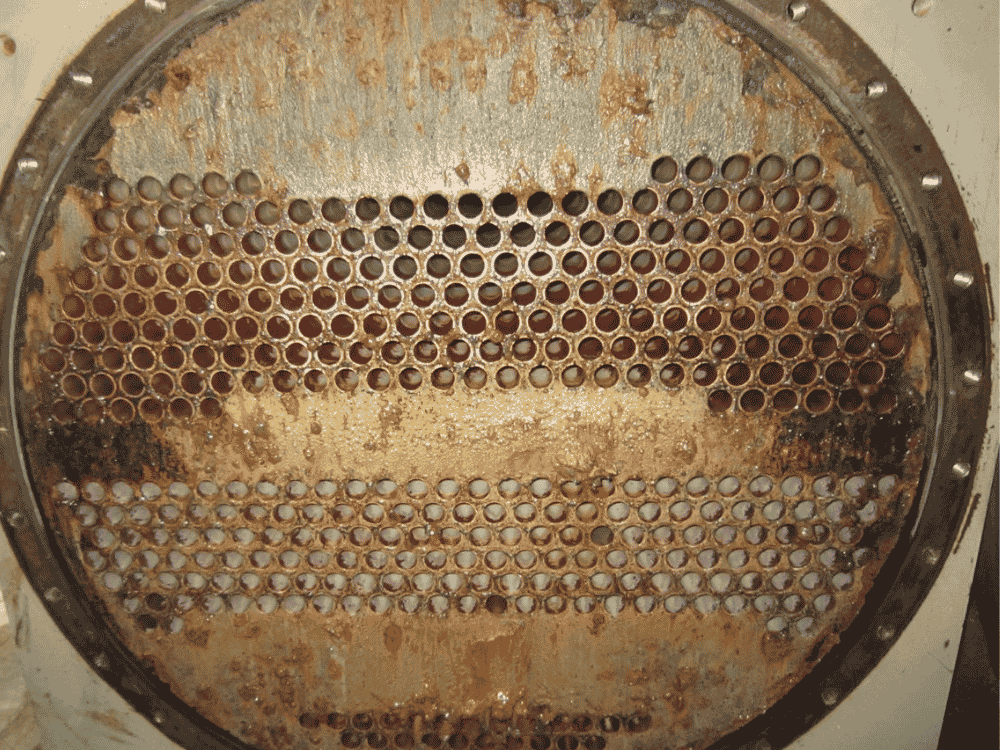
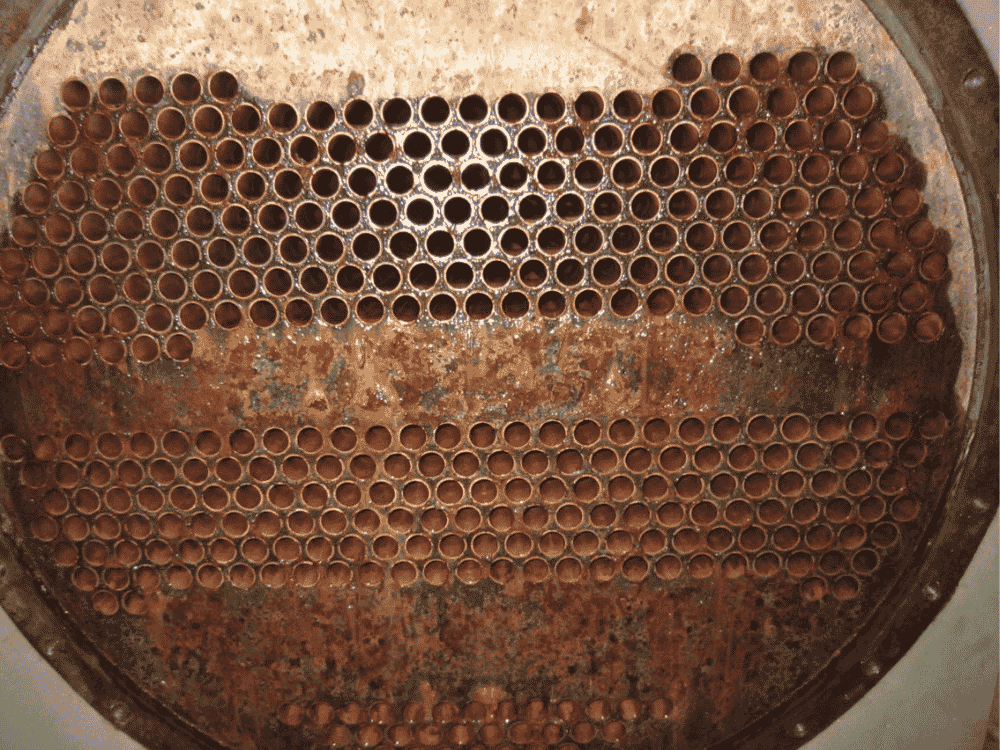
A major listed real estate management group, Hong Kong: remaining condenser scale eliminated within 12 months — with no pre-cleaning — leading to 100+ HydroFLOW units across 50+ shopping malls. Read the case study →
Where the Savings Add Up.
Limescale and biofouling carry a continuous financial cost in a cooling tower — across chemical dosing, water and blow-down, energy, maintenance and equipment life. Hydropath addresses six of the most significant recurring costs across your cooling system’s operating life.
Lower Chemical Costs
Reduce scale inhibitors, biocides and acid dosing. A Texas factory, for example, reduced its chemical use by 75%.
Water Savings & Reduced Blow-down
Run higher cycles of concentration and reduce blow-down — a Fortune 100 HQ in Houston cut blow-down by 85%.
Lower Energy Costs
Scale and biofilm insulate condensers and heat exchangers — around 1 mm of scale can reduce heat transfer by about 7%. Cleaner surfaces support efficiency and lower energy use.
Reduced Maintenance & Downtime
Less manual descaling and acid cleaning, with fewer scale-related stoppages — a Philippines moulding plant cut acid cleaning from every 3–6 months to once a year.
Extended Equipment Life
Supporting scale and corrosion control helps protect condensers, chillers and heat exchangers — deferring costly repair and replacement.
Fast Return on Investment
Lower chemical, water and energy use builds a quick payback — an Arizona municipal building reported a 5.5-month payback, and a Houston HQ around $73,000 saved a year.
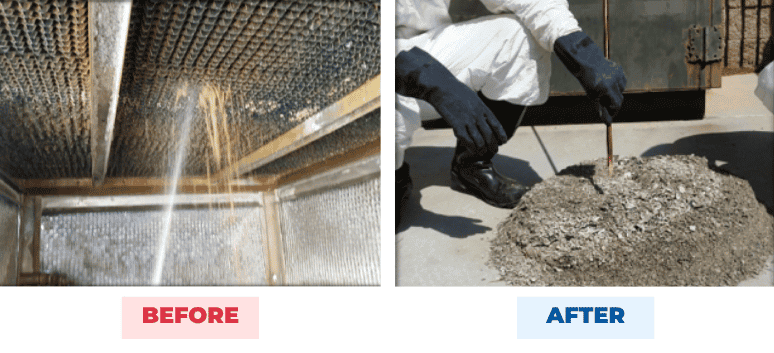
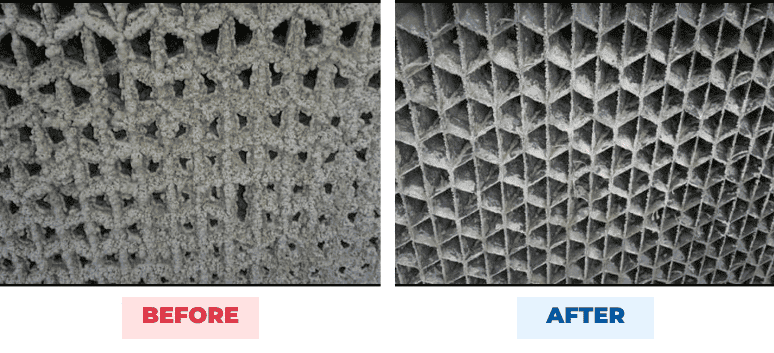
Add estimated chemical savings (optional)
How this is calculated
Driving Net-Zero Through
Water System Optimisation.
Sustainability is a critical operational requirement. Hydropath® helps facilities meet aggressive ESG targets by tackling the three pillars of environmental impact in water systems.
Reduced Chemical Dependency
Dramatically reduce the need for scale inhibitors and biocides in your cooling circuit. Cleaner blowdown water simplifies discharge compliance and protects local ecosystems from harmful chemical additives.
Scale & Biofouling, Stopped at Source
Just 1 mm of limescale on fill packs and condenser tubes cuts heat transfer efficiency by up to 7%. Biofouling is even costlier — 1 mm of biofilm can slash thermal performance by up to 50%.
Energy Decarbonisation
A scale-free tower holds its design approach temperature, so chillers, pumps and fans stop working overtime. The result: lower energy demand, lower carbon emissions and operational costs that keep falling.
Process Overview
Simple Installation. Immediate Protection.
Our patented technology integrates seamlessly into your existing operations with zero disruption.
The Fit
The HydroFLOW® unit installs around your existing pipework — typically on the make-up or recirculation line. No cutting, no welding, no shutting the tower down. Compatible with any pipe material.
The Signal
A patented electronic signal propagates in both directions through the water, treating the whole cooling circuit from a single point — working continuously, 24/7.
The Results
Scale is kept in suspension and biofilm is disrupted over time. As the system stays cleaner, blow-down and chemical dosing can be progressively reduced — delivering chemical-light, water- and energy-efficient operation.

Monitor Every Unit. From Anywhere.
Real-time remote monitoring and instant alerts for every HydroFLOW® installation, from anywhere in the world.
Hydropath Care
Our remote monitoring platform gives you a complete overview of all your HydroFLOW® installations in one place. See which units are live, manage your projects, and stay in control — all from a single, easy-to-use dashboard.
HydroKNCT
The IoT device that connects your HydroFLOW® unit to Hydropath Care via LAN. Simple to install and compatible worldwide — keeping you connected to your system 24/7. Add optional sensors to unlock real-time temperature and signal monitoring.
Proven On Site
Real Sites. Real Results.
Drawn from Hydropath installations and our customers’ own feedback across cooling towers.
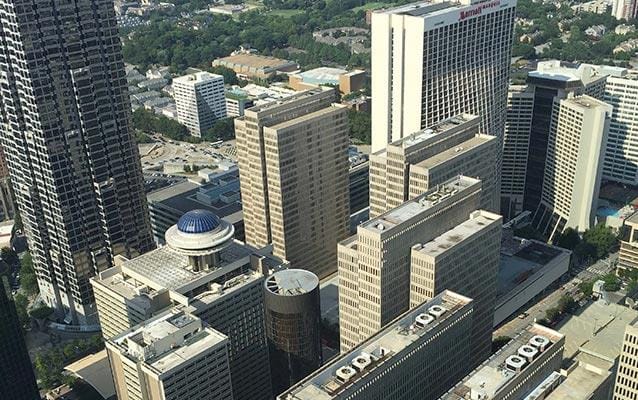
US Office Complex: Bio-Counts 100,000 to Under 1,000
A 2.3 million sq ft US office complex cut cooling tower bio-counts from 100,000 CFU to below 1,000 within days with one HydroFLOW® Custom 14 inch unit.
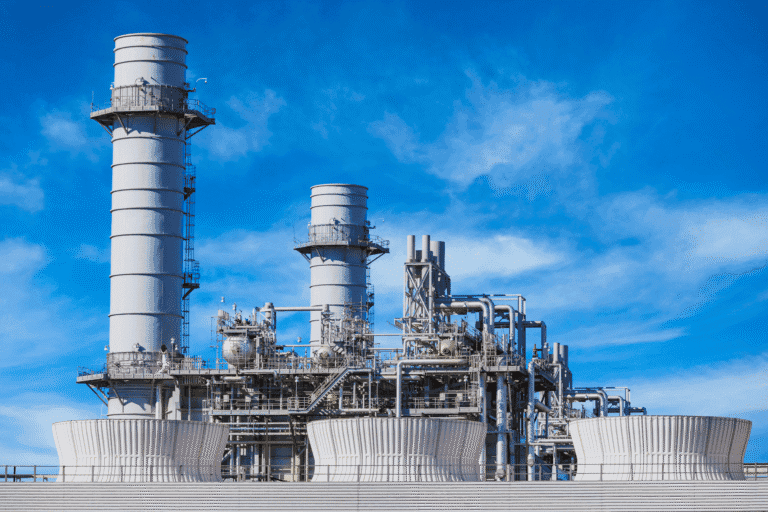
Great Lakes Plant: 200M Gallons and $350K Saved a Year
A 700MW Great Lakes power plant cut scale and corrosion inhibitor use by 75.5% and saved 200 million gallons a year across its 10-cell cooling tower.
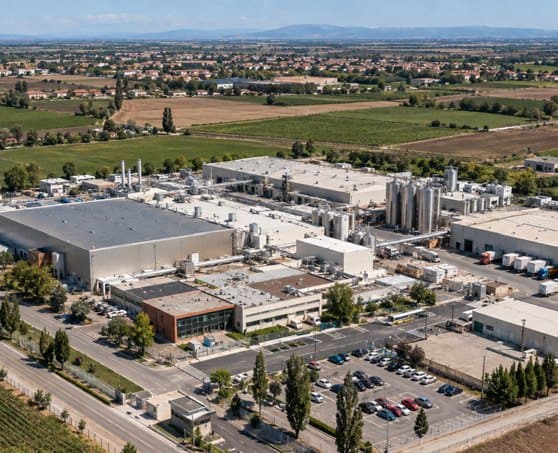
Cooling Tower Bacteria Control: 12,000 to 500 CFU/ml, Italy
One HydroFLOW® i160 cut reported bacterial counts from 12,000 to 500 CFU/ml in an Italian food producer's cooling tower and let chemical dosing stop.
Key Cooling Tower Applications
Scale & Limescale
Controls calcium scale on fill, condensers and pipework — letting you run higher cycles of concentration and cut make-up water.
Biofilm & Biofouling
Disrupts biofilm across the tower, sump and pipework, supporting lower biocide dosing and cleaner heat-transfer surfaces.
Corrosion
Helps manage corrosion risk on metal surfaces as scale and biofilm are brought under control across the cooling circuit.
Condensers & Heat Exchangers
Reduces scale and fouling on condensers and heat exchangers to maintain approach temperatures and chiller efficiency.
Pumps
Keeps circulation pumps free of scale and biofilm for reliable flow and lower maintenance.
Legionella Management
By controlling biofilm and scale, supports Legionella risk management alongside your existing hygiene protocols.
Support & FAQ
Frequently Asked Questions
How does chemical-free cooling tower water treatment work?
Hydropath’s electronic water treatment uses a signal that passes through the pipework, changing how minerals behave in the water. Instead of forming hard limescale deposits on heat exchangers and pipes, minerals form loose collections of mineral ions known as clusters. When the increase in temperature at the heat exchanger (or condenser) causes the water to become supersaturated, the clusters form fine crystals that don’t adhere to surfaces, keeping your system clean without chemical antiscalant or descaling.
Can electronic water treatment replace cooling tower chemicals?
Hydropath can significantly reduce chemical usage, though the extent depends on the type of chemical. Anti-scalant chemicals can typically be eliminated entirely — as demonstrated at the Amsterdam Data Centre which achieved 100% chemical-free scale treatment. For biocides, Hydropath typically enables a 50–75% reduction rather than full elimination, as most cooling towers still benefit from some level of biocide treatment. Depending on your tower size, more than one conditioner may be required — one for the heat exchanger/ condenser and potentially another for the spray arms in the tower. We recommend a site assessment to determine the right setup for your system.
How does Hydropath prevent limescale in cooling towers?
The Hydropath signal causes dissolved calcium and magnesium ions to form clusters in the water before they reach the condenser. When the increase in temperature at the heat exchanger (or condenser) causes the water to become supersaturated, the clusters form fine crystals that don’t bond to surfaces. Over time, existing limescale deposits also break down as the treated water gradually cases them to dissolve. This keeps heat exchangers clean and maintains thermal efficiency without mechanical or chemical descaling. Removing limescale is also important because it creates a breeding ground for Legionella bacteria.
Does Hydropath help with Legionella prevention in cooling towers?
Yes — in two ways. First, by controlling biofilm (where bacteria harbour and multiply), Hydropath removes the environment Legionella needs to grow. Second, by preventing limescale buildup, it eliminates another key breeding ground for Legionella. Together, these effects significantly reduce bacterial loads in cooling tower systems. This supports your overall Legionella risk management plan, though it should sit alongside your existing water hygiene protocols — including reduced biocide treatment — rather than replace them entirely.
What are the benefits of chemical-free water treatment for industrial cooling systems?
The main benefits are reduced water and sewage costs (prevention of limescale allows an increase in cycles of concentration, reducing blowdown) lower operating costs (reduced chemical purchasing, storage, and handling), reduced environmental impact (less chemical discharge into wastewater), improved system efficiency (clean heat exchangers transfer heat better), and less maintenance downtime. With anti-scalant eliminated and biocide reduced by 50–75%, facilities see significant cost savings. For businesses with ESG or sustainability targets, reducing cooling tower chemicals also contributes directly to those goals. Most installations see a return on investment within 12 months.
How much water can you save with better cooling tower treatment?
When limescale and biofilm are controlled effectively cooling towers run more efficiently, allowing higher cycles of concentration and needing less water discarded as blowdown. This means you use less makeup water overall, and discharge less to sewage. The exact savings depend on your water quality and system size, but the increase in cycles of concentration from cleaner water typically leads to meaningful reductions in water consumption and associated costs. As an example, a cooling tower system in Brazil increased cycles of concentration from around 4 to up to 20, significantly reducing purge volume and saving water.
Ready to Cut Your Cooling Tower's Running Costs?
Tell us about your cooling system and our technical team will come back with a view on scale, biofilm and water use, and what a site assessment would involve.
- A reply within one working day
- Technical input from our engineers
- No obligation
Send us your details
Ready to explore sustainable water treatment?
Get in touch to find out how HydroFLOW® can work for you.

© 2026 Hydropath Technology Ltd. All rights reserved