
Swimming Pool Water Treatment
Clearer Water Less Chlorine to Dose Fewer Backwashes
HydroFLOW® improves your pool’s filtration physically, with nothing added to the water and no closure to fit. Fine particles cluster so the filter catches them, the water clears, and chlorine, backwashing and heater scale come down with it.
Results from documented case studies; they vary with pool size, bather load, filter type and baseline operation. View all swimming pool case studies →
Cloudy Water Costs a Pool Three Ways: Chemicals, Water and Heat
Most pool problems start at the filter. Sand and cartridge filters let the finest particles through, so the water dulls, algae gets a foothold and operators compensate with more chlorine, more clarifier and more backwashing. The chemicals cost twice: once to buy, and again in the odour and eye irritation bathers complain about. Every backwash then sends heated, treated water to drain: a public indoor pool in Colmar lost 52.5 m³ per wash, 78 times a year, and a residential complex in India was backwashing every 48 hours. Hard water adds scale on heaters and pumps. And chlorine is not the whole safety case: some pathogens resist it and have to be filtered out.
Typical signs a pool's filtration is struggling:
- Water that looks dull or cloudy even when chlorine readings are in range
- Backwashing every day or two just to hold filter pressure
- Chlorine, clarifier and flocculant spend creeping up season on season
- A strong "chlorine" smell, with bathers complaining about eyes and skin
- Green tinges, algae on walls and biofilm at the waterline
- Scaled heaters and heat exchangers, and pool temperature harder to hold
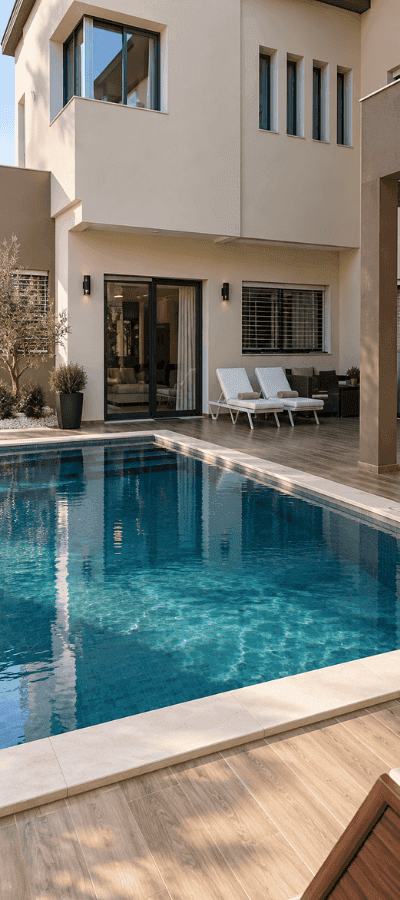
What Does Poor Filtration Cost a Swimming Pool?
A pool recirculates the same heated water through its filters all day, shared by every bather who gets in. When the filter misses fine particles, the cost lands in several budget lines at once: chemicals, water, energy, staff time and bather complaints, which is why it is rarely added up as one figure. The duty side is fixed too: in the UK, HSE HSG179 and the PWTAG code of practice, and their equivalents elsewhere, expect a maintained disinfectant residual and effective filtration, because each does a job the other cannot.
Crypto survives 7+ days in chlorinated pools
The US CDC notes that Cryptosporidium's tough outer shell lets it survive for more than seven days, even in properly chlorinated pools. Oocysts are typically 4 to 6 microns across, so removing them is a filtration job: the better the filter captures fine particles, the less rests on chlorine alone.
Heating outweighs pumping in pool energy
ENERGY STAR's pool benchmarking finds that heating energy is a far larger share of total pool energy than pumping. That makes every backwash expensive: the water sent to drain has already been heated and treated, and its replacement has to be heated and treated again.
1,000+ public pools closed in England
Swim England reports that more than 1,000 publicly accessible pools have closed since 2010, with energy bills up by more than 200% for some operators. The pressure is the same wherever pools are heated: water, energy and chemicals are the running costs an operator can actually reduce.
Sources: CDC, Facts About Crypto and Swimming Pools · Cranfield University, Role of filtration in managing the risk from Cryptosporidium in commercial swimming pools · ENERGY STAR, Swimming Pools and the ENERGY STAR Score · Swim England, Ongoing high energy costs continue to threaten future of pools (2023) · HSE, HSG179 Health and safety in swimming pools · PWTAG. Figures are agency- and survey-reported; individual pools vary.
What’s Really Driving Up Your Pool Costs
A pool pays for weak filtration in chemicals, in water and heat sent to drain, in maintenance on scaled plant and in bather complaints. Four problems drive most of it, each with a measured site behind the fix.
Cloudy Water the Filter Can't Clear
The finest particles pass straight through sand and cartridge filters, so the water dulls however much chlorine goes in.
Backwash Water & Heat Down the Drain
Every backwash dumps water the pool has already paid to heat and treat, then pays again to replace it.
Heavy Chlorine, Odour & Algae
Operators dose harder to hold clarity, and bathers pay in odour and irritation while algae keeps returning.
Scale on Pumps, Heaters & Spa Circuits
Hard or mineral-rich water scales the pumps, heaters and pipework that keep a pool or spa running.
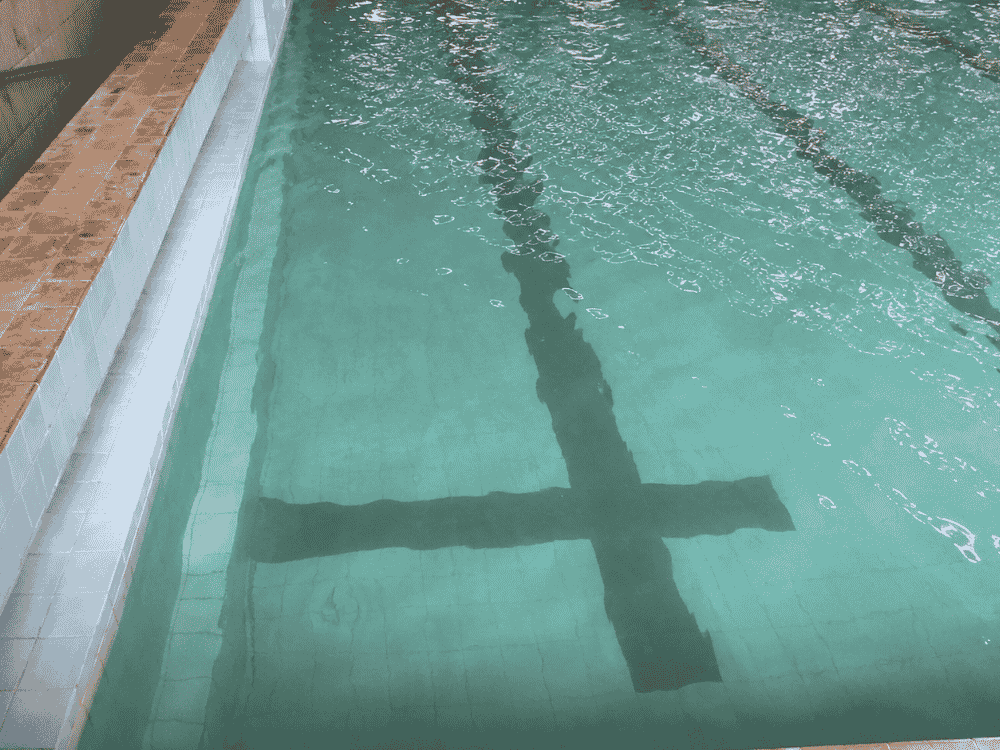

Ukraine wave pool: water cleared to a blue appearance within 12 days, with 60% less chlorine and 95.7% less E. coli. Read the case study →
Better Filtration, Lower Pool Running Costs
Better filtration pays back across six running costs at once, each one recorded at a working pool.
Less Backwashing, Less Water
When filters catch more per pass, they need washing less often. The Colmar indoor pool saved 2,535 m³ of backwash water a year, and the India complex went from backwashing every two days to weekly, cutting water use around 60%.
Lower Chlorine & Chemical Spend
Clearer water holds its residual with less dosing. The Ukraine wave pool went from 15 litres of chlorine a day to 4–6, the India complex cut chemical costs around 55%, and a Hong Kong theme park cut pool sodium hypochlorite by 14%.
Fewer Clarifiers & Add-On Systems
Physical flocculation does the clarifier's job without the drum. A Tunisian villa stopped flocculants completely and used nearly 40% fewer pool chemicals; the Hong Kong theme park shut down its pool ozonator and bypassed its carbon filter, with water quality held.
Less Heat Sent to Drain
Backwash water has already been heated, so every wash avoided keeps energy in the pool. At Colmar, fewer washes avoided 41,275 kWh of heat loss a year, and scale-free heat exchangers keep transferring heat: around 1 mm of scale can cost about 7%.
Less Maintenance on Pumps & Heaters
Scale that stays soft flushes through instead of bonding. Hot spring apartments in Taiwan cut maintenance costs by half or more on pumps that had been stripped monthly, and at a Santa Fe resort on 923 ppm water, units on the heaters and hot tubs have performed for more than eight years.
Fast Return on Investment
No consumables to buy and no servicing schedule, so the savings start on day one. Colmar's unit paid for itself in 0.7 years across water, heat and chlorine, and a private villa in Tunisia stopped buying flocculants altogether.
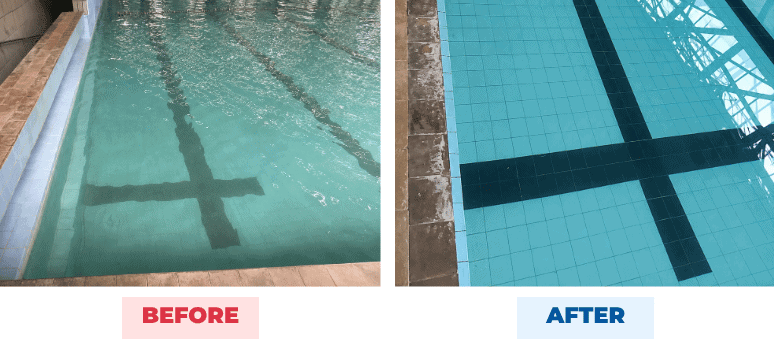
Ukraine wave pool: cleared to a blue appearance within 12 days — with 60% less chlorine and 95.7% less E. coli.
Don’t take our word for it. Test it on your own pool.
Every chemical, water and energy figure on this page came from an operator's own records. Fit a unit, then measure it against your backwash log, chemical deliveries, utility bills and daily water tests, reducing dosing only as your tests allow.
Get a Free Pool Water Assessment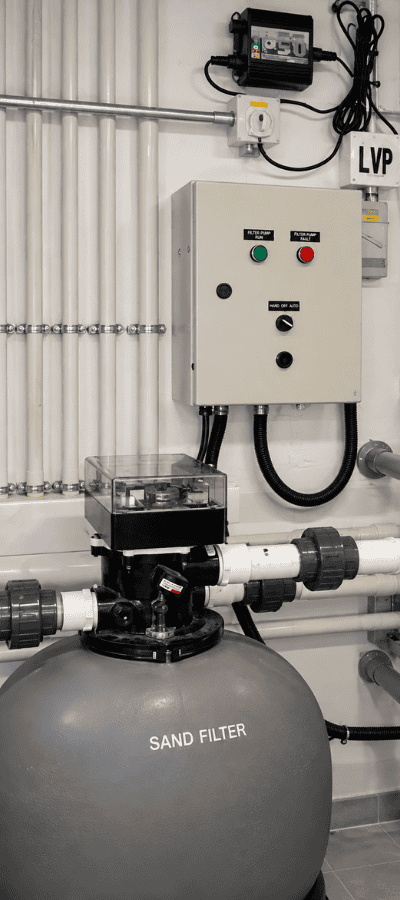
Commercial Pool Water Treatment Physical, Not Chemical!
A physical clarifier for pool filtration and a scale inhibitor for heaters, pumps and pipework, powered by a patented electronic signal
HydroFLOW® induces a patented ~150 kHz signal into the water through the pipe wall. In a pool circuit it does two jobs. It causes fine suspended particles and organic matter to cluster into flocs large enough for sand and cartridge filters to catch, which is the job a chemical clarifier does, with nothing dosed. And where the water is heated, it keeps calcium crystallising in suspension rather than bonding to heat-exchanger plates, heater elements and pump internals as hard scale.
The unit installs around the pipe, typically on the circulation line before the pump and filters, with no cutting and no pool closure. The signal propagates in both directions, so one fitting treats the whole circulation loop, and it works on PVC, PEX, stainless steel and copper alike. It keeps working on water standing overnight and through quiet periods, when algae and biofilm get their start.
Because it changes how particles and minerals behave rather than what the water contains, nothing enters the pool: pH, alkalinity and calcium hardness readings are unchanged, and your residual sanitiser stays at the level your regulations require. What falls is the demand: with the filter catching more, the water uses less chlorine to stay clear. Reduce dosing step by step as your tests allow, as the operators at the Ukraine wave pool did.
Learn More About Our TechnologyOne Technology — Clearer Water, Cleaner Plant
From the filter to the heat exchanger, one fitting on the circulation line changes what your pool water costs you.
Particles Cluster, Scale Stays Soft
The same signal works on both sides of the plant room: fine particles flocculate ahead of the filter, and minerals stay in suspension instead of hardening on hot surfaces. On Taiwan's 400+ ppm hot spring water, scale stayed soft and flushed away through the flow.
Gradual, and Led by Your Tests
No acid descaling, no draining and no closure. Expect more material at strainers and in the first backwashes as existing deposits loosen: that is the system clearing. Keep chlorine where it is until your tests show demand falling, then step it down.
Measured in an Open Pool
At Colmar's public indoor pool, operators logged every backwash: the evaluation recorded washes falling from 78 to 52 a year and each wash from 21 to 12 minutes, saving 2,535 m³ of heated, chlorinated water a year.
A Different Approach to Pool Clarity
How HydroFLOW® compares with the usual ways of tackling cloudy water, chemical demand and backwash.
| HydroFLOW®Physical clarifier and scale inhibitor | Chemical clarifier / flocculant | UV or ozone | Filter media upgrade | |
|---|---|---|---|---|
| How it works | Electronic signal causes fine particles to cluster so the existing filter catches them; keeps scale in suspension on heated surfaces | Dosed coagulant binds fine particles into flocs ahead of the filter | Secondary treatment that inactivates microorganisms passing through the unit | Finer or alternative media (e.g. glass) to capture smaller particles |
| Fine-particle capture & clarity | Improved Clear within 12 days at the Ukraine wave pool | Improved While dosing continues | Indirect Does not remove particles | Improved Depends on media and filtration rate |
| Chlorine demand | Reduced 15 L a day to 4–6 at the Ukraine wave pool; around 55% lower chemical cost in India | Partial Clearer water, but one more chemical to buy and dose | Reduced Lower combined chlorine; residual still required | Partial Some reduction as clarity improves |
| Backwash water & heat loss | Reduced 2,535 m³ water and 41,275 kWh heat loss saved a year at Colmar | Varies Flocs can load the filter faster | None No effect on filter loading | Varies Depends on media |
| Inactivates chlorine-resistant pathogens | No Helps the filter remove particles; it does not disinfect | No Aids removal by filtration | Yes UV is the established route for Cryptosporidium | No Removal by filtration only |
| Scale on heaters & pumps | Yes Same unit protects heat exchangers, heaters and pumps | No | No | No |
| Consumables & handling | None Nothing to buy, store or dose | Continuous chemical purchase, storage and dosing pump | Lamp replacement and power (UV); ozone generation, monitoring and off-gas control | Periodic media replacement |
| Replaces your residual disinfectant | No Works alongside it, reducing demand | No | No A residual is still required | No |
| Downtime to fit | None Installs around the existing pipe with the pool open | Injection point and dosing pump | Cut-in to the circulation line; plant-room space and power | Filters drained and re-bedded |
Swipe sideways to compare all four approaches →
Comparison reflects typical products in each category; individual pools vary, and approaches can be combined. HydroFLOW® is not a filter and not a disinfectant: your filters, residual sanitiser, pH control, testing regime and any UV or ozone your regulations require all stay in place.
Applications
Swimming pool & leisure applications
A pool’s water runs from the balance tank through the pumps, filters and heaters and back again. Each application links to its dedicated page.
Flocculation & Filtration
Acts as a physical clarifier so sand and cartridge filters catch finer particles: clearer water, fewer backwashes, no clarifier to dose.
Algae, Biofilm & Biofouling
Helps disrupt the biofilm that algae and bacteria rely on, at the waterline, in balance tanks and through the circulation pipework.
Calcium Scale & Hard Water
Reduces calcium scale in heated and hard-water pools, and on the showers and hot-water plant in the changing rooms.
Pool Heaters & Heat Exchangers
Keeps plate and shell-and-tube exchangers clean so the pool holds temperature on less energy, with fewer descales.
Circulation Pumps
Keeps circulation and spa pumps free of hard scale and biofilm, for steady flow and longer intervals between strip-downs.
Legionella & Spa Water Safety
Disrupts the biofilm that shelters bacteria in showers, spa pools and hot tubs, supporting your control scheme, never replacing it.
Pools often sit inside a bigger estate: see hotels & resorts and commercial buildings & facilities. For the pool units themselves, see the HydroFLOW® K40 for private pools and spas and the HydroFLOW® P Range for commercial pools.
Process Overview
Simple Installation. No Pool Closure.
Our patented technology installs around your existing pipework while the pool stays open.
The Fit
The HydroFLOW® unit installs around your existing pipework, typically on the circulation line before the pump and filters. No cutting, no drain-down and no closure: both the Ukraine and Colmar units went in with the pool open.
The Signal
A patented electronic signal propagates in both directions through the water, treating the whole circulation loop from a single point. It works on any pipe material and runs continuously, overnight and through quiet periods included.
The Results
Clarity moves first: the Ukraine wave pool was clear within 12 days. Backwash and chemical records build over months, as Colmar's eight-month evaluation shows. At Colmar, the payback came inside the year, at 0.7 years.
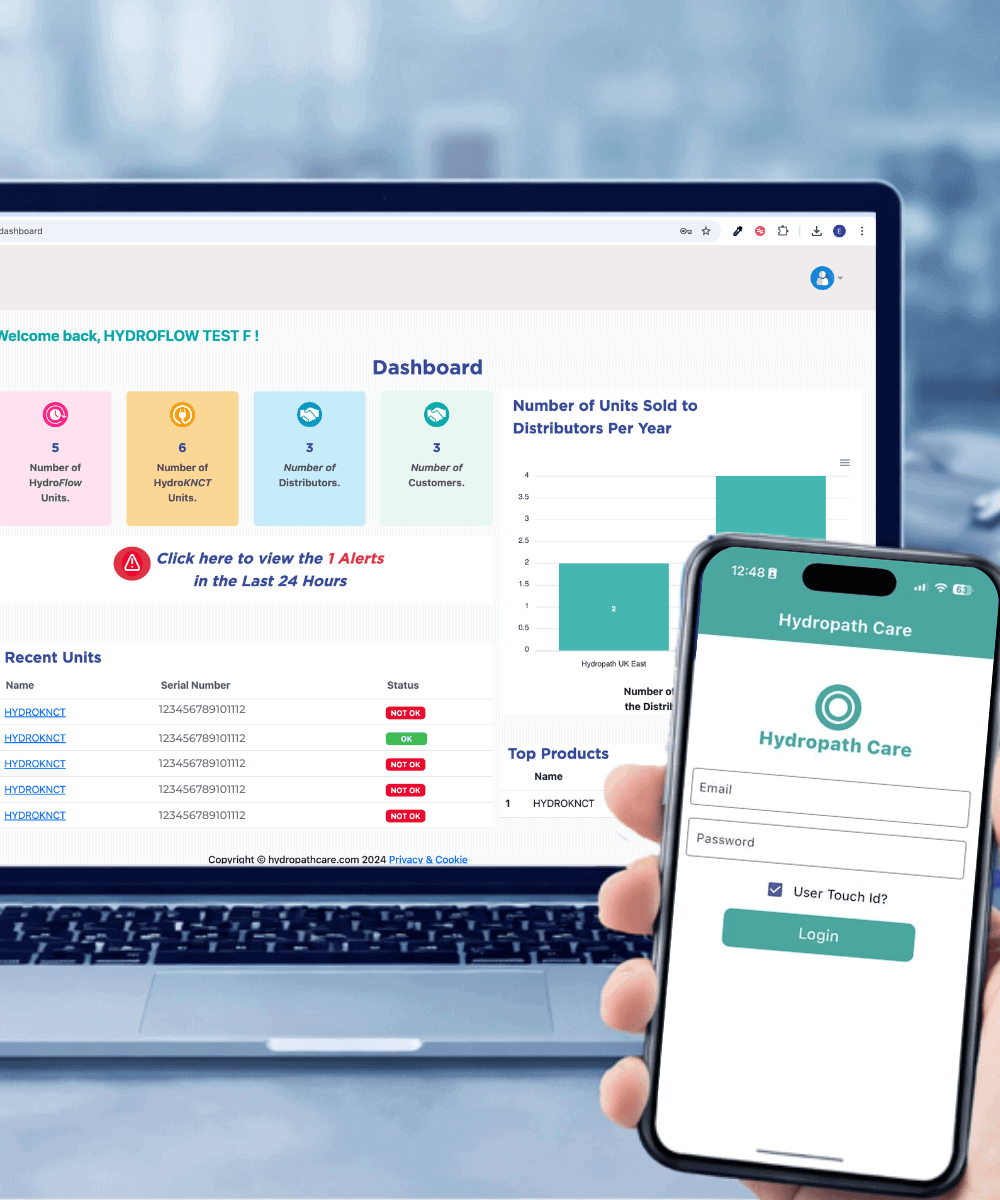
Monitor Every Unit. From Anywhere.
Real-time remote monitoring and instant alerts for every HydroFLOW® installation, from anywhere in the world.
Hydropath Care
Our remote monitoring platform gives you a complete overview of all your HydroFLOW® installations in one place. See which units are live, manage your projects, and stay in control — all from a single, easy-to-use dashboard.
HydroKNCT
The IoT device that connects your HydroFLOW® unit to Hydropath Care via LAN. Simple to install and compatible worldwide — keeping you connected to your system 24/7. Add optional sensors to unlock real-time temperature and signal monitoring.
Proven On Site
Real Sites. Real Results.
Drawn from Hydropath installations and operators’ own records across public, residential and leisure pools.
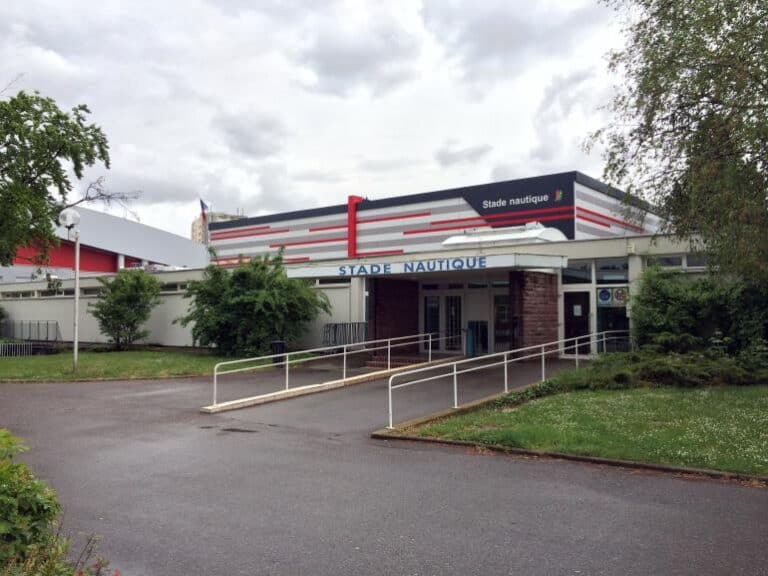
Colmar Pool: 2,535m³ Water Saved, 0.7-Year ROI
Colmar Nautical Stadium in France cut backwash water by 2,535m³ and chlorine use 15% with a HydroFLOW P160 unit.
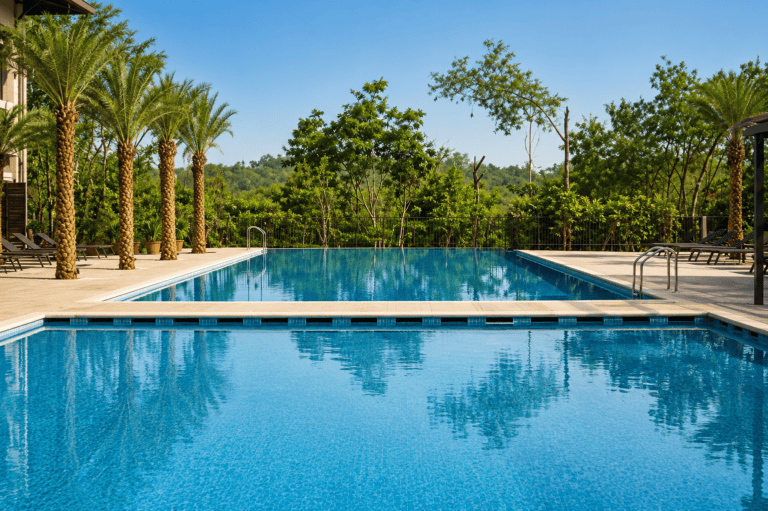
India Pool: 60% Water Saved, 55% Chemical Saved
A HydroFLOW P-160 unit cut backwashing, chlorine dosing and costs at the Lodha Amara residential pool in Thane, India.

Hong Kong Disneyland: 35+ Units, Chemicals Cut Site-Wide
35+ HydroFLOW units across Disneyland and its hotels in Hong Kong cut chemical use and maintenance across multiple water systems.
Support & FAQ
Frequently Asked Questions
What is swimming pool water treatment?
Swimming pool water treatment is everything that keeps recirculated pool water clear, safe and comfortable: filtration to remove particles, a maintained disinfectant residual (usually chlorine) to deal with microorganisms, pH and alkalinity control so that disinfectant works, and heating. The filter and the disinfectant do different jobs, and pools struggle when the filter misses fine particles and chlorine is asked to make up the difference. HydroFLOW® works on the filtration and scale side: it helps fine particles cluster so the filter catches them, and keeps calcium scale off heaters and pumps. It is not a disinfectant, so your residual and testing stay in place.
How can I reduce chlorine use in my swimming pool?
Start with what is consuming the chlorine. Fine particles, organic matter and biofilm the filter misses all use up free chlorine, so the most durable reduction comes from better filtration rather than lower set points. That is where HydroFLOW® helps: with the filter catching more, the water needs less chlorine to hold its residual. Operators then reduce dosing step by step as their tests allow. A 620 m³ wave pool in Ukraine went from 15 litres of chlorine a day to 4–6, and a residential complex in India cut chemical costs around 55%. Never drop below the residual your local regulations require.
Why does my pool smell so strongly of chlorine?
The sharp “chlorine” smell is usually chloramines, also called combined chlorine: compounds formed when chlorine reacts with sweat, urine and other organic matter bathers bring in. A strong smell normally means too much organic load and combined chlorine, not too much free chlorine. Ventilation, fresh-water dilution and good bather hygiene all help; so does removing more organic matter at the filter, so there is less for chlorine to react with. At the India residential complex, the strong chlorine odour went once filtration improved and dosing came down.
How do I clear cloudy pool water?
Check the basics first: pH, alkalinity, free and combined chlorine, and whether the filter is running long enough and is clean. If the chemistry is right and the water is still dull, the cause is usually fine particles too small for the filter to catch. The conventional answer is a chemical clarifier or flocculant to clump them together. HydroFLOW® does that physically, with nothing dosed, so the filter catches more on every pass. The Ukraine wave pool was clear within 12 days of installation, under full bather load.
Why is my pool green, and can this help?
Green water is algae, which takes hold when the disinfectant residual drops or circulation and filtration leave it somewhere to grow. Restore the residual and correct the pH first: that is the immediate fix. HydroFLOW® helps with the longer-term cause by improving filtration and disrupting the biofilm algae rely on. At the India residential complex, algae stopped clouding the water once filtration improved, and the Ukraine wave pool went from green to clear within 12 days. It works alongside your disinfection, not instead of it.
How often should a commercial pool be backwashed?
Follow your filter manufacturer’s guidance, which is usually based on the pressure difference across the filter and on regular schedules set by the operator. What changes the answer is how quickly the filter loads up and how well it clears. Backwashing costs more than people expect, because every wash sends heated, treated water to drain. With better flocculation, filters can run longer between washes: a public indoor pool in Colmar was washing 78 times a year at 52.5 m³ a wash and saved 2,535 m³ of water a year, and the India complex went from backwashing every two days to weekly.
What does a pool clarifier or flocculant do, and can I stop using one?
Both make fine particles clump together so the filter can remove them: a clarifier makes small clumps the filter catches, a flocculant makes heavy flocs that settle to the floor to be vacuumed. Both are dosed chemicals with an ongoing cost. HydroFLOW® produces the same clustering effect physically, through its signal. A private villa pool in Tunisia stopped using flocculants completely after a K40 was fitted, and used nearly 40% fewer pool chemicals overall.
Does hard water cause scale in pool heaters and heat exchangers?
Yes. Heat drives calcium out of solution, so scale forms fastest on heater elements and heat-exchanger plates, exactly where the pool’s energy is spent; around 1 mm of scale can cut heat-transfer efficiency by about 7%. HydroFLOW® keeps calcium crystallising in suspension so it is carried away rather than bonding to hot surfaces, and gradually loosens existing deposits without acid descaling. On hot spring water above 400 ppm in Taiwan, scale stayed soft and flushed away, and maintenance costs fell by half or more.
Do electronic water conditioners actually work in pools?
Scepticism is earned: there are plenty of cheap wrap-around descalers with little behind them. We would make three distinctions. First, mechanism: HydroFLOW® is not a magnet; it induces a patented ~150 kHz signal into the water, and pool units are sized to the pipe, from the K40 for private pools to the P Range for commercial circulation lines. Second, evidence: the results on this page are operators’ own records, such as Colmar backwash logs, Ukraine daily chlorine use and a Hong Kong theme park cutting pool sodium hypochlorite 14%. Third, verifiability: judge it on your own pool, with your own backwash log, chemical deliveries and water tests.
Can a swimming pool be completely chemical-free?
Not a public or commercial pool, and we would not advise it for a private one. A residual disinfectant protects bathers from what other bathers bring in, and local regulations set the level. HydroFLOW® makes a pool chemical-light: it lowers the chlorine the water consumes and can replace clarifiers and flocculants, but the residual stays. The Ukraine wave pool still doses chlorine, at 4–6 litres a day instead of 15.
Is HydroFLOW a disinfectant or a filter?
Neither, and it does not replace either. It does not inactivate bacteria or Cryptosporidium, which can survive more than seven days in properly chlorinated water; that is the job of your residual, and of UV where your regulations require it. It does not remove anything itself: it helps your existing filter catch more. In the first weeks you may see more material at the strainers and in backwashes as existing deposits loosen. If your water problem is supply quality or a failing filter, fix those first, and we will tell you so.
Can it be fitted without closing the pool, and how soon will we see results?
Yes. The unit installs around the outside of the existing circulation pipe, typically before the pump and filters, with no cutting, no drain-down and no closure; the Ukraine and Colmar units both went in with the pool open. Clarity usually moves first: the Ukraine wave pool was clear within 12 days. Backwash and chemical savings build over the following months as operators adjust their routines to their test results, and Colmar’s payback came in 0.7 years. That makes a trial straightforward: one unit, measured against your own records.
Ready to Lower Your Pool's Running Costs?
Tell us about your pool and current water and chemical use, and our team will estimate your annual saving from chemical-free swimming pool water treatment.
Ready to explore sustainable water treatment?
Get in touch to find out how HydroFLOW® can work for you.

© 2026 Hydropath Technology Ltd. All rights reserved