
Irrigation & Agricultural Water Treatment
Keep Emitters Clear Protect Your Yield Reduce Acid Soaking
HydroFLOW® conditions irrigation and livestock water electronically — no chemicals, no salt, no cut into the pipe. Emitters stay clear, filters last longer and hard borehole water stops working against the crop.
Results from documented case studies; vary by water hardness, crop and baseline operation. View all agriculture case studies →
Hard Water Imposes Two Distinct Costs — Equipment and Crop Performance
Most holdings have no practical choice of water source. Supply is drawn from a borehole, a well or a surface abstraction, and across much of the country it is hard — carrying dissolved calcium and magnesium that precipitate wherever water evaporates or is heated. In an irrigation network that occurs at the smallest orifice in the system, which is why emitters and spray nozzles are affected first and most severely. The direct consequences are blocked emitters, seized valves and blinded filters, together with the recurring maintenance required to address them.
Temperature and nutrient load compound the problem. Fertigation supports biofilm development as effectively as it supports the crop; water standing between irrigation cycles allows deposits to consolidate; and heated equipment — calf-milk tanks, glasshouse circuits, dairy plate heat exchangers — scales considerably faster than cold pipework. The second cost is agronomic rather than mechanical. On saline or high-hardness ground, irrigation water suppresses germination and early growth, and the conventional response is increased fertiliser application to compensate.
Typical signs your farm water is scaling up:
- Emitters and spray nozzles requiring repeated removal, acid cleaning and refitting
- Pressure variation along the laterals, producing uneven application across the block
- Shut-off valves and hydraulic rails leaking past seals fouled with mineral deposit
- Increasing filter backwash frequency as the irrigation season progresses
- Limescale accumulation in drinkers, calf-milk heaters, wash-down lines and plate heat exchangers
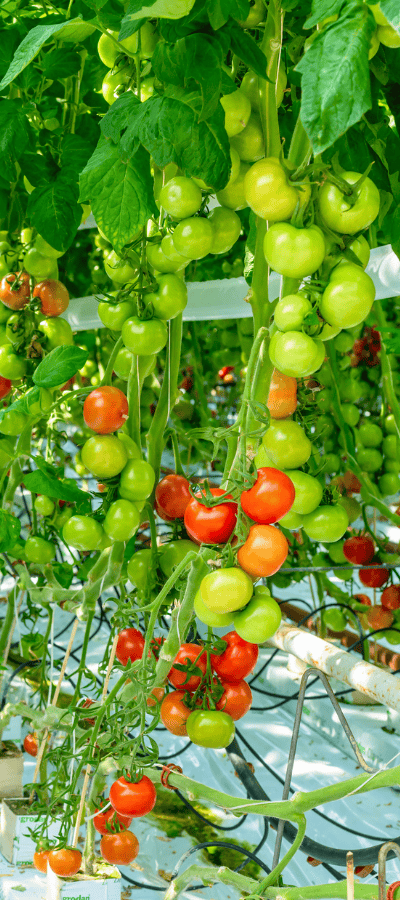
How Much Water Does Agriculture Actually Use?
Agriculture accounts for approximately 70% of global freshwater withdrawals, ahead of industry at just under 20% and domestic use at about 12%. Around 25% of all irrigation water is drawn from groundwater — generally the hardest water a holding will handle. Irrigated land represents roughly a fifth of the world's cultivated area yet produces some 40% of global crop output, which places disproportionate value on every irrigated hectare performing as designed. Requirements vary considerably by crop, soil and climate, but one factor is common to all systems: how much of the water applied actually reaches the root zone.
~70% of global withdrawals
Agriculture is the largest single user of fresh water worldwide, and the majority of it is applied through irrigation systems.
25% of irrigation from groundwater
A quarter of all irrigation water is abstracted from aquifers — typically the hardest and most scale-forming supply available to a holding.
40% of crop output, 20% of land
Irrigated systems produce around 40% of the world's crops from a fifth of its cultivated area, concentrating risk on irrigation performance.
Sources: UN World Water Development Report 2024, UNESCO · FAO, The State of the World's Land and Water Resources · Our World in Data, Water Use and Stress · Grafton et al. (2018), The paradox of irrigation efficiency, Science. Figures are study- and agency-reported estimates; individual holdings vary.
The True Cost of Untreated Water
The cost of untreated water is distributed across several budget lines — labour, chemicals, replacement parts, energy and crop performance — which is why it is rarely quantified as a single figure. The sections below set out where it accumulates.
Blocked Emitters & Spray Nozzles
Every litre that evaporates at a dripper or nozzle leaves its minerals at the smallest orifice in the network. Emitters obstruct first, application turns uneven along the laterals, and the holding absorbs a continual cycle of removal, acid-soaking and refitting.
Scale on Heated Equipment
Calf-milk tanks, wash-down heaters, parlour plate coolers and glasshouse circuits scale fastest of all, because heat drives minerals out of solution. The cost is incurred twice: additional fuel consumed through the scale layer daily, then acid and downtime to remove it.
Biofilm in Irrigation & Drinker Lines
Warm, static, nutrient-rich water supports microbial growth. Biofilm restricts line diameter and blinds filters, shelters bacteria from the chlorine intended to control them, and drives microbiologically induced corrosion in the pipework beneath it.
Suppressed Germination & Yield
On saline and high-hardness ground the water itself limits the crop, suppressing germination and early growth before the season is properly under way. The conventional response is increased fertiliser application, which addresses the symptom at full cost.
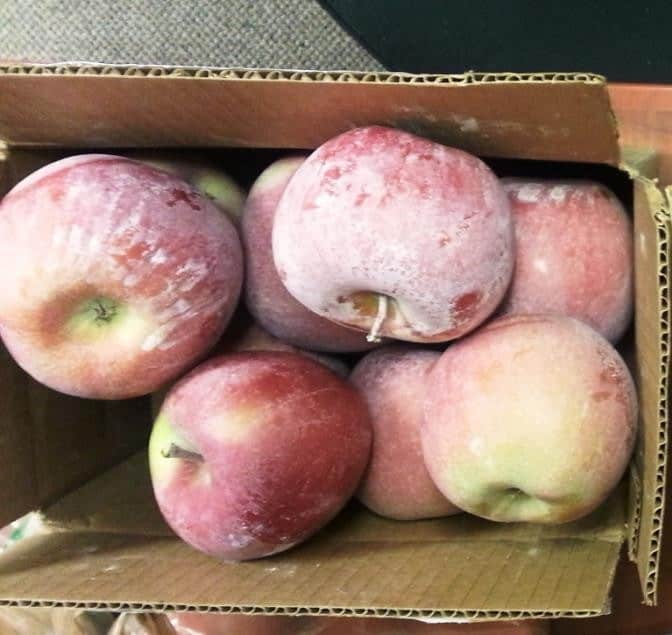
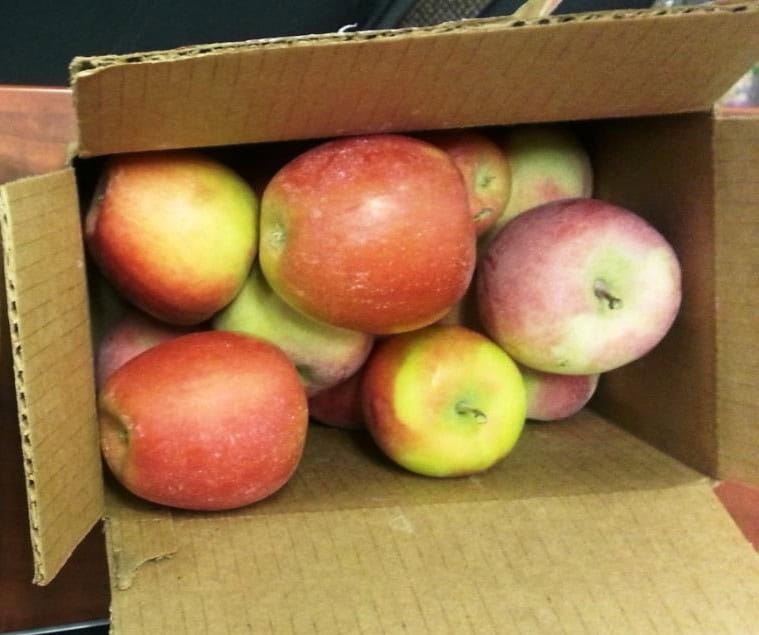
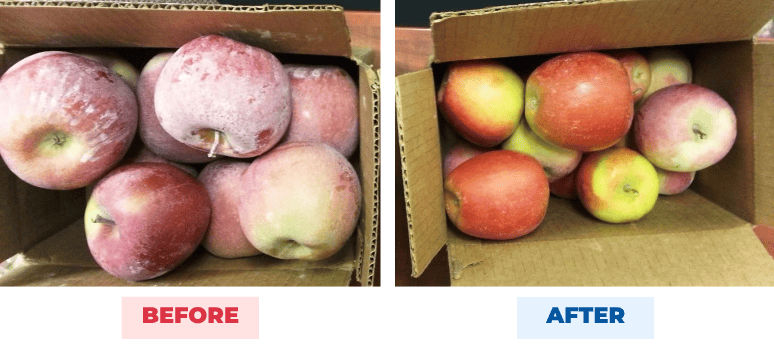
Yakima Valley orchard, Washington: hard-water staining from overhead irrigation had held top-grade fruit at around 50%. With HydroFLOW® fitted, the deposit forms as a soft powder that rubs off in handling, and the grower expects 90%+ at top grade. Read the case study →
Where the Savings Add Up
Scale and biofilm carry a continuous cost across a farm's water — labour, chemicals, energy, equipment life and crop performance. Hydropath addresses six of the most significant recurring costs.
Lower Maintenance Labour
Cleaning frequency is typically the first cost to fall. At Al Jouf, flushing intervals extended from five days to twenty and restart flushing fell from 30 minutes to two. A six-acre nursery in Italy, which had been dismantling and chemically cleaning its sprayers, reported no blocked nozzles several months after fitting a single unit.
Reduced Acid & Cleaning Chemicals
Less scale bonded to surfaces requires less chemistry to remove it. Al Jouf had required weekly flushing and acid injection; six months after fitting, flushing intervals had extended to twenty days.
Lower Energy Costs
Scale insulates heat-transfer surfaces — around 1 mm can reduce heat transfer by about 7%. Cleaner coils, plate coolers and glasshouse circuits deliver a saving realised on every fuel bill, not solely at the annual strip-down.
Longer Filter, Emitter & Seal Life
Deposits held in suspension pass through the system rather than embedding in it. Backwash frequency falls, valve seals cease weeping, and replacement emitter consumption reduces accordingly.
Improved Crop Yield & Grade
On most holdings margin is determined by grade. A Yakima orchard moved from 50% to an expected 90%+ top-grade fruit, and Faran Sugar Mills recorded 14% more maize from the same ground on less fertiliser. In a South American rose glasshouse, average stem length rose 18.5%, taking the share of stems making the 50 cm grade from 26% to 89%.
Fast Return on Investment
A single fitting, no consumables, no servicing schedule and a power draw comparable to a small lamp. Once installed there are no recurring purchases, so each subsequent season contributes directly to margin.
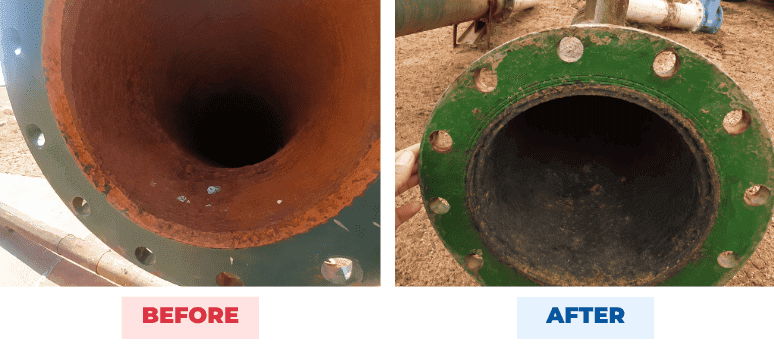
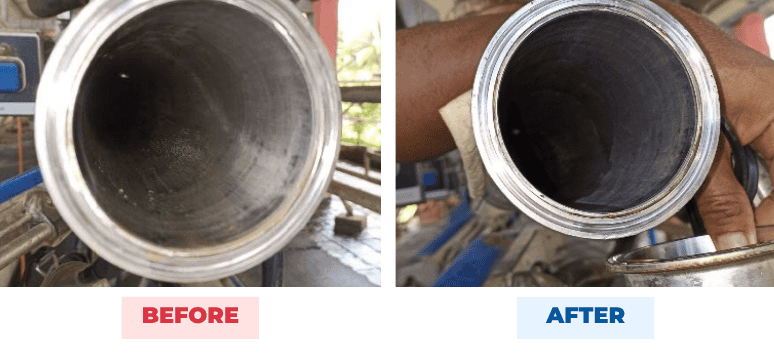
Olive groves at Al Jouf, Saudi Arabia: six months of treatment reduced biofilm and corrosion against an untreated comparison well. Well restart flushing fell from 30 minutes to two, and flushing intervals extended from five days to twenty.
Al Jouf irrigation pipework before and afterDon’t take our word for it — test it on your own irrigation system.
Every labour, chemical and crop figure on this page is designed to be independently verified using a documented, step-by-step testing protocol run on your own irrigation lines, borehole and heated equipment.
Get a Free Farm Water Assessment
Irrigation Water Treatment Physical, Not Chemical!
A physical scale inhibitor for irrigation lines, boreholes, livestock water and glasshouse heating, powered by a patented electronic signal
HydroFLOW® induces a patented ~150 kHz signal into the water through the pipe wall. The signal changes how dissolved minerals behave: instead of bonding to emitters, valve seals and heat-transfer surfaces as hard calcium carbonate scale, calcium and magnesium ions form loose clusters in the water. Where the water concentrates through evaporation — at a spray nozzle, a dripper, a heated tank — those clusters crystallise in suspension, as fine particles carried through the system rather than fouling the surfaces they pass.
The result is scale control at the point where deposits are born — the moment of crystallisation — with no salt, no acid dosing and no cut into the pipe. The signal propagates in both directions through the pipework, so a single unit at the borehole discharge or transfer pump protects the network beyond it. It works on HDPE, PVC and metal alike, and it continues working on water standing between irrigation cycles, where deposits and biofilm would otherwise consolidate.
Because the treatment alters how minerals behave rather than what the water contains, the hardness reading is unchanged and calcium remains available to crop and livestock. Nothing is dosed, so there is no residue, no discharge to land and no material to enter in an organic system plan.
Learn More About Our TechnologyOne Technology — Clearer Lines, Better Crop Grade
Across irrigation lines, boreholes and heated equipment, one fitting changes what your water costs you.
Treated Water Redissolves Deposits
Because new scale stops forming, the water regains capacity to dissolve minerals — and slowly draws existing calcium carbonate back into solution, layer by layer, from emitters, valve seats and heated surfaces alike.
Gradual and Safe by Design
Progressive removal avoids the risks of acid descaling: no concentrated acid to handle, no metal thinned by the descale itself, and no shutdown mid-season. Expect some loosened material at the filters in the first few weeks — that is the system clearing, and it settles.
Photographed on a Working Farm
Six months of treatment at Al Jouf released detached mineral deposits and blackened the orange corrosion products lining the pipework, while the untreated comparison well was unchanged. See the photographic record.
A Different Approach to Farm Water
How HydroFLOW® compares with the usual ways of protecting irrigation and livestock water from hard-water scale.
| HydroFLOW®Physical conditioner — no chemicals | Salt water softener | Acid or antiscalant injection | Manual acid flushing | |
|---|---|---|---|---|
| How it works | Electronic signal crystallises minerals in suspension so they cannot bond as scale on emitters, valves and heated surfaces | Removes calcium & magnesium from the supply by ion exchange, substituting sodium | Dosed chemistry lowers pH or interferes with crystal growth in the line | Acid strips deposits after they have formed |
| Effect on soil & crop | Neutral Hardness unchanged; calcium and magnesium stay available to the crop | Adverse Raises sodium — softened water is unsuitable for irrigating many crops and can degrade soil structure | Managed Alters pH; requires monitoring to avoid crop and equipment damage | None Lines flushed before return to service |
| Consumables | None No salt, no acid, no dosing | Regular salt refills and regeneration water | Continuous acid purchase, storage and handling | Acid, neutralising and labour at every clean |
| Removes existing scale | Yes Gradually redissolves deposits | No Prevention only, downstream of the unit | Partial Depends on dose and programme | Yes But with downtime and corrosion risk |
| Livestock drinking water | Suitable Nothing added — no residue and no withdrawal considerations | Not advised Raises sodium in drinking water | Not advised Demands strict dose control on stock lines | N/A Lines out of service during cleaning |
| Organic holdings | No input added Nothing is added to the water, so there is no material to enter in an organic system plan | Declarable Input to justify at inspection | Declarable Input to justify at inspection | Declarable Cleaning chemistry to record |
| Downtime to fit | None Installs onto the existing pipe; irrigation stays live | Cut-in installation, drain-down and power | Injection point, dosing pump, tank and monitoring | Lines offline for every clean |
Swipe sideways to compare all four methods →
Comparison reflects typical products in each category; individual systems vary. HydroFLOW® is not a filter — filtration for sand, silt and suspended solids remains a separate requirement, as do any drinking-water and food-safety duties on the holding.
Applications
Key applications for farms
A farm's water challenge runs from the borehole to the emitter. Each application links to its dedicated treatment page.
Misting & Spray Systems
Keeps spray nozzles and misting lines at their design flow rate, so application stays even across the block without the strip-and-acid-soak routine.
Wells & Boreholes
Treats hard groundwater at the discharge, protecting the pump, the rising main and every emitter, drinker and heater downstream of it.
Limescale & Scale Control
The wider limescale picture — how calcium carbonate forms across irrigation and farm water systems, and how it is treated and gradually removed.
Biofouling & Biofilm
Helps disrupt biofilm in irrigation mains, fertigation lines and livestock drinkers, protecting flow, filtration and water quality across the holding.
Filters & Filtration
Reduces the mineral load reaching filter banks ahead of drip and sprinkler runs, so backwash frequency falls and filter life extends.
Heat Exchangers
Reduces fouling on plate and shell-and-tube exchangers in dairies and glasshouse circuits, protecting heat transfer and cutting acid cleaning.
Process Overview
Simple Installation. No Interruption to Irrigation.
Our patented technology retrofits onto your existing pipework while irrigation continues.
The Fit
The HydroFLOW® unit installs around your existing borehole, ring main or filter-skid pipework — no cutting, no drain-down, no interruption to irrigation. Typically under an hour, with the system live throughout.
The Signal
A patented electronic signal propagates in both directions through the water, treating the network from a single point. It works on HDPE and metal alike, and continues on water standing between irrigation cycles.
The Results
Emitter and nozzle blocking typically eases within weeks. Existing deposits release over the following months. Crop and grade effects follow the growing cycle — the Faran Sugar Mills trial ran three months.
Proven On Site
Real Farms. Real Results.
Drawn from Hydropath installations and our customers' own feedback across arable, horticulture, orchards and dairy farms.
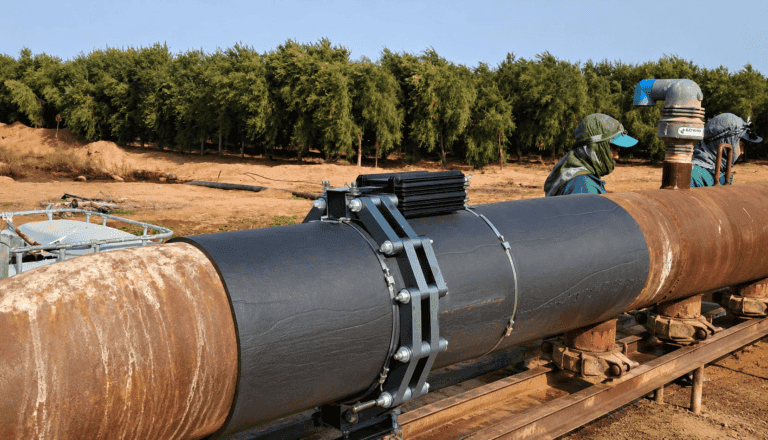
Saudi Olive Grove: Flushing Cut from 30 Minutes to 2
A 60,000 hectare farm in Al Jouf cut well restart flushing from 30 minutes to 2 and reduced emitter clogging risk by up to 50% with four HydroFLOW® units.
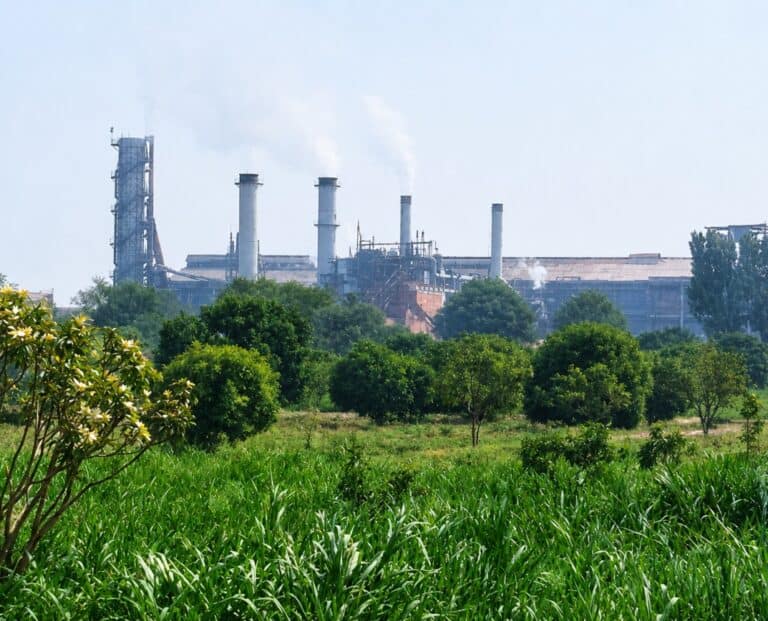
Pakistan Sugar Mill: 14% More Maize With Treated Water
Faran Sugar Mills treated high-TDS underground irrigation water with HydroFLOW®, improving germination, maize yield and sugarcane growth in field trials.
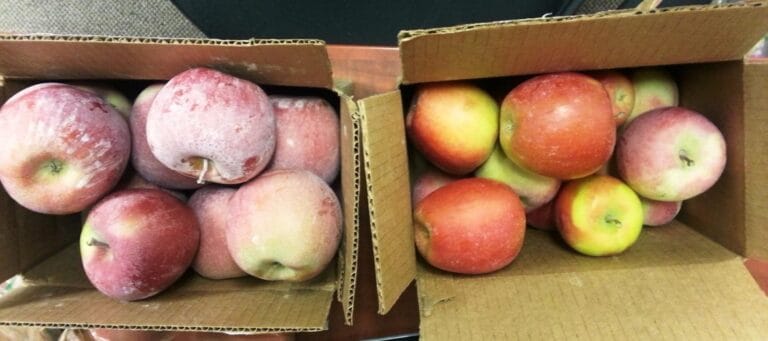
Washington Orchard: Over 90% Top Grade Apples Expected
A Yakima Valley fruit grower turned hard scale on apples into a removable powder and cleared its irrigation pond with one HydroFLOW® custom 12 inch unit.
Support & FAQ
Frequently Asked Questions
What is agricultural water treatment?
Agricultural water treatment is the set of measures that keep a farm's water usable from source to crop — managing hardness and limescale, controlling biofilm and algae in irrigation and livestock lines, and protecting the equipment that water passes through, from borehole pumps and filter banks to emitters, drinkers and parlour plate coolers.
It matters because most holdings cannot choose their supply: water is drawn from a borehole, a well or a surface abstraction, and agriculture accounts for roughly 70% of global freshwater withdrawals, around a quarter of it from groundwater. HydroFLOW® adds a chemical-free physical layer that changes how minerals behave in that water, so scale and biofilm stop forming on the surfaces where they cost you flow, fuel and labour.
How do you stop drip irrigation emitters clogging in hard water?
Emitters clog for three reasons: physical debris, mineral deposits and biological growth. Filtration and flushing handle the first. The second comes from the water itself — every litre that evaporates at the emitter leaves its calcium behind, at the smallest orifice in the whole system. HydroFLOW® addresses that directly: minerals crystallise in suspension and pass through the emitter instead of building at it.
At Al Jouf in Saudi Arabia, where more than half the emitters were affected, well restart flushing fell from 30 minutes to two and emitter clogging risk fell by up to 50% over a six-month evaluation. More on misting and spray systems.
Can you use softened water for irrigation?
Generally, no — and this is the one place where the conventional hard-water fix is wrong for farming rather than merely expensive. An ion-exchange softener does not so much remove hardness as swap it: calcium and magnesium out, sodium in. Sodium degrades soil structure and reduces infiltration, which is why softened water is unsuitable for irrigating many crops.
This is also why HydroFLOW® is not a softener and does not work like one. It removes nothing, so your hardness reading will not change and no sodium is added. What changes is where the hardness ends up: in suspension and out through the emitter, rather than bonded to the pipe wall as limescale.
At Faran Sugar Mills, the treated plots were still irrigated with hard groundwater at 2,000–2,400 ppm TDS — nothing was taken out of it — and still produced 14% more maize than the untreated control.
Is hard water bad for crops?
Not usually for the plant itself. Calcium and magnesium are nutrients, and for most crops moderately hard irrigation water supplies a good share of the calcium the crop needs. The damage is done to the equipment delivering it — blocked emitters and spray nozzles, seized valves, blinded filters, and scale on anything heated.
There are two exceptions worth knowing. Overhead irrigation can leave visible mineral staining on the crop: at the Yakima orchard that staining was pulling fruit down a grade, with only half the crop reaching top rating. And on saline or high-hardness ground the water can suppress germination and early growth, which is normally answered with more fertiliser at full cost.
So the practical question is not whether to strip the minerals out of your water, but whether to stop them depositing where they cost you.
Crop quality can move with it. In a South American rose glasshouse, nine months after the irrigation main was treated, average stem length had risen from 42.3 cm to 50.1 cm and the share of stems making the 50 cm grade had gone from 26% to 89%. That was measured before and after rather than against an untreated control, and verified by the site’s own technical staff.
Will it clear scale and biofilm that have already built up?
Gradually, yes, and the character of the deposit changes first. At the Yakima orchard, scale that had bonded to the fruit as a hard stain formed instead as a soft powder that came away in handling.
Existing deposits then release over the following weeks and months, because water no longer saturated with new scale regains capacity to dissolve old. At Al Jouf, six months of treatment released detached mineral deposits and blackened the orange corrosion products lining the pipework, while the untreated comparison well was unchanged.
Expect to see loosened material at the filters early on. That is the system clearing, and it settles.
How do you get rid of algae and slime in irrigation lines?
Flushing, acid and hydrogen peroxide will all clear a line that has already fouled, but none of them changes the conditions that let it foul again. HydroFLOW® works on the conditions: because treatment does not depend on flow, it keeps working on water standing between irrigation cycles, which is exactly when biofilm consolidates and algae take hold.
At Al Jouf, gelatinous biofilm inside the irrigation network was visibly reduced against an untreated comparison well, and flushing intervals extended from five days to twenty. The Yakima orchard also reported its source pond running clearer, with floating algae blooms reduced within two weeks of fitting.
Can it be used on an organic holding?
The treatment is electronic and adds nothing whatsoever to the water, so there is no material to enter in an organic system plan — which is a different position from a dosed product that has to be justified at inspection.
Organic standards and certifying bodies differ by country and by scheme, so confirm with your own certifier before fitting. We can supply the technical documentation describing how the units work, which is normally what they ask for.
Will it work on plastic pipe?
Yes. The signal is induced into the water rather than the pipe, so HDPE, MDPE and PVC are all suitable, as are copper and steel. The Al Jouf installation runs on steel pipework feeding a polyethylene distribution network, and at Pegliasco Nurseries in Italy a single unit sits on a 50 mm irrigation line after the transfer pump.
Pipe material does not affect sizing; diameter does. Most holdings start at the borehole or well discharge.
How quickly will I see a difference?
It depends what you are measuring. Emitter and nozzle blocking typically eases within weeks. Existing scale and biofilm release over the following months — the Al Jouf evaluation ran six.
Crop and grade effects follow the growing cycle. The Faran Sugar Mills trial ran three months, the Yakima orchard was evaluated two months after fitting, and the rose glasshouse evaluation ran nine months, from April to January.
Does it replace my filtration?
No. HydroFLOW® is not a filter and does not remove sand, silt or suspended solids — those still need mechanical or cartridge filtration. What it does is reduce the mineral and biofilm load reaching that filtration, which is why backwash frequency typically falls.
Sites that fit it keep their filtration in place. If your primary problem is sediment rather than scale or biofilm, filtration is the answer and we will tell you so. See filters and flocculation and filtration.
Is it safe for livestock drinking water?
Yes. Nothing is added to the water and its chemistry is unchanged, so there is no residue and no withdrawal consideration. Units are commonly fitted on drinker lines and calf-milk water heaters, where the aim is to control scale in the heater and biofilm in the lines.
On the parlour side, a dairy farm in Panama fitted one unit to the heaters serving its raw milk piping wash system and saved $803 a year in cleaning chemicals, with milk scale remover down 22%.
Ready to Stop Scale Costing You a Season?
Tell us about your water source, your irrigation layout and what fails first, and our team will recommend the right units and set out what to expect — including where our assessment is that we cannot help.
Ready to explore sustainable water treatment?
Get in touch to find out how HydroFLOW® can work for you.

© 2026 Hydropath Technology Ltd. All rights reserved