Saudi Olive Grove: Flushing Cut from 30 Minutes to 2

Home 9 Case Studies and Results 9 Saudi Olive Grove: Flushing Cut from 30 Minutes to 2
Key results
30 minutes to 2 minutes flushing
Up to 50% lower clogging risk
4x longer maintenance interval

Case Study from HydroFLOW Tunisia

Drip irrigation clogging on a 60,000 hectare farm

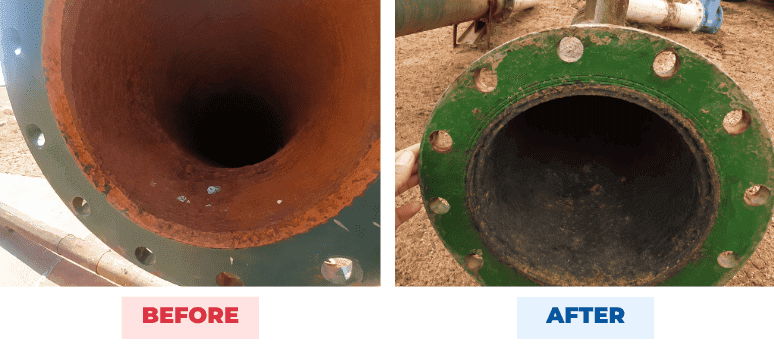
Drip irrigation clogging was affecting more than half the emitters on a 60,000 hectare olive and crop farm in Al Jouf, Saudi Arabia. Biofilm, mineral deposits and microbiologically induced corrosion were all coming out of the wells together. Every well restart needed half an hour of flushing, and weekly flushing and acid injection were using water, labour and chemicals without solving the underlying problem. Four HydroFLOW® custom 10 inch units were fitted to two wells and run for six months against an untreated comparison well. Restart flushing fell from 30 minutes to two, the flushing interval stretched from five days to 20 and emitter clogging risk dropped by up to half.

The Challenge
  • Drip irrigation clogging affected more than 50% of emitters
  • Well restart flushing took 30 minutes or more
  • Weekly flushing and acid injection were required
  • Daily winter restarts increased water loss and labour
  • Microbiologically induced corrosion, biofilm and minerals contaminated the well water

Irrigation pipe before and after HydroFLOW, scale cleared from drip irrigation line at a Saudi Arabia olive grove

The Solution

  • Units installed: four HydroFLOW® custom 10 inch units, two per well
  • Installation point: wells A127 and D97, one unit before filtration and one after
  • Trial: six months against untreated comparison well D96
  • Previous treatment: weekly flushing and acid injection

To tackle drip irrigation clogging at source rather than at the emitters, the units were fitted at the well heads, before and after filtration. The signal disrupts the conditions that let biofilm and mineral deposits bond to surfaces. The two treated wells were then compared with untreated well D96 over six months for MIC activity, the condition of wells and pipework, and flushing intervals.
Key Outcomes

R

Typical restart flushing fell from 30 minutes to 2

R

Flushing interval extended from 5 days to 20 days

R

Emitter clogging risk reduced by up to 50%

R

Clear evidence of biofilm and MIC reduction

Independent Verification

All results in this study were measured and verified by third-party facilities managers and technical staff.

Summary

Restart flushing fell from 30 minutes to two, with MIC activity inhibited and wells and pipework running cleaner. Farms on deep well water rarely have a supply problem; they have a biofilm and mineral problem that shows up at the emitters. Treating it at the well head, before filtration, is what made the difference here, and the untreated comparison well is what makes the result credible.

Ready to see more?

Ready to explore sustainable water treatment?

Get in touch to find out how HydroFLOW® can work for you.

© 2026 Hydropath Technology Ltd. All rights reserved