High TDS irrigation water at Faran Sugar Mills
High TDS irrigation water was limiting germination and yield on trial plots at Faran Sugar Mills in Pakistan. The site’s underground water carried 2,000 to 2,400 TDS with heavy salt and calcium, and canal water was not normally available. Maize and sugarcane grown on the well water were shorter and lighter than they should have been. A HydroFLOW® unit was installed at the well discharge, and side by side trials compared untreated groundwater, treated groundwater and Sindh River canal water over 89 days for maize and 98 days for sugarcane. On the treated plots, maize yield rose 14.28%, sugarcane height rose 19% and sugarcane weight rose 8%.
The Challenge
- High TDS irrigation water from the site’s wells limited germination and yield
- Underground water carried high salt and calcium levels
- TDS readings were around 2,000 to 2,400
- Canal water was not normally available for the comparison plots
- Poor germination reduced crop growth and yield
The Solution
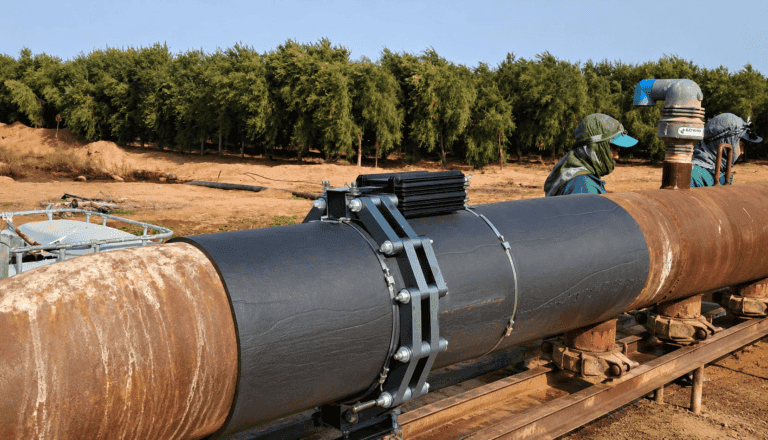
- Unit installed: one HydroFLOW® unit
- Installation point: well discharge
- Trial: 89 days for maize, 98 days for sugarcane
- Water: underground water at 2,000 to 2,400 TDS, high in salt and calcium
The trial set out to test whether high TDS irrigation water could be made more productive without changing the source. Plots irrigated with treated groundwater were grown alongside plots on the same untreated groundwater, with Sindh River canal water as the benchmark. The signal changes how dissolved minerals behave in the water, and germination, crop height, weight and yield were then compared plot by plot.