Case Study from HydroFLOW Italy
Jar washing water treatment on a food packaging line
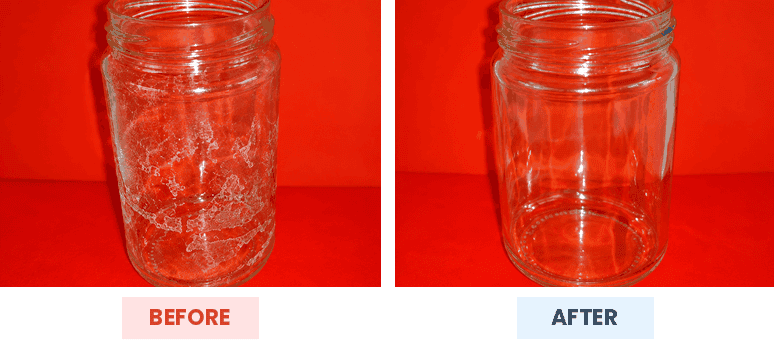
Jar washing water treatment mattered to a food preserves manufacturer in Puglia, Italy, because every jar had to leave the line clean. After filling and sterilisation, the glass jars were washed with well water at 19 °fH (190 ppm) to remove product residue, show up any oil leakage and dry without marks. Instead, white mineral marks remained once the jars dried, slime clogged the spray nozzles, sudden foam affected the line, and dispersant and surfactant dosing added cost. One HydroFLOW® i45 was fitted to the 1½-inch well-water inlet before the PP filter. Within seven days the dried jars showed no mineral marks, and dispersant dosing stopped while surfactant fell by 80%.
The Challenge
- Jar washing water treatment had to stop white mineral marks on dried jars
- Slime formed on the spray nozzles and clogged them
- Sudden foam affected the washing line
- Dispersant and surfactant dosing added operating cost
- The well water ran at 19 °fH (190 ppm)
The Solution
- Unit installed: one HydroFLOW® i45
- Installation point: 1½-inch well-water inlet, before the PP filter
- Water: well water at 19 °fH (190 ppm)
- Dosing changed: dispersant stopped, surfactant reduced to 20% of the previous dose
To improve jar washing water treatment without adding chemicals, the i45 went on the well-water inlet ahead of the PP filter, so all the wash water was treated before it reached the sprays. With the unit in place, dispersant dosing was stopped and surfactant was cut to a fifth of its previous dose, and the jars and nozzles were then checked at seven and 60 days.