When Dr Danny Stefanini first came to Britain in 1966, something he saw at Victoria Station stayed with him for the rest of his life. Years later, the British Gas HydroFLOW relationship would begin with the water treatment technology he was developing in a Nottingham garage.
Based on the recollections of Dalia Stefanini, Hydropath co-founder.
Waiting to meet his uncle, Danny noticed an unattended newspaper stand. People picked up a paper, put their money in a box and took their change. He watched, expecting someone to take the money. Instead, the newspaper seller eventually returned, put down another pile of papers and collected the box, whistling as he worked.
His wife and Hydropath co-founder, Dalia Stefanini, remembers him telling her the story. It was that small demonstration of trust, she says, that helped him decide Britain was where he wanted to live.
Years later, when British Gas expressed an interest in the water treatment technology he was developing in the family garage, it carried a particular significance. An organisation whose name was familiar in homes across his adopted country was taking his invention seriously.
From a Nottingham garage to British Gas
Danny’s interest in limescale grew out of his work in the swimming pool industry. By the late 1980s, Dalia recalls, he was developing prototypes of a device to tackle it, working in his own small laboratory in their garage in Nottingham.
“I still have some of the drawings,” she says.
Those drawings connect today’s Hydropath with its beginnings: an engineer working through an idea, building prototypes and talking to people who might have a use for them. Early units were finding their way into plumbing suppliers in London. Then British Gas got in touch.
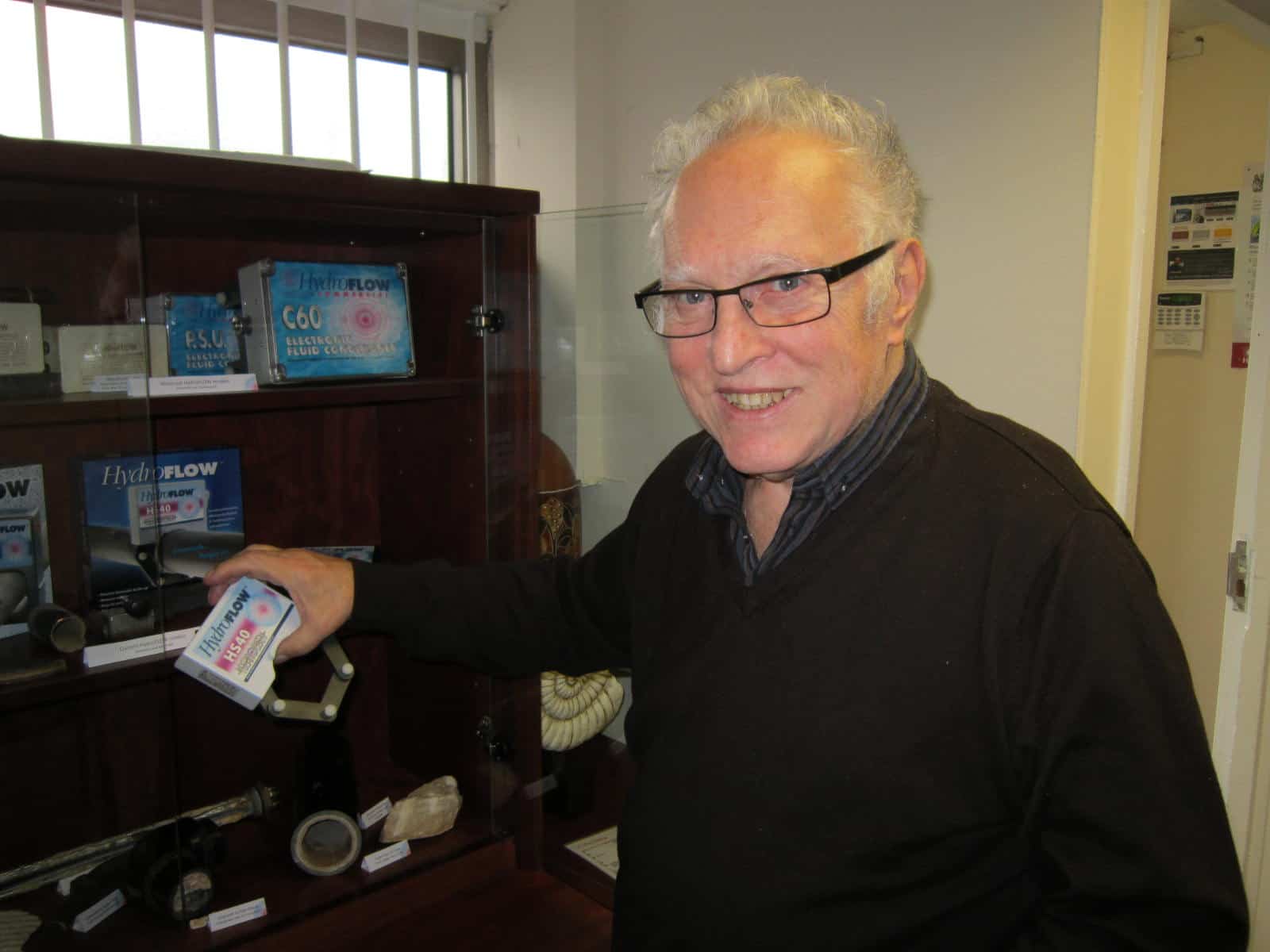
Dr Danny Stefanini, Hydropath’s founder, beside a cabinet of HydroFLOW® units in the company office.
Dalia remembers British Gas purchasing a few of the early HP18 units. Later came an approach from its investment arm. British Gas wanted to invest in the business.
Danny, she recalls, was “completely flabbergasted”. He was working from a garage; British Gas was a household name. Its willingness to back the technology was a moment of enormous pride.
As Dalia tells it, British Gas became a shareholder and an important part of Hydropath’s early development. Hydropath later bought back those shares over a number of years. The relationship between the companies continued through the supply of HydroFLOW®.
The cost of limescale in British homes
For a household, a boiler is a significant investment. Hard water contains dissolved calcium and magnesium minerals. When water is heated, these can form limescale deposits on hot-water surfaces, affecting heat transfer, flow and maintenance. The problem is particularly relevant to the domestic hot-water side of a boiler or the heat exchanger in a combi boiler.
The consequences can include increased energy use, remedial work and disruption to hot water. Over time, protecting equipment from damaging deposits can help support its useful life. Hydropath’s boiler and hot-water limescale guide explores where scale forms and why it matters.
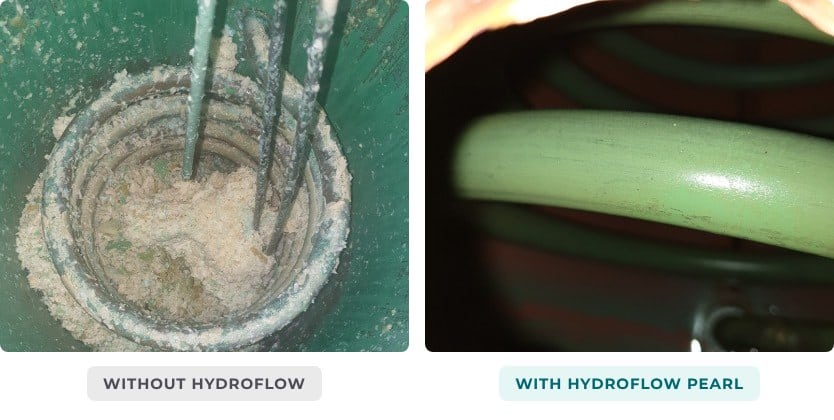
Left: a hot water cylinder with heavy, hard scale. Right: a cylinder protected by a HydroFLOW® Pearl, with the coil clear of limescale.
British Gas’s limescale control information also describes damage to household appliances and heating efficiency associated with scale. These are reasons for homeowners to take limescale seriously when considering the running costs and longevity of their heating and hot-water systems. They help explain British Gas’s longstanding interest in offering customers a way to protect those systems.
An invention put to the test
British Gas’s Research and Technology Division at Watson House assessed a selection of water-conditioning and chemical-dosing approaches in 1992. Its work included the early Hydropath HP18, tested under demanding conditions intended to represent severe domestic use.
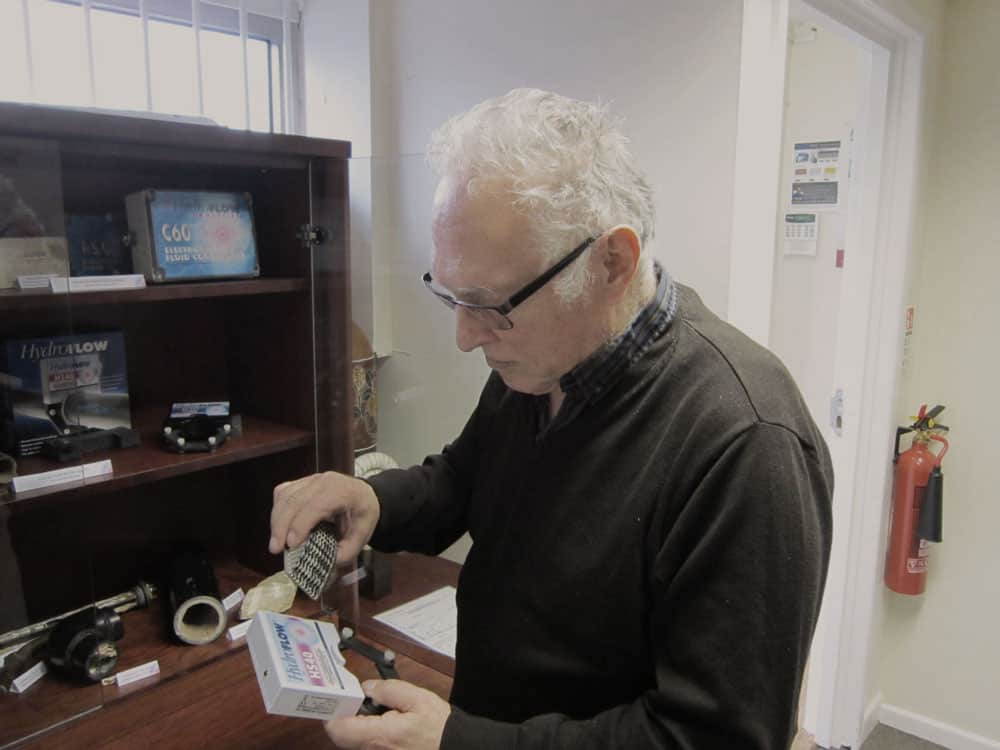
Dr Danny Stefanini at work on a HydroFLOW® unit in the Hydropath office.
That historical assessment concerned an early device and an accelerated test, not the performance of today’s HydroFLOW® models in household boilers. Its relevance here is the serious technical interest British Gas showed in an invention that had begun in Danny’s garage.
Research into physical scale conditioning has continued since then. A 2020 peer-reviewed review in npj Clean Water considered electromagnetic treatment across many studies. It discussed reports of reduced scale adherence alongside variation in results and the importance of operating conditions. The review covered a broad category of technologies and should not be treated as a direct test of HydroFLOW.
There is also more recent research on HydroFLOW itself. A 2025 ASME technical conference paper reported laboratory tests of two HydroFLOW devices in a heated hard-water loop. The researchers observed differences in the scale’s structure and how readily it could be removed from heating elements. A related 2026 University of Louisville engineering thesis examined the Pearl Plus and S38. These are related pieces of work by the same researcher, not two independently replicated household trials. Neither establishes a guaranteed saving on energy bills or a particular boiler lifespan.
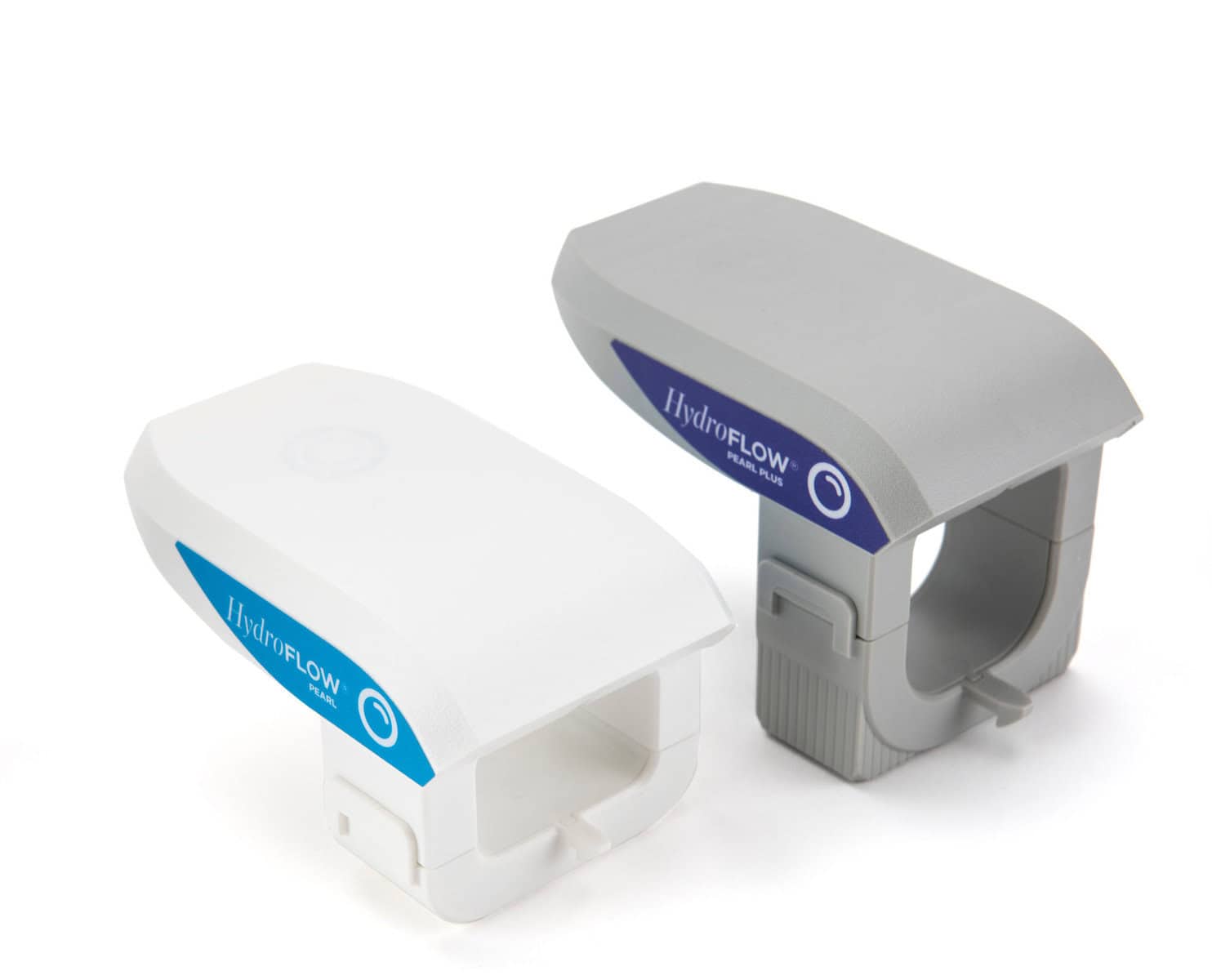
The HydroFLOW® Pearl and Pearl Plus, today’s home units. The Pearl Plus was one of the devices examined in the University of Louisville research.
For Hydropath, the early British Gas evaluation became part of the foundation of a longstanding relationship. For Danny, it meant that an idea developed in his garage had earned serious consideration from engineers working on a problem that affected households across Britain.
British Gas HydroFLOW today
Today, British Gas continues to offer HydroFLOW through its limescale control service. Its published information describes an engineer’s home assessment to check suitability, followed by a fixed-price quotation. That is different from purchasing a standalone unit directly from Hydropath, and the quotation relates to the British Gas offering.
HydroFLOW® is an electronic water conditioner that installs on the pipe and works without adding treatment chemicals to the water. It is designed to help manage scale deposits, but it does not remove the dissolved hardness minerals. It is therefore not the same as an ion-exchange water softener. Nor does it replace normal boiler servicing or the inhibitor needed in a sealed central-heating circuit.
Hydropath also supplies its own residential HydroFLOW range, including HydroFLOW® Pearl. These are separate purchasing options, not a statement about which model British Gas installs or what its quotation includes.
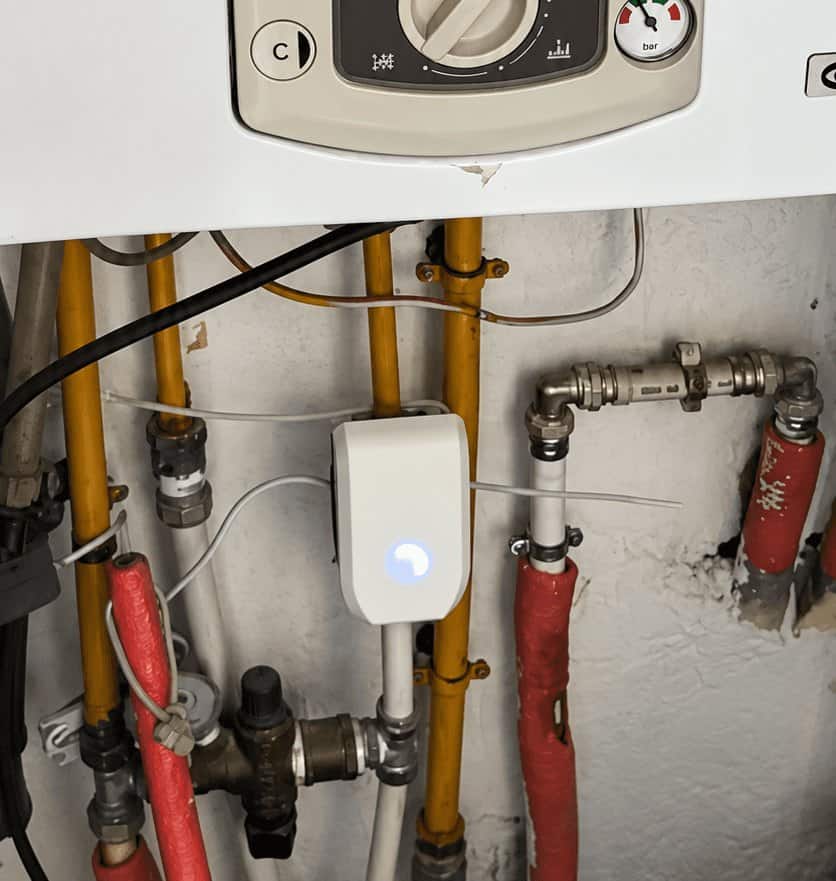
A contemporary HydroFLOW® Pearl installed on the cold water feed below a combi boiler, at a villa in Tunisia. This is not a British Gas installation.
A relationship built between people
Dalia speaks with pride about British Gas’s place in Hydropath’s story, and about the continuing relationship between the two companies.
Over the years, the relationship has also brought people together in person. Hydropath attended engineer meetings, British Gas events, in-house exhibitions and training sessions. These occasions gave colleagues opportunities to talk directly about the technology and its use in customers’ homes. A 2009 trade report on Hydropath’s training programme mentions earlier regional training events hosted by British Gas.
Those conversations are part of the shared history too. A relationship that began with an inventor and a few early units became one involving the people who made the products, the engineers who fitted them and the households they served.

The Hydropath team in 2017 with the Water Environment Federation’s Innovative Technology Award.
Much has changed since 1992. The energy market has evolved, teams have changed and Hydropath’s technology has developed. British Gas remains a familiar presence in British homes, and HydroFLOW remains part of its limescale offering. There is reason to take pride in that continuity and in the responsibility that comes with a longstanding name.
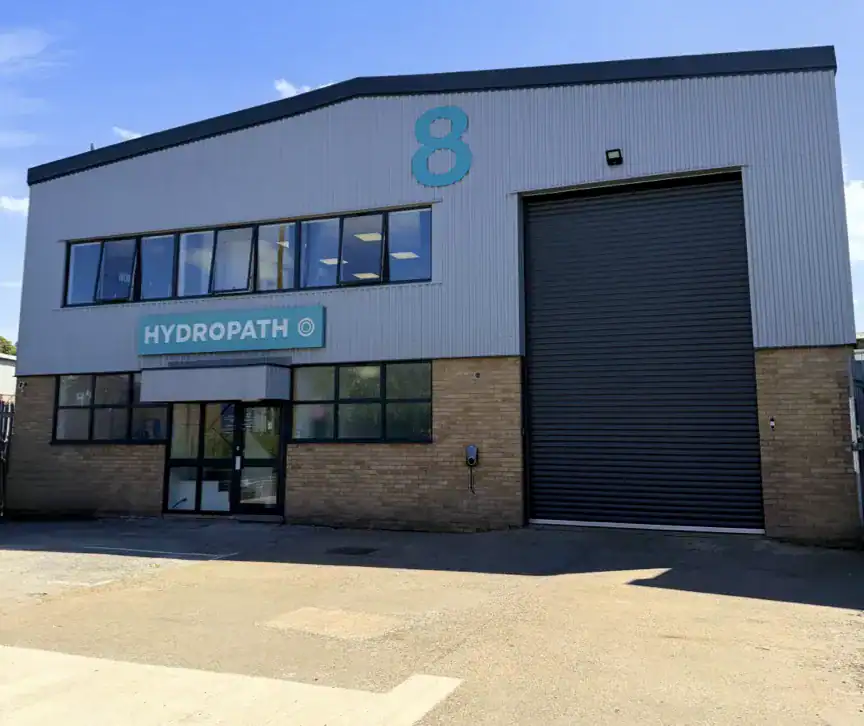
Hydropath’s headquarters in Nottingham today, a few miles from the garage where it began.
A legacy carried forward
For Dalia, the story remains personal. She remembers the drawings, the garage and her husband’s astonishment when British Gas wanted to invest. She also remembers how much it meant to him to build his working life in Britain.
The trust he saw at Victoria Station offers a thread through those memories. In business, that trust depends on people taking responsibility for their work and valuing the reputation attached to their name. It is a standard we recognise in the origins of this relationship and one we want to carry forward.
Speaking of Danny, Dalia says:
We continue his legacy.
British Gas has an important place in that legacy: as an early investor, a customer and an organisation whose interest brought him lasting pride.
More than three decades on, the relationship is part of both companies’ history and of Hydropath’s present. Remembering how it began honours the people who built it and gives those continuing it today a shared story to carry forward.
Frequently asked questions
Does HydroFLOW really work?
There is evidence worth considering, but its scope matters. British Gas examined the early HP18 in 1992. A 2025 ASME conference paper and a related 2026 University of Louisville thesis reported changes in scale structure and ease of removal in laboratory testing of newer HydroFLOW devices. These findings do not guarantee results in every household, and the two publications come from related research rather than independent replications. Suitability depends on the particular water system.
How does HydroFLOW work?
A HydroFLOW® electronic water conditioner installs on an existing water pipe and applies a signal designed to influence scale formation and adhesion. It does not remove calcium or magnesium from hard water and does not replace routine boiler maintenance.
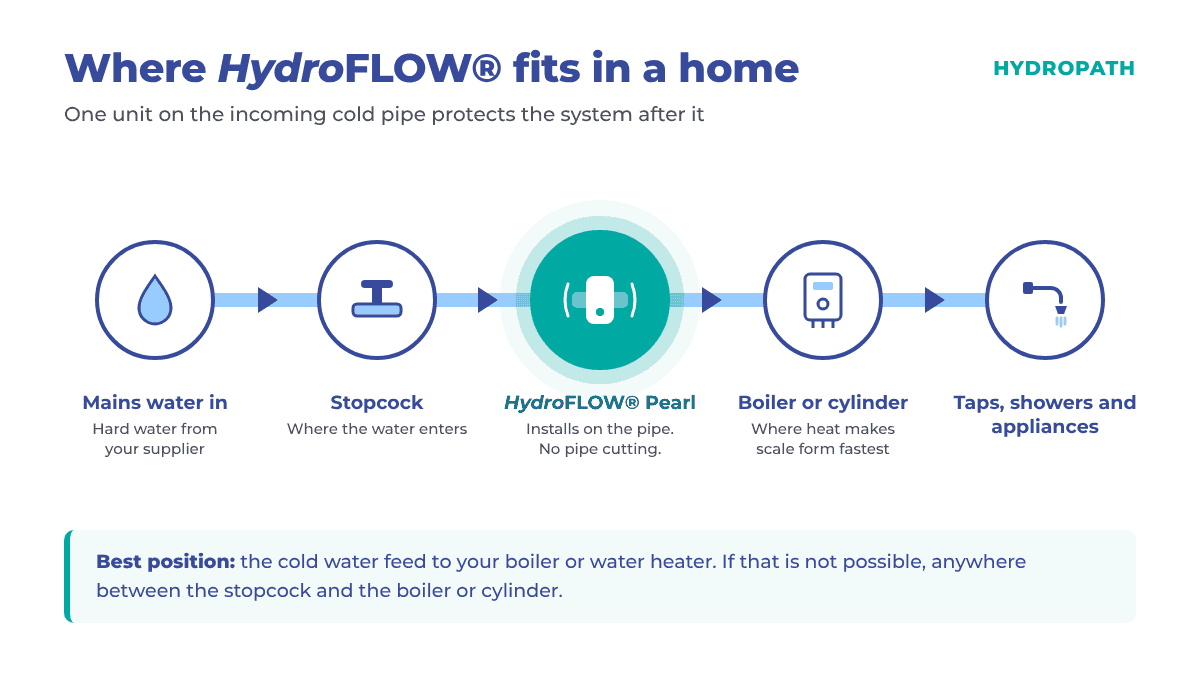
One unit on the incoming cold pipe protects the boiler, cylinder and appliances after it.
How much does British Gas HydroFLOW cost?
British Gas does not publish a single fitted price. Its limescale control service offers an engineer’s assessment followed by a fixed-price quotation. Prices on Hydropath’s own store are for direct product purchases, not British Gas installations.
Is HydroFLOW a water softener?
No. An ion-exchange softener reduces hardness by removing calcium and magnesium ions from the water and replacing them with other ions. HydroFLOW® is an electronic water conditioner intended to manage mineral deposits without removing hardness minerals. The Drinking Water Inspectorate’s hard-water guidance explains the underlying hardness issue.
What causes limescale in a boiler?
Limescale forms when calcium and magnesium minerals in hard water produce solid deposits, particularly on heated surfaces. In a combi boiler, the domestic hot-water heat exchanger can be affected; deposits may restrict flow and reduce heat-transfer efficiency. For more information, see Hydropath’s guide to boiler and hot-water limescale and its article on preventing limescale build-up.
Find out more
To learn more about the technology that grew from Danny Stefanini’s early work, explore how HydroFLOW works or Hydropath’s residential products. For a British Gas assessment and quotation, visit British Gas limescale control.
If you would like to discuss a particular water system or ask a question about the technology, contact Hydropath Technology.