Cloudy ice. Streaky glasses. A combi oven that nags you to descale mid-service. If your kitchen runs on hard water, every machine that heats, chills or sprays it is collecting the same mineral, and you are paying for it in chemicals, callouts and early replacements. Limescale in commercial kitchens is beatable. Here is what scale and slime actually do to catering equipment, what each of your options honestly costs, and how to stop it forming in the first place.
Is this your kitchen?
- ✓Cloudy, shrinking iceThe ice machine needs descaling every few months, and the ice is cloudy or smaller than it used to be.
- ✓Streaky glasswareGlasses come out of the glasswasher spotted, whatever rinse aid you buy.
- ✓The descale warning againThe combi oven is asking to be descaled, or a heating element has failed early.
- ✓Slime in the ice machinePink or dark slime around the bin, chute or water lines.
- ✓Rising chemical spendDescaler and softener-salt costs keep climbing, and cleaning takes hours you don’t have.
All five have the same two causes: mineral scale from hard water, and biofilm growing where water sits. They feed each other, because scale gives biofilm a rough surface to anchor to.
What limescale is costing your commercial kitchen, machine by machine
Combi and steam ovens
The steam generator is a kettle that never gets emptied. Trade guidance calls water quality and scale removal the largest concern in caring for a combi oven, and notes that combis fail most often because the boiler is not well maintained. Manufacturer care tablets cost over £100 a tub, on top of an oven that costs roughly £4,000 to £12,000. A scaled generator still cooks slower and hotter than it should.
Ice machines
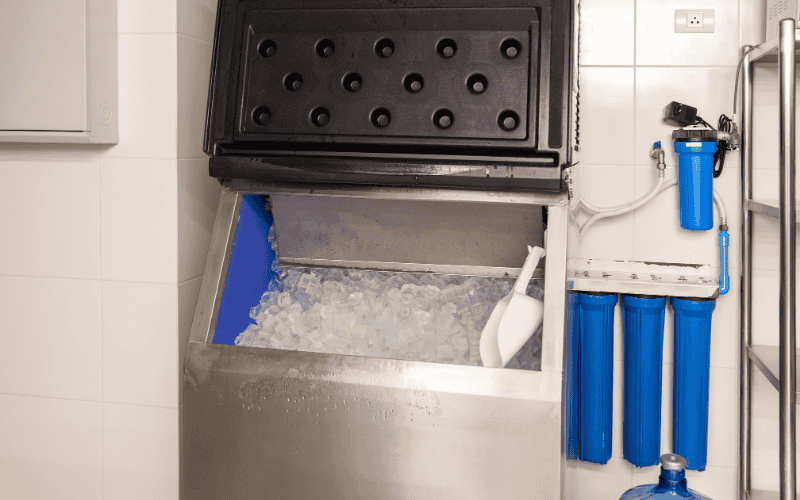
Scale on the evaporator plate acts as a barrier to heat transfer (calcium carbonate fouling measurably increases thermal resistance), so the machine works harder to make less ice, and the cubes come out cloudy, shallow or undersized. Left alone, scale leads to plugged distribution holes, reduced ice harvest and eventually a shutdown. Trade guidance is a full clean and sanitise at least every six months; in a hard-water area many kitchens are forced to do it far more often.
Dishwashers and glasswashers
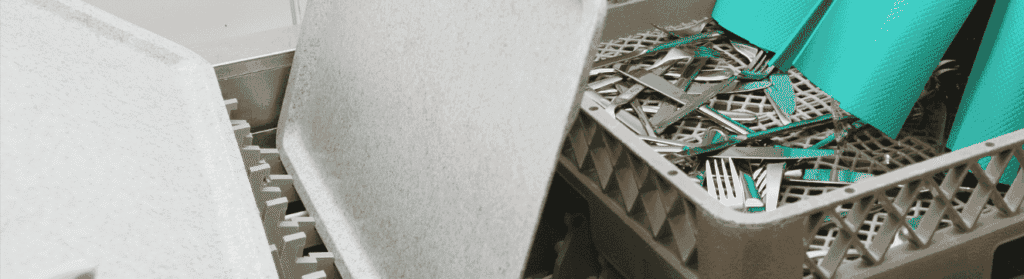
Scale on the element works the same way as on an ice machine evaporator: it insulates the heating surface, so heat-up takes longer and uses more energy. Scale in the jets restricts spray pressure, and that is where the streaking and spotting come from. Calcium and magnesium also react with detergent: research shows cleaning performance falls as water hardness rises, so you dose more to wash the same load.
Every machine in the kitchen is scaling from one incoming water supply. Treating them one descale at a time is treating the symptom five times over.
The slime problem, and why it matters more than the scale
The pink, grey or black slime that appears in ice machine bins and dishwasher door seals is biofilm: colonies of bacteria, and often moulds, in a protective layer they build themselves. Food-safety inspections treat it seriously for good reason. A ten-year review of food ice worldwide documents E. coli, Salmonella and Listeria in ice, as well as norovirus outbreaks traced to it, and the US CDC recently traced a Salmonella outbreak to poorly cleaned ice storage. The machine itself is usually the problem, not the water: one study found E. coli on over a fifth of ice machine surfaces while the incoming water tested clean, and a 2025 study of catering ice concluded that contamination is linked to the production, storage and maintenance of ice machines rather than water quality. Under UK food hygiene law, ice that touches food or drink must be made from drinking-quality water and protected from contamination, just like anything else on the plate.
Scale and biofilm are partners. Scale gives biofilm a rough, sheltered surface to colonise; biofilm traps minerals and hardens into more scale. Deal with the scale and you remove most of the biofilm’s grip.
Your options, compared honestly
There are four realistic ways to deal with limescale in commercial kitchens. Here is how they compare.
| Descaling chemicals | Salt softener | Filter units | HydroFLOW® | |
|---|---|---|---|---|
| What it does | Dissolves scale after it forms | Removes calcium before the machine | Filters or binds minerals per appliance | Conditions minerals so they don’t stick |
| Existing scale | Yes — aggressively | No | No | Yes, gradually |
| Consumables | Every clean, forever | Salt + regeneration water | Cartridges per machine | None |
| Plumbing changes | None | Drain + floor space | Per appliance | None — installs on the pipe |
| Whole kitchen | Per machine | Yes, if sized for peak flow | No | One unit on the feed |
| Watch out for | Acid attacks seals and nickel plating; downtime | Salt logistics, water waste | Costs multiply across machines | Not a filter — pair with one for taste if needed |
Each of these has a legitimate place. If a machine is already heavily scaled, one proper descale is the right first step. If you need soft water for a specific process, a softener does that. The question is what runs in the background for the next ten years, and that is where physical conditioning earns its keep.
How HydroFLOW® protects the whole kitchen from one point
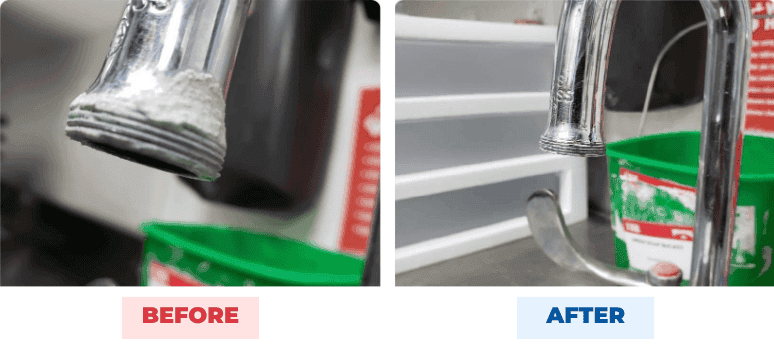
Most limescale in commercial kitchens arrives through a single point: the incoming mains feed. Hydropath Technology’s HydroFLOW® unit installs on the kitchen’s incoming water pipe (no cutting, no drain, no salt, no consumables) and induces a signal into the water that keeps dissolved minerals forming as suspended crystals instead of hard scale on your equipment. Existing scale gradually softens and rinses away. The same signal disrupts the bacteria that build biofilm.
One unit on the feed protects everything downstream: the ice machine, dishwasher, glasswasher, combi oven, coffee machine and hot-water system together. Fitting takes about an hour and nothing shuts down. In 2015 the technology earned the National Restaurant Association’s Kitchen Innovations Award for exactly this application.
- ✓No saltNo bags, no refills, no regeneration water.
- ✓No cuttingInstalls on the existing pipe; fitted in about an hour.
- ✓No consumablesNothing to replace, ever.
- ✓Whole kitchenOne unit on the incoming feed covers every machine downstream.
- ✓Cleaning still mattersHydroFLOW® is not a cleaner. It changes what you find when you open the machine, and how long each clean takes.
Proven on the machines that matter
- ✓
112 hospital ice machinesCleaning was needed every 3 to 4 months. Within 3 weeks of fitting a HydroFLOW®, hidden biofilm that previous cleans had missed was flushed out, with very little fouling over the next 10 months. The hospital rolled it out to all 112 machines. Read the case study
- ✓
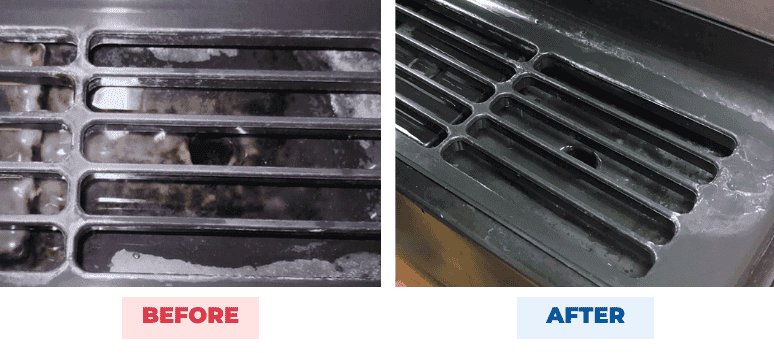
ICU ice maker, KentuckyHeavy scale and biofilm on the tray, chute and ice-making surface of a Hoshizaki machine were progressively removed over a 90-day evaluation with one HydroFLOW®, with payback projected under a year. Read the case study
- ✓
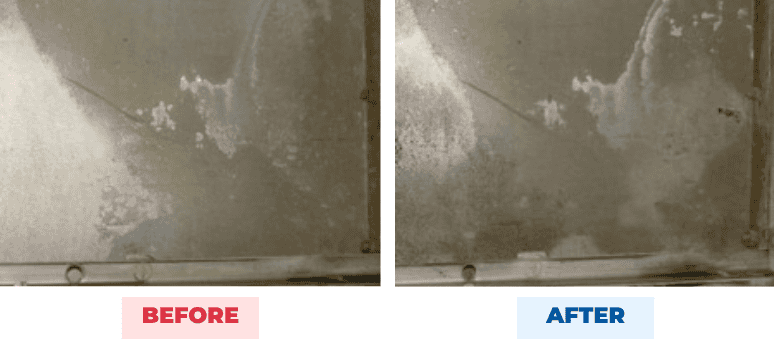
Hotel dishwasher, WaikikiScale dropped noticeably within 60 days, and water spotting on dishes and glassware fell significantly. Read the case study
- ✓
Convenience chain, 30+ storesUnits on ice machines, water heaters and food service equipment reduced scale and biofilm across every site, with a 6 to 12 month return on investment. Read the case study
It certainly reduces maintenance issues due to hard scale and makes regular maintenance much easier. (Director of Facilities, Central Kentucky hospital)
Elsewhere in hospitality: the Taj Chandigarh hotel holds scale at bay on 1,000 ppm water, and a Macau casino hotel controls calorifier scale without chemicals.
Which unit fits your kitchen?
- 1
Small café or small kitchenStandard mains feed: a compact unit such as the HydroFLOW® Pearl Plus range on the incoming pipe.
- 2
Restaurant or hotel kitchenMultiple machines: a commercial unit sized to the feed pipe. One unit covers the lot.
- 3
Central plant or multi-siteKitchens plus laundry: units at the risers, the same approach our hotel installations use.
Not sure of your pipe size or hardness? Contact the team, or read how the technology works first.
FAQs
How do I remove limescale from a commercial ice machine?
Descale it properly once: power down, empty it, and run a nickel-safe descaler through the water system per the manufacturer’s instructions, because ordinary acids attack the evaporator’s nickel plating. Then stop it coming back. A HydroFLOW® unit on the machine’s feed keeps new scale from forming, so future cleans are quicker and less frequent. In one US hospital, ice machines that needed cleaning every 3 to 4 months ran 10 months with very little fouling.
How do you descale a commercial dishwasher?
Drain it, run a manufacturer-approved descaler through a hot cycle, rinse thoroughly, and clean the jets and filters by hand. If you are descaling more than a couple of times a year, the water is the problem, not the machine, and prevention beats repetition.
Why does my ice machine get slimy?
The slime is biofilm: bacteria and moulds colonising damp surfaces, often anchored to mineral scale. It can be pink, grey or black. Research on catering ice machines links contamination to how the machine is maintained, not the water supply. Regular sanitising removes it temporarily; controlling the scale it anchors to keeps it from re-establishing so quickly.
Is mould in an ice machine harmful?
It can be. Ice machine slime is often a mix of bacteria and moulds, and ice has been shown to carry E. coli, Salmonella, Listeria and norovirus. Because UK food hygiene law requires ice to be protected from contamination, a slimy ice machine is a food-hygiene failure, not a cosmetic issue. Clean it immediately and fix the underlying scale problem.
Will a water softener stop limescale in commercial kitchens?
Yes. An ion-exchange softener removes calcium, at the cost of salt refills, regeneration water, a drain connection and floor space. It also does nothing for scale already in your machines. HydroFLOW® trades a little of the softener’s chemical completeness for zero consumables, zero plumbing changes and gradual removal of existing scale. Which is right depends on your site, and the comparison table above is the honest starting point.
Do commercial ice machines need to be cleaned even with water treatment?
Yes. No water treatment replaces a food-safety cleaning schedule. What good treatment changes is what you find when you open the machine, and how long each clean takes.