Struvite deposit removal inside a London, Ohio belt press
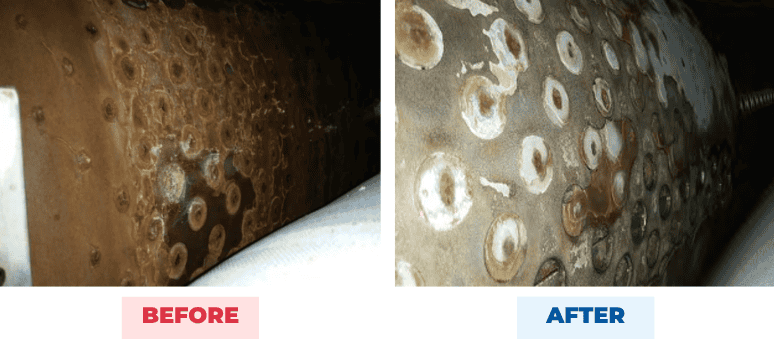
Struvite deposit removal was the test at London, Ohio, where years of build-up had coated the belt press drum, rollers and bottom beam with about a quarter of an inch of hard deposit. Struvite had also blocked the holes on the first roller, and conventional chemical or mechanical cleaning would have meant significant downtime. One HydroFLOW® i120 was fitted to the four inch iron sludge feed pipe about 30 ft before the press and run for a 35 day evaluation from 11 May to 16 June. Large pieces came off the first roller and wash box within the first week, and by the end more than half the first-roller holes were open.
The Challenge
- Struvite deposit removal was needed after years of build-up inside the belt press
- Deposits reached approximately a quarter of an inch
- Years of build-up coated the drum, rollers and bottom beam
- Struvite covered and blocked the holes on the first roller
- Chemical or mechanical cleaning would have required significant downtime
The Solution
- Unit installed: one HydroFLOW® i120
- Installation point: sludge feed pipe, approximately 30 ft before the belt press
- Pipe size: four inch iron
- Trial: 35 days, 11 May to 16 June
Struvite deposit removal was followed week by week, without chemical cleaning alongside the unit. The aim was to see how quickly years of hardened deposits would let go once treatment started. The rate of new accumulation fell, the old deposits began to soften, and the first roller and wash box were watched as large pieces broke away.
Testimonial
“The HydroFLOW® device not only reduced the rate of struvite accumulation, it actually started to soften-up existing deposits! Within a week, we started seeing large pieces coming off the first roller and the wash box. In addition, over half of the holes on the first roller were open.” — Dan Leavitt, Plant Superintendent