
Struvite Control in Wastewater Treatment
Stop New Struvite Forming Soften and Remove Deposits Retire the Anti-Scalant
HydroFLOW® conditions sludge and centrate electronically — nothing dosed in, nothing taken out, no cut into the pipe, fitted while the line runs. Cleaned surfaces stay clear, existing deposits soften, and the anti-scalant budget stops being permanent.
Results from documented case studies; outcomes vary by liquor chemistry, sludge type and baseline operation. View all wastewater case studies →
Struvite Costs a Plant Twice — Chemicals and Downtime
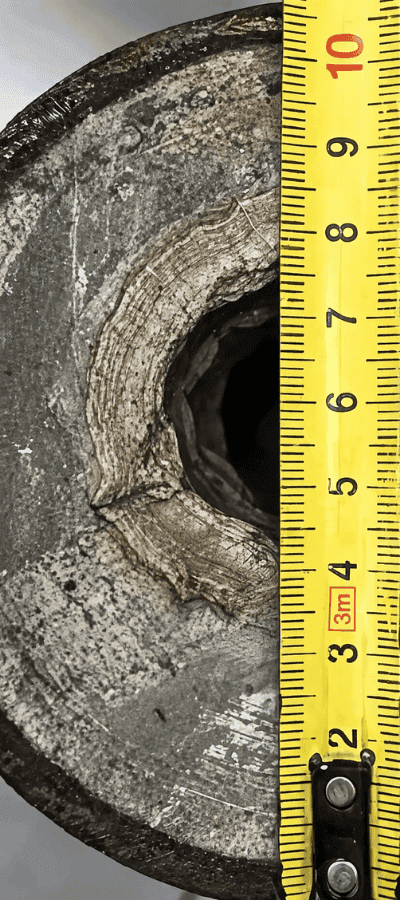
Struvite is magnesium ammonium phosphate (MgNH4PO4·6H2O). It crystallises out of digested sludge and centrate wherever the three ions meet in roughly equal measure and the pH rises above about 7.5 — which is precisely what happens where the liquor is agitated. Turbulence at a centrifuge, a pump or a pressure drop strips carbon dioxide out of solution, the pH climbs, and crystals begin to form on the nearest surface. The result is the deposit every dewatering operator recognises: hard, greyish, concrete-like scale on belt press drums and pans, screw press flights, centrate lines, transfer pumps and digester pipework.
The first cost is the chemistry bought to suppress it — anti-scalants, ferric, magnesium control, and the storage, handling and dosing that come with them. The second is the cleaning that happens anyway, each round taking a press or a line out of service. Both bills are paid at once, because chemistry that only partly works leaves the cleaning schedule exactly where it was — the dosing is bought, and the press still comes out of service. Meanwhile tightening phosphorus consents push more phosphorus into the sludge liquors, so the underlying problem is getting harder, not easier.
Typical signs struvite is running your maintenance schedule:
- Hard, greyish scale narrowing centrate, digester and sludge pipework between services
- Belt press drum holes bridging over, or a screw press that needs stripping every month
- Cleaning that has escalated from a hose, to 3,500 psi water, to chisels and hammers
- Anti-scalant or ferric dosing that has crept upward without the cleaning interval improving
- Transfer pumps coming offline for acid cleaning on a fixed calendar rather than on condition
- Scale returning within weeks of a clean, and returning faster each time
Why Struvite Is Getting Harder, Not Easier
Struvite is not a fault in the process. It is what happens when a plant does nutrient removal properly and then dewaters the result. Tighter phosphorus consents — extended across Europe by the recast Urban Waste Water Treatment Directive (EU) 2024/3019, and enforced through NPDES permits in the United States and Environment Agency permits in the United Kingdom — mean more phosphorus is captured into the sludge rather than released to the river. The same directive asks member states to promote phosphorus recovery from sludge. All of that phosphorus has to pass through the digester and the dewatering line, which is exactly where the conditions for crystallisation are met.
pH above 7.5, and a 1:1:1 ratio
Struvite precipitates when magnesium, ammonia and phosphate are present in roughly equal molar proportion, at pH above 7.5 and between 10 and 40 °C. Turbulence at a centrifuge or pump strips carbon dioxide out of the liquor, the pH rises, and crystals form on the nearest surface.
Biological P removal doubles or triples the phosphorus
Struvite is reported to be more prevalent at plants using biological phosphorus removal, because the process can double or triple the volume of phosphorus carried through to the solids stream. The better the consent performance, the richer the liquor.
3.7 million tonnes of phosphorus a year
Humans discharge as much as 3.7 Mt of phosphorus into wastewater annually — enough in principle to meet a fifth of global fertiliser demand, although only about 4% is currently recoverable on economic and technical grounds. The nuisance deposit and the recoverable resource are the same mineral.
Sources: Robinson, T. (2021), Problems and Potential of Struvite in Anaerobic Digestion Processes, Veolia Water Technologies UK — formation conditions · Antoniewicz, P. (2018), Understanding and Coping With Struvite/Vivianite Formation in WWTPs, Water Online — biological phosphorus removal · Kok et al. (2018), Global phosphorus recovery from wastewater for agricultural reuse, Hydrology and Earth System Sciences 22:5781 · Directive (EU) 2024/3019, Urban Waste Water Treatment (recast). Figures are study- and agency-reported estimates; individual plants vary.
The switch-off test
A single treated trial cannot separate the technology from everything else that changes in a working plant. At the City of Walla Walla Waste Water Plant in Washington, the unit was deliberately switched off after eight weeks and the same test sections were watched again. It is the nearest thing to a control a live plant can offer.
Cleaned sections stayed clear
- Week 0Drum and pan test sections, 12 × 12 in, chiselled back to bare metal. One HydroFLOW® Custom unit fitted, 31 May 2013, signal confirmed at 41.2 V peak-to-peak.
- Week 5No new accumulation on the cleaned drum section. Pan deposits soft enough to take a clear finger mark.
- Week 8Drum section still free of new scale; existing drum deposits gradually reducing. Softened pan deposits washed off with a hose.
Hard scale returned
- Week 4New struvite spreading across the test area. An eighth of an inch of deposit had formed on the pan.
- Week 7Hard scale an eighth of an inch thick on the drum section, and a quarter of an inch on the pan — back to chisel work.
- ResultThe same equipment, the same liquor, the same operators. The only variable was whether the unit was running.
City of Walla Walla Waste Water Plant, Washington, USA. Figures as recorded in the site inspection record. Read the case study →
The True Cost of Untreated Water
The cost of struvite is spread across several budget lines — chemical dosing, cleaning labour, lost dewatering capacity and polymer — which is why it is rarely quantified as a single figure. The sections below set out where it accumulates.
Struvite Encrusting Belt and Screw Presses
Drum holes bridged over, throughput falling, every wash-down hours of labour with the press standing idle.
Scale Narrowing Centrate and Digester Pipework
Bore shrinking between services, on a centrate transfer that never offers a window to come offline.
Anti-Scalant and Struvite Chemical Bills
A permanent line in the operating budget, paid month after month even where scale still forms.
Lost Dewatering Capacity and Unplanned Stops
Bridged drum surfaces and blocked roller holes cutting throughput, and every clean taking out a press you cannot spare.
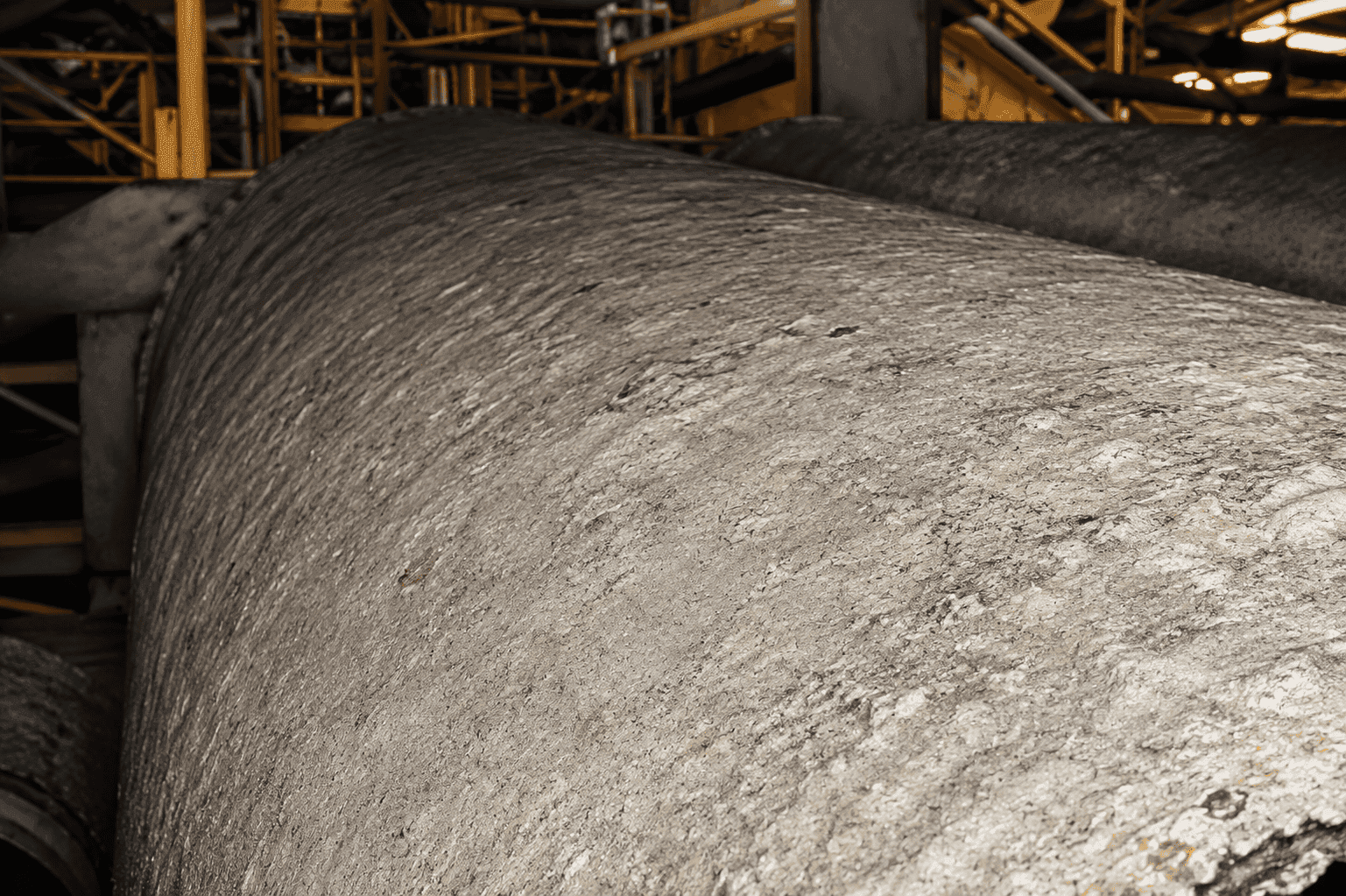
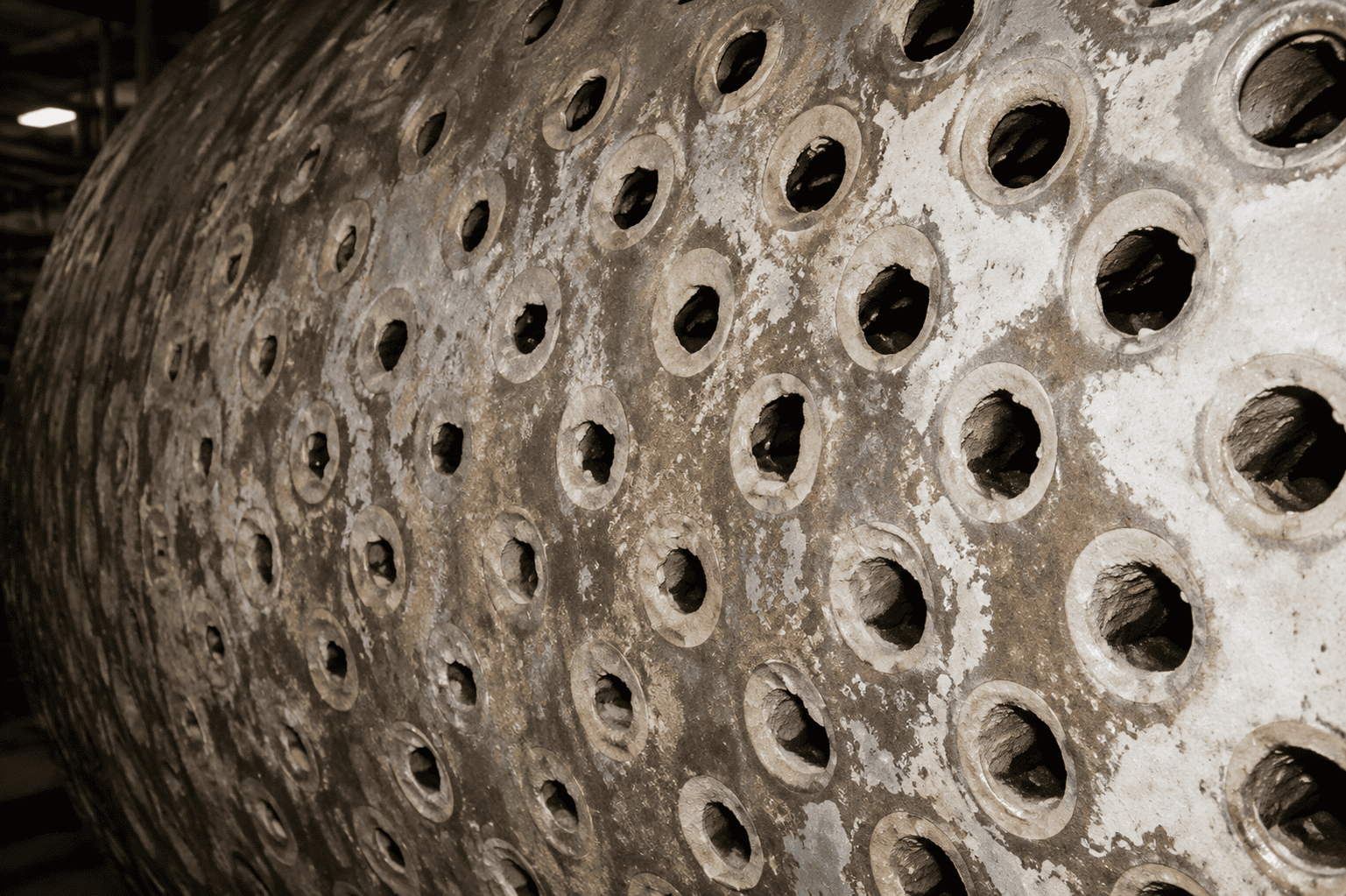
Water Conserv II, Orlando: hard struvite had bridged the holes across belt press No. 5's drum. After 150 days of HydroFLOW® treatment the holes are open with only minimal scale remaining — and the press ran the whole evaluation without a cleaning stop. Read the case study →
Lower Polymer Costs, Lower Sludge Disposal Costs
Struvite carries a continuous cost across the solids stream — chemicals, cleaning hours, downtime, polymer and lost capacity. Hydropath addresses six of the most significant recurring costs.
Struvite Chemistry Retired
The dosing exists to suppress crystallisation; treat the crystallisation and the dosing has nothing left to do. Augusta cut anti-scalant to zero and saved about $4,000 a month, and a plant in Utah stopped an $8,000-a-month struvite chemical on day one of its evaluation.
Cleaning Hours Cut
Softened deposits come off with water instead of hand tools. The Utah screw press wash took under four hours instead of up to thirty; Augusta replaced chisels and hammers with high-pressure water; and at Tulsa Southside, operators found power washing markedly less laborious than routine cleaning.
Longer Runs Between Stops
Every avoided clean is a press back in service. Water Conserv II ran 150 days with no cleaning stop, Walla Walla's cleaned drum section held clear for eight weeks, and at East Hyde in Luton no new struvite formed on the centrate line across a six-month trial.
Lower Polymer Dosing
The same signal that suppresses scale also assists flocculation. Orlando's average daily polymer fell about 20%, Banbury saved 200 litres an hour on a belt press, and a Yorkshire works used 11% less centrifuge polymer.
Bore and Capacity Recovered
Deposits that thin instead of thicken give back the cross-section you paid for. At Denver's Robert W. Hite facility, flowing centrate progressively exposed more of the glass-lined pipe wall, and at the City of London plant in Ohio more than half the blocked first-roller holes reopened within 35 days.
Payback Measured in Months
A single fitting, no consumables, no dosing equipment and a power draw comparable to a small lamp. The Utah plant recorded a three-month payback; Augusta calculated a return under eight months on chemical savings alone, before any credit for labour or avoided downtime.
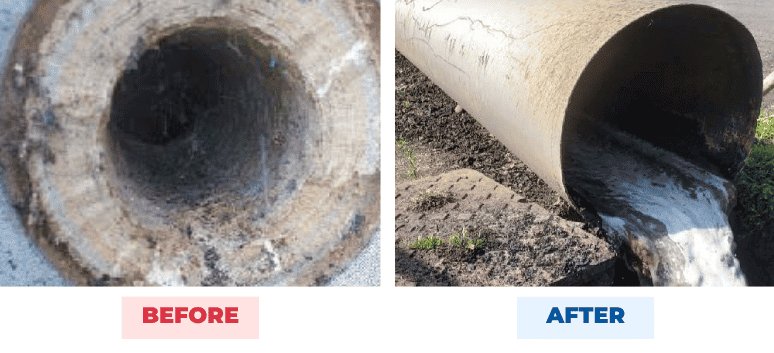
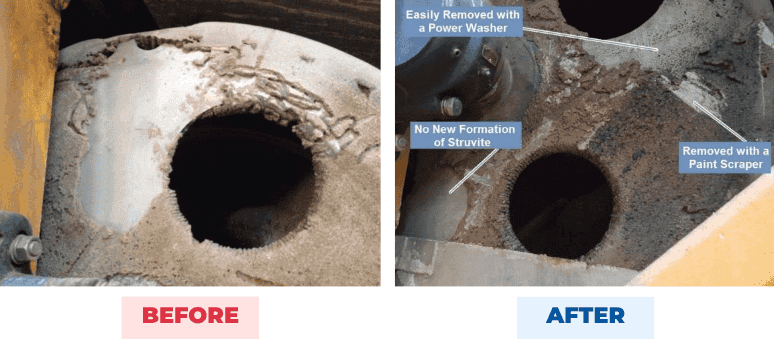
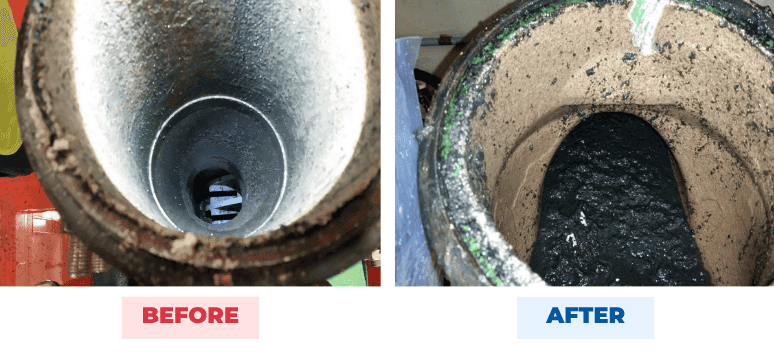
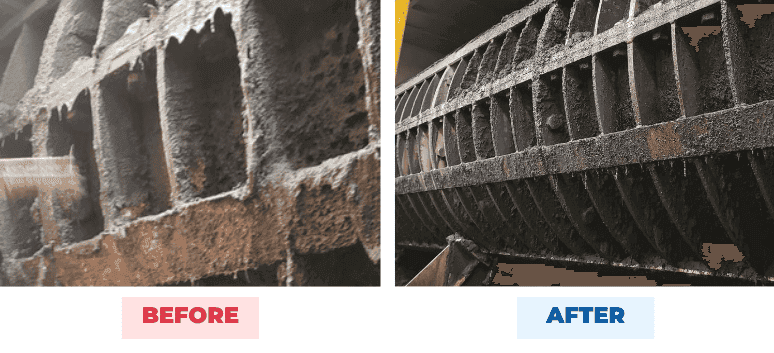
East Hyde works, Luton (Thames Water): no additional struvite scale formed in the centrate lines across a six-month trial, with reduced maintenance demand.
East Hyde Sewage Works, Luton, centrate pipeworkDon’t take our word for it — test it on your own press.
Every chemical, cleaning-hours and polymer figure on this page can be checked the way the case studies checked them: clean a defined section of drum, pan or pipe back to bare metal, record it, and inspect it on a fixed interval. We will set out the protocol and the intervals for your own plant.
Get a Free Struvite Assessment
Struvite Control — Physical, Not Chemical
A physical scale inhibitor for belt presses, screw presses, centrifuges, centrate lines and digester pipework, powered by a patented electronic signal
HydroFLOW®, developed by Hydropath Technology, induces a patented signal of approximately 150 kHz into the liquid through the pipe wall. The signal changes how dissolved minerals behave. Instead of magnesium, ammonium and phosphate bonding as hard struvite onto a drum, a flight or a pipe wall, they form loose clusters in the liquor. Where conditions drive crystallisation — a pressure drop, a pump, the turbulence at a press — those clusters crystallise in suspension, as fine particles carried away with the flow rather than cementing to the surfaces they pass.
Because new scale stops bonding to the metal, the flowing liquor regains capacity to take minerals back into solution, and existing deposits soften and release over the following weeks and months. That is the pattern every case study on this page records: cleaned surfaces stay clear first, and years-old encrustation reduces afterwards. The signal propagates in both directions through the pipework, so a single unit on a sludge feed can treat the equipment beyond it — at Augusta, oscilloscope testing confirmed one unit reached both belt presses. Fitting takes about an hour on a live line, with no cut into the pipe and no shutdown.
Because the treatment changes how minerals behave rather than what the liquor contains, nothing is dosed in and nothing is taken out — no residue in the cake, no change to the biosolids destination, and nothing new to declare on the site's chemical inventory. At Denver, sampling along the treated centrate line found all three ions still at scale-forming concentrations downstream, as high at the later points as at the first — staying in the fluid rather than scaling out onto the pipe. That is the mechanism measured directly, and it is also the limit: nothing leaves the liquor, so this is not nutrient removal and it will not help you meet a phosphorus consent.
Learn More About Our TechnologyApplications
Key wastewater applications
One signal treats every part of the dewatering circuit — struvite and polymer dosing together.
Belt & Screw Presses
Where struvite is most visible — drums, pans, rollers, wash boxes and screw flights — and where polymer dosing and cleaning hours are decided.
Centrifuges
Turbulence in a decanter strips carbon dioxide and lifts pH, which is precisely where struvite crystallises. Treatment on the feed protects the bowl and the centrate line beyond it.
Centrate & Sludge Pipework
Hard grey deposits narrow the bore and raise pumping cost. A single unit treats in both directions along the line, including eight-inch glass-lined centrate mains.
Transfer Pumps & Valves
Pressure drops across impellers and seats make pumps and valves the first components to encrust, and the first to be taken offline for acid cleaning.
DAF & Flotation
The same signal that suppresses scale assists flocculation, cutting coagulant and polymer dosing on dissolved air flotation and effluent treatment.
Polymer Reduction in Sludge Dewatering
The flocculation side of the same signal — lower polymer dose, drier cake and lower disposal tonnage across belt presses and centrifuges.
Struvite is one of several costs hiding in the solids stream. Polymer dosing, cake dryness and disposal tonnage are covered on our Water & Wastewater Treatment page.
A Different Approach to Struvite Treatment
How HydroFLOW® compares with the usual ways of protecting sludge lines, presses and centrate systems from struvite scale.
| HydroFLOW®Physical conditioner — nothing dosed | Anti-scalant / struvite inhibitor | Ferric or magnesium control chemistry | Acid cleaning & hydroblasting | |
|---|---|---|---|---|
| How it works | An electronic signal makes minerals crystallise in suspension, so they leave with the flow instead of bonding to drums, flights and pipe walls | Dosed chemistry interferes with crystal growth or holds minerals in the liquor | Binds or strips one of the three ions so struvite cannot form — usually phosphate, with iron salts | Removes deposits after they have formed, with acid, high-pressure water or hand tools |
| Effect on liquor chemistry & consent | Nothing removed Sampling at Denver found magnesium, ammonium and phosphate still at scale-forming levels downstream — staying in the fluid, not scaling out. Nothing leaves the liquor, so no help with a phosphorus consent | Dosed input Adds a chemical to the stream, with residue and dose control to manage | Changes it Genuinely alters the chemistry, and can support phosphorus removal — at the cost of iron dose and sludge volume | None Acts on the deposit, not the liquor |
| Consumables | None No dosing, no reagents, no servicing schedule | Continuous purchase, storage, COSHH handling and dosing plant | Large and continuous chemical doses; iron salts are relatively expensive | Acid, neutralising, hire plant and labour at every clean |
| Removes existing struvite | Gradually, assisted Deposits soften and release over weeks to months — Orlando 5 mm to 1 mm; Denver wipeable. Not chemical dissolution | No Prevention only, and only while dosing continues | No Prevention only | Yes The fastest way to strip a fouled press — but with downtime and repeat visits |
| Chemical changes to cake & biosolids | None added Nothing enters the stream, so the cake and its destination are unchanged. Flocculation improved at Orlando | Carried through The dosed product travels with the solids | Increases solids Iron dosing adds to sludge volume and disposal tonnage | None Lines rinsed before return to service |
| Downtime to fit and to run | None Fits around the existing pipe in about an hour; the line stays live | Injection point, dosing pump, tank, bunding and monitoring | Dosing plant, storage and continuous control | It is the cost Every clean is the downtime you are trying to avoid |
| Evidence you can generate yourself | Direct Clean a defined section to bare metal, run it, inspect it — and switch the unit off to check, as Walla Walla did | Indirect Judged by cleaning interval over long periods | Measurable Liquor sampling shows the chemistry change directly | Not applicable Reactive by definition |
Swipe sideways to compare all four methods →
Comparison reflects typical products in each category; individual systems vary. Struvite recovery reactors are not listed because they solve a different problem — they precipitate and harvest struvite deliberately in a vessel. HydroFLOW® is not a filter and removes no solids, and nothing is taken out of the liquor — so it cannot contribute to a phosphorus consent.
Process Overview
Simple Installation. Measurable Results.
Fitted upstream of the equipment or point of concern, with zero disruption to the line.
The Fit
The HydroFLOW® unit fits around your existing pipework — a sludge feed, a centrate line or a press influent — with no cut into the pipe, no draining and no shutdown. Typically under an hour, with the line running throughout.
The Signal
A patented electronic signal propagates in both directions along the pipework, treating the line from a single point — often more than one press from one fitting. It keeps working on liquor standing in the line between runs.
The Results
Softening shows first, within days to weeks. Cleaned surfaces then stay clear, and years-old encrustation reduces over the following months — easy to verify with a dated photograph and a simple scrape test.
Proven On Site
Real Sites. Real Results.
Verified wastewater installations across municipal dewatering, struvite control and industrial effluent.
Utah Screw Press: 30 Hours of Cleaning Down to Four
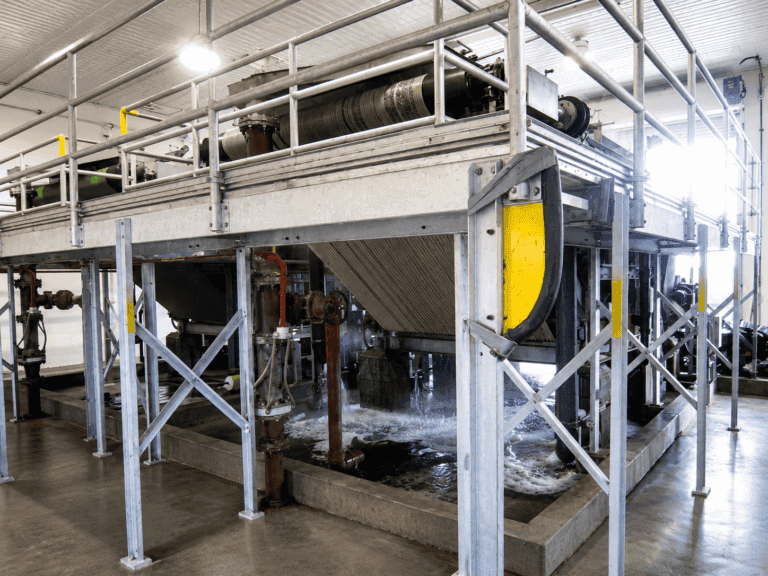
A Utah plant stopped $8,000 a month of struvite chemical and cut screw press cleaning from 30 hours to under four with one HydroFLOW® Custom 8 inch unit.
Augusta Belt Presses: $4,000 a Month in Chemicals Cut
The J. P. Messerly plant in Augusta cut anti-scalant dosing to zero on two belt presses with one HydroFLOW® i160, saving roughly $4,000 a month.
Walla Walla: Scale Returned When the Unit Was Off
A cleaned belt press drum at Walla Walla stayed struvite-free for eight weeks, then scaled again within weeks of the HydroFLOW® unit being switched off.
Support & FAQ
Frequently Asked Questions
What is struvite?
Struvite is magnesium ammonium phosphate hexahydrate, MgNH4PO4·6H2O — a hard, off-white crystalline mineral that precipitates out of digested sludge and centrate in wastewater treatment plants. It forms when magnesium, ammonia and phosphate are present in roughly equal molar proportion, at a pH above about 7.5 and a temperature between 10 and 40 °C. Operators usually describe it as concrete-like or cement-like, because that is how it behaves once it has bonded to a surface.
The same mineral is a nuisance in one context and a product in another: recovered deliberately in a reactor it is a slow-release phosphorus fertiliser, while formed unintentionally on a belt press drum or in a centrate line it is a maintenance and chemical cost. This page is about the second case.
What causes struvite to form in a wastewater treatment plant?
Anaerobic digestion releases magnesium, ammonia and phosphate into solution, so the liquor leaving a digester is often already close to saturation. What tips it over is agitation. Turbulence at a centrifuge, a pump or a pressure drop strips carbon dioxide out of the liquid, the pH rises, and crystals begin to form on the nearest available surface.
That is why the problem tends to arrive with better nutrient performance rather than worse. Struvite is reported to be more prevalent at plants using biological phosphorus removal, because the process can double or triple the volume of phosphorus carried through to the solids stream. Tightening phosphorus consents therefore push more of the raw material into precisely the part of the works where the conditions for crystallisation are met.
Where does struvite form in a treatment plant?
Around the dewatering end of the process, almost always. In the case studies on this page it appeared on belt press drums, pans, rollers and wash boxes; inside screw presses; on centrifuge internals; along centrate and digested sludge pipework; and on transfer pump impellers and discharge lines. Heat exchangers on digested sludge are a common site too.
The pattern is consistent: wherever the liquor is agitated, depressurised or exposed to air, the pH rises locally and crystals nucleate on the nearest surface. At the City of London plant in Ohio, years of accumulation had reached about a quarter of an inch inside the belt press and had blocked the holes on the first roller.
How do you remove struvite?
There are three usual routes, and they are not interchangeable. Mechanical removal — high-pressure water, chisels, hammers, hydroblasting — is fast but takes equipment out of service and gets harder as deposits thicken; Tulsa Southside was using 3,500 psi water and Augusta was using chisels and hammers before treatment. Chemical dissolution with an acid or a proprietary descaler works but brings handling, neutralising and disposal with it. Both are reactive: neither stops the deposit returning.
The third route is to stop new struvite bonding, and let the liquor take existing deposits back gradually. That is what HydroFLOW® does, and it is slower than acid: expect softening over the first weeks and reduction of older encrustation over months, not days. What it changes is the cycle — at Water Conserv II in Orlando the press ran 150 days with no cleaning at all, and hard pan scale fell from 5 mm to 1 mm of brittle deposit.
Can you control struvite without chemicals?
Yes, and the evidence for it here is a switch-off test rather than a claim. At the City of Walla Walla Waste Water Plant, drum and pan test sections were chiselled back to bare metal and one HydroFLOW® unit was fitted. Across eight weeks of treatment the cleaned drum section formed no new scale and the pan deposits softened enough to wash off with a hose. The unit was then deliberately switched off. Within four weeks an eighth of an inch of new pan deposit had formed, and by seven weeks the drum carried an eighth of an inch of hard scale and the pan a quarter of an inch.
Two further trials were verified by an independent engineering firm. At Tulsa Southside a 90-day trial verified by CH2M found no new scale on the cleaned drum surface; at Denver's Robert W. Hite Treatment Facility a 60-day trial by the same firm found no new formation in cleaned pipe sections. Neither used any chemical assistance.
Does HydroFLOW® remove existing struvite, or only prevent new scale?
Both, but on different timescales, and the distinction matters when you set expectations with your maintenance team. Prevention is immediate: cleaned surfaces stop accumulating from the moment the unit is running. Removal is gradual and assisted — once new crystals stop bonding, the flowing liquor regains capacity to take minerals back into solution, and existing deposits soften, thin and release.
What that looked like in practice: struvite soft enough to wipe off by hand after ten days at Orlando; large pieces detaching from the first roller and wash box within a week at London, Ohio, with more than half the blocked roller holes open by day 35; an eighth of an inch of hard grey scale at Denver becoming thin, soft and wipeable across 60 days; and pan scale at Orlando reducing from 5 mm to 1 mm across 150 days. This is not chemical dissolution and it is not as fast as acid. If you need a fouled press stripped by Friday, clean it mechanically — then run treated to stop it coming back.
Does it reduce the magnesium, ammonium or phosphate in the liquor?
No, nothing is removed — and the Denver sampling shows why that is the point rather than a shortfall. Through the independently verified 60-day trial at the Robert W. Hite Treatment Facility, weekly samples were taken at three points along the treated centrate line. Magnesium, ammonium and ortho-phosphate were all at scale-forming concentrations, and at the downstream points they were as high as at the first. The minerals stayed in the fluid instead of scaling out onto the pipe wall — which is precisely what the technology is meant to do.
The same measurement sets the honest boundary. HydroFLOW® changes where crystals form, not how many ions are present, so it is not nutrient removal, it will not contribute to a phosphorus consent, and it should not appear in a nutrient mass balance. If reducing the phosphorus load itself is your objective, that is a different technology and we will say so.
Is this the same as struvite recovery, such as Ostara Pearl, AirPrex or MagPrex?
No — those solve a different problem and answer to a different budget. A recovery process precipitates struvite deliberately, in a controlled vessel, usually with magnesium dosing, so that the mineral can be harvested and sold as fertiliser. It is a capital project with a nutrient and revenue case attached, and where it is installed it also reduces nuisance deposition downstream.
HydroFLOW® makes no struvite and recovers none. It is a maintenance and chemical-cost measure: a unit fitted around an existing pipe in about an hour, with no dosing and no consumables, aimed at keeping presses, pipework and pumps clear. The two can coexist; they are not alternatives to one another, and we would not put them in the same evaluation.
Will it work on a centrifuge as well as a belt or screw press?
The mechanism does not care what the equipment is called — it acts on crystallisation in the liquor, and treatment is applied to the feed line rather than to the machine. The evidence on this page is strongest for belt presses, because that is where most of the trials ran: Tulsa, Orlando, Walla Walla, London and Augusta. One study covers screw presses, at a plant in Utah, where cleaning fell from up to thirty hours to under four.
For centrifuges specifically, our directly comparable evidence is on the polymer side rather than the scale side — a Yorkshire works recorded 11% less centrifuge polymer — together with the centrate line at Denver and at East Hyde in Luton, both downstream of centrifugal dewatering. We would rather say that plainly than imply a centrifuge trial we do not have. Ask us for the closest match to your configuration.
What happens to the struvite that comes loose?
It leaves with the flow, and on this application the pieces can be substantial. At Tulsa, power washing removed pieces three to four inches across. At London, Ohio, large pieces came off the first roller and the wash box within the first week of treatment. Sheets of softened struvite washed off the screw press at the Utah plant during its sixty-day clean.
HydroFLOW® is not a filter and removes no solids. Plan for the debris: watch screens, strainers, launders and downstream pumps through the first weeks while the backlog clears, and schedule an extra check rather than discovering it. Once existing deposits have gone, the rate falls away.
How do we prove it works on our own plant?
Use the method the case studies used, because it needs no instrumentation and it is hard to argue with. Clean a defined section back to bare metal — Walla Walla used 12 by 12 inch squares on the drum and on the pan — photograph it with a date, fit the unit, and inspect the same section on a fixed interval. Tulsa did the same on a cleaned drum section across 90 days.
Alongside that, record the things you already meter: chemical dosing, polymer rate, hours spent cleaning and the interval between cleans. Augusta's case rests on a chemical line item, Utah's on cleaning hours, Orlando's on average daily polymer. And if you want the strongest version of the test, do what Walla Walla did and switch the unit off at the end. We will set out the protocol and the intervals for your plant, and we will tell you where our assessment is that we cannot help.
Does it work on vivianite as well as struvite?
We do not know, and we would rather say so. Vivianite — iron phosphate — is an increasing problem at works dosing iron for phosphorus removal, and it turns up alongside struvite in most discussions of dewatering scale. None of the trials on this page identified or measured vivianite, so we have no evidence either way and we are not going to imply coverage we cannot support.
What we can say is that the technology acts on crystallisation generally rather than on struvite specifically, and it is used against calcium carbonate scale across other industries. If vivianite is your primary deposit, tell us at the assessment stage and we will treat it as an open question and propose a trial designed to answer it.
Ready to Stop Struvite Running Your Maintenance Schedule?
Tell us where the scale is, what you are dosing and how often you clean, and our team will recommend the right units and set out what to expect and when — including where our assessment is that we cannot help.
Ready to explore sustainable water treatment?
Get in touch to find out how HydroFLOW® can work for you.

© 2026 Hydropath Technology Ltd. All rights reserved