Alum flocculant reduction in drinking water filtration
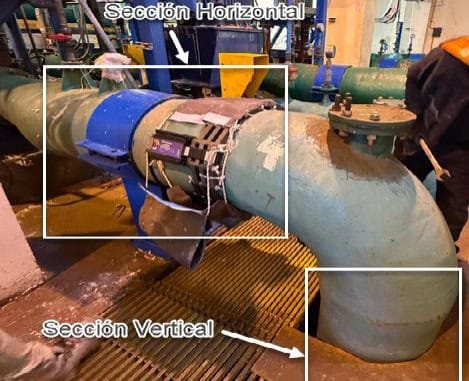
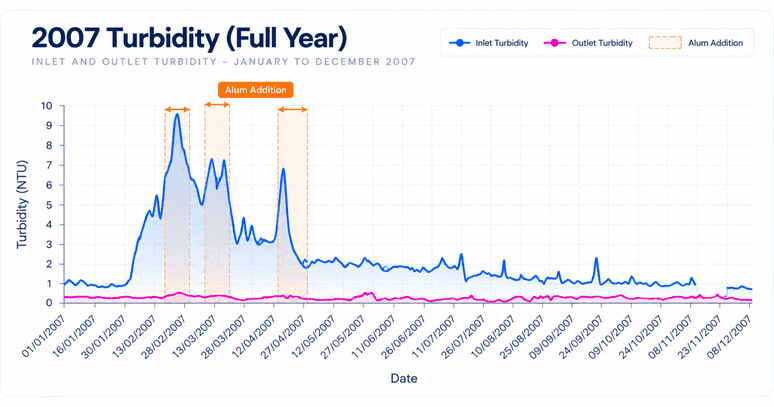
Alum flocculant reduction was the goal at the Hula Valley drinking water facility, which treats water from the River Dan for communities across the Hula Valley in Middle East. Water passes an initial 50-micron filter, eight rapid sand filters and disinfection. Fine suspended particles are hard to catch by sand filtration alone, inlet turbidity swings with the seasons and reached 10–12 NTU in spring, and alum in the backwash water was an environmental concern. One HydroFLOW® Custom 8” was installed about 6 m before the first sand filter. Filtered-water turbidity stayed low all year, no alum was used through winter and very little was needed in summer.
The Challenge
- Alum flocculant reduction was needed while keeping finished-water turbidity low
- Fine particles were difficult to capture by filtration alone
- Spring inlet turbidity reached 10–12 NTU
- Alum in backwash water created an environmental concern
The Solution
- Unit installed: one HydroFLOW® Custom 8”
- Installation point: after the 50-micron filter, about 6 m before the first sand filter
- Filtration system: eight rapid sand filters, with a static mixer added after the unit
- Water source: River Dan
- Monitoring: inlet and outlet turbidity through 2007
The aim was alum flocculant reduction without letting turbidity rise, so the unit went on the line between the 50-micron filter and the sand filters, about 6 m ahead of the first filter, with a static mixer downstream to support flocculation. Inlet and outlet turbidity were then tracked through winter, the spring peaks and summer.