Case Study from Hydropath Asia
PCB wastewater reverse osmosis in Guangdong
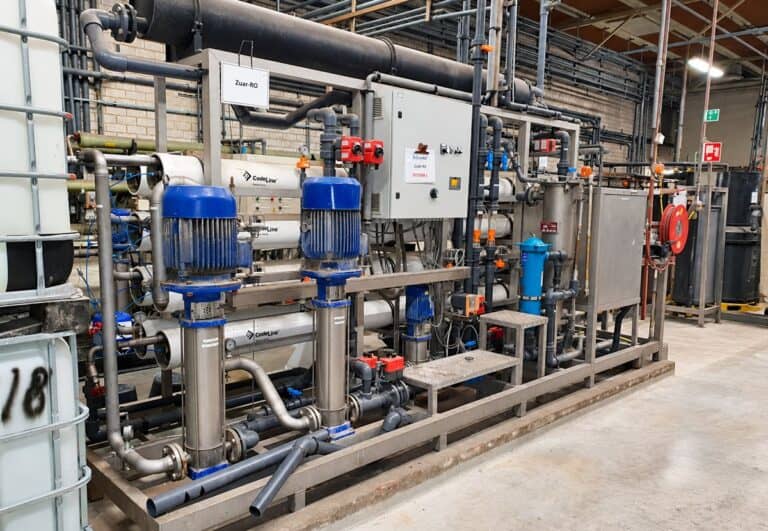
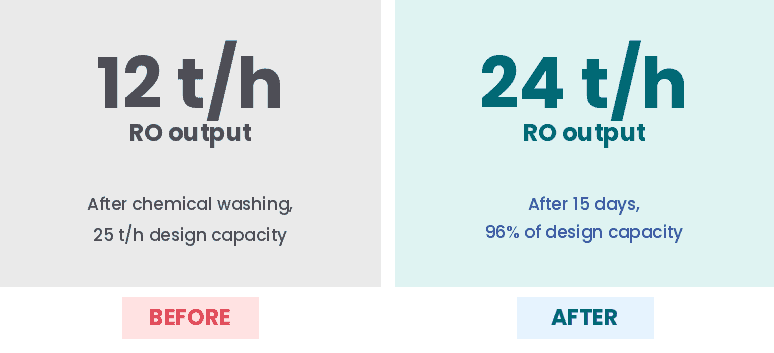
PCB wastewater reverse osmosis was falling well short of its design at a printed circuit board factory in Guangdong, China, which treats its production wastewater by RO so it can be reused in cooling towers and for cleaning. The RO system was designed for 25 tonnes an hour, but scale meant it produced only 12 tonnes an hour even after a chemical wash, dropping to 8.5 tonnes an hour within 30 days, and permeate conductivity was around 45 µS. A HydroFLOW® unit was installed on the RO system and evaluated over 15 days. Output rose by 50% within a day and reached 24 tonnes an hour by day 15, with lower pumping pressure and permeate conductivity down by about two-thirds.
The Challenges
- PCB wastewater reverse osmosis output was 12 t/h even after chemical washing, against a 25 t/h design
- Scale could cut throughput to 8.5 t/h within 30 days
- Permeate conductivity was around 45 µS
- The treated water had to be fit for reuse in cooling towers and cleaning
The Solution
- Unit installed: one HydroFLOW® unit
- Installation point: the factory’s RO system
- RO design capacity: 25 tonnes an hour
- Trial: 15 days, monitoring output, pumping pressure and permeate conductivity
To see whether PCB wastewater reverse osmosis could be brought back towards its design output, the unit was fitted to one RO system and output, pumping pressure and permeate conductivity were tracked for 15 days. The unit was then taken off: output held near 24 t/h for ten days, but fell to 18 t/h after two months, so the unit went back on and the factory ordered more.