
How Hydropath Water Treatment Works
The Science,
The Proof,
The Difference
HydroFLOW® uses a patented electric-field signal to prevent limescale buildup, control biofilm, and bacteria and enhance flocculation — right through your existing pipework. No cutting. No dosing. No downtime.
Three Water Treatment Problems.
One Root Cause.
Limescale, biofouling, and poor flocculation all come down to one thing: the way charged particles and bacteria behave inside your water. HydroFLOW® changes that behaviour directly — without chemicals, without softeners, and without touching your pipework.

The Real Cost
Untreated water is costing you more than you think.
Three problems. Same root cause. Every year they quietly drain your budget, damage your equipment, and put your operations at risk.
Limescale
Mineral deposits insulate heat exchangers, narrow pipe diameters, and force systems to work harder for the same output. Even a thin layer acts as a stubborn insulator — one millimetre is enough to noticeably drop efficiency.
Source: Association of Water Technologies 1
Biofouling
Biofilm is a far bigger efficiency thief than scale — the same thickness causes roughly 5× more heat transfer loss. It builds in as little as 8 weeks, shelters bacteria that cause corrosion (MIC), and breeds Legionella in hot water systems. Chemical biocides kill only the top layer.
Sources: Scientific Reports (Nature, 2024); Antimicrobial Resistance & Infection Control (BMC, 2023) 2
Poor flocculation
Fine suspended particles embed deep into filters instead of sitting on the surface, forcing frequent backwashing that dumps heated or chemically-treated water. In wastewater and pool systems, expensive chemical flocculants are added constantly to compensate — driving up consumable costs and creating disposal issues.
Source: Randtke (1988), widely-cited water treatment literature 3
References & Sources
- Corroborated by the Association of Water Technologies (AWT), "Science of Scaling," cited in DTU (Technical University of Denmark) research: "Timely cleaning of heat exchangers significantly reduces energy consumption" (2022). View source →
- Biofilm formation timeline: "Dynamics of drinking water biofilm formation associated with Legionella spp. colonization," Scientific Reports (Nature Publishing Group, 2024). View study →. Disinfection resistance: Maillard JY, Centeleghe I. "How biofilm changes our understanding of cleaning and disinfection." Antimicrobial Resistance & Infection Control (BMC, 2023);12(1):95. View study →
- Supporting literature: Randtke, S. J. (1988). "Organic contaminant removal by coagulation and related process combinations." Cited in peer-reviewed review: "Impact of enhanced and optimized coagulation on removal of organic matter" (ScienceDirect). View source →
One signal. Your entire system.
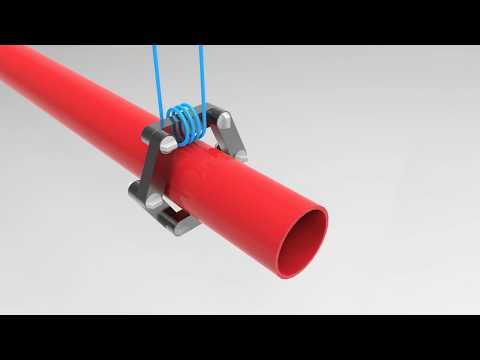
A unit installs around your existing pipework. From there, it turns your pipes into a treatment system: no chemicals, no cutting, no contact with the water.
HydroFLOW® works on the principle of a transformer. The unit contains a primary coil and a ferrite core, which together induce an electric signal directly into the pipe and water — making your pipe act as the secondary coil.
The signal oscillates at 120–150 kHz — around 2,000 times faster than mains electricity — as a decaying sine wave. Because it’s induced rather than conducted, it works on any pipe material: metal, plastic, even pipes wrapped in lagging or thermal insulation. The entire system is treated, continuously.
Three Applications
Limescale. Biofouling. Flocculation.
Three distinct water treatment problems — solved by different aspects of the same patented signal.
Controlled where it forms, then slowly dissolved
The signal energises calcium and carbonate ions, causing them to gather into stable clusters in the water. When heat or pressure triggers crystallisation, scale grows onto these clusters instead of your pipe walls — producing a fine powder carried away by the flow. Over time, existing scale also dissolves: clustering releases small amounts of CO₂, the missing ingredient that lets the reaction run in reverse.
The decaying sine signal promotes cluster nucleation in bulk water. For removal, CO₂ release enables the reverse reaction: CaCO₃ + CO₂ + H₂O → Ca(HCO₃)₂.
Biofilm disrupted across the whole system
Chemical biocides kill only the top layer of biofilm, leaving living bacteria protected underneath to regrow. The signal reaches the biofilm itself — destabilising the protective matrix so fragments detach and flush out with the flow. Once the base layer breaks down, bacteria lose their shelter and become far more vulnerable to any biocides you still use. Critical for Legionella control in hot water systems and reducing MIC (microbially induced corrosion) in industrial plants.
The induced signal destabilises biofilm's extracellular matrix, detaching established colonies. This exposes previously-protected bacteria, making residual chemical treatments dramatically more effective.
Particles clump so filters work better
As water passes through the ferrite ring, suspended particles pick up an electrical charge. When that charged water hits turbulence — typically at a pump downstream — the particles collide and stick together, forming larger flocs. Those flocs sit on the surface of your filter rather than embedding deep into the medium, making filtration more effective and cleaning far easier. Backwash cycles become shorter and less frequent, saving water, energy, and chemical flocculants.
Charged particles collide and agglomerate under turbulent mixing, forming larger surface-retainable flocs. Unlike limescale and biofouling treatment, flocculation only affects water passing directly through the unit.
The Difference
Not a magnet. Not a chemical. Something measurably better.
HydroFLOW® is often mistaken for magnetic water conditioners. The science is fundamentally different — and so are the results.
Magnetic conditioners
Passive magnetic field
-
Mechanism Static magnets or wrapped coils create a magnetic field at a single point on the pipe
-
Coverage Treats water only at the magnet itself, not throughout the system
-
Flow-dependent Still water gets no treatment; flow too fast or too slow also limits effect
-
Evidence Limited peer-reviewed validation; results highly inconsistent
Chemical treatment
Continuous chemical dosing
-
Mechanism Scale inhibitors, biocides, flocculants added to alter water chemistry
-
Cost Ongoing purchase, storage, handling, and disposal costs
-
Environment Creates chemical-resistant strains; environmental and disposal issues
-
Evidence Well established but increasingly regulated
HydroFLOW® by Hydropath
Active 120–150 kHz decaying sine signal
-
Mechanism Induces an active electric field at 120–150 kHz throughout the whole system
-
Coverage Treats water throughout the entire pipe network, continuously
-
Evidence 30+ years of installations across 70+ countries, independent testing, measurable field results
-
Certified ISO 9001, ISO 14001, Solar Impulse labelled, GreenPro certified
Across the majority of laboratory, pilot and full-scale studies reviewed, field-based water treatment encouraged scale-forming crystals to precipitate in the bulk water rather than adhering to the walls of pipes and vessels.
Case Studies
Real systems. Real results. Real customers.
The best proof isn’t a claim — it’s pipes. Here’s what HydroFLOW® looks like in the field.
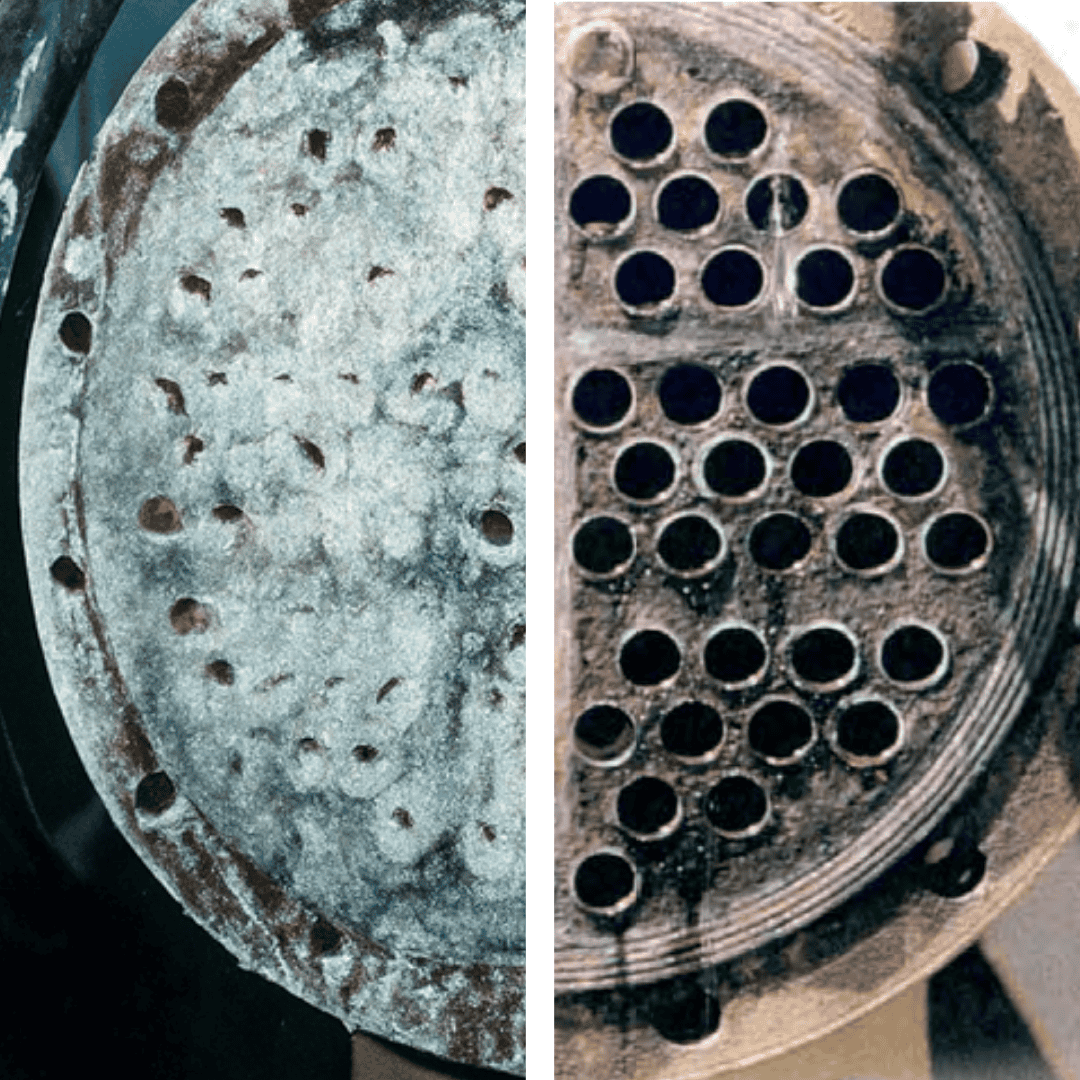
Scaled-up heat exchanger saved from disposal
A heat exchanger was so badly scaled it was scheduled for disposal — its design made it impossible to clean manually. HydroFLOW® was installed as a last resort. No chemicals, no softeners, no mechanical cleaning.
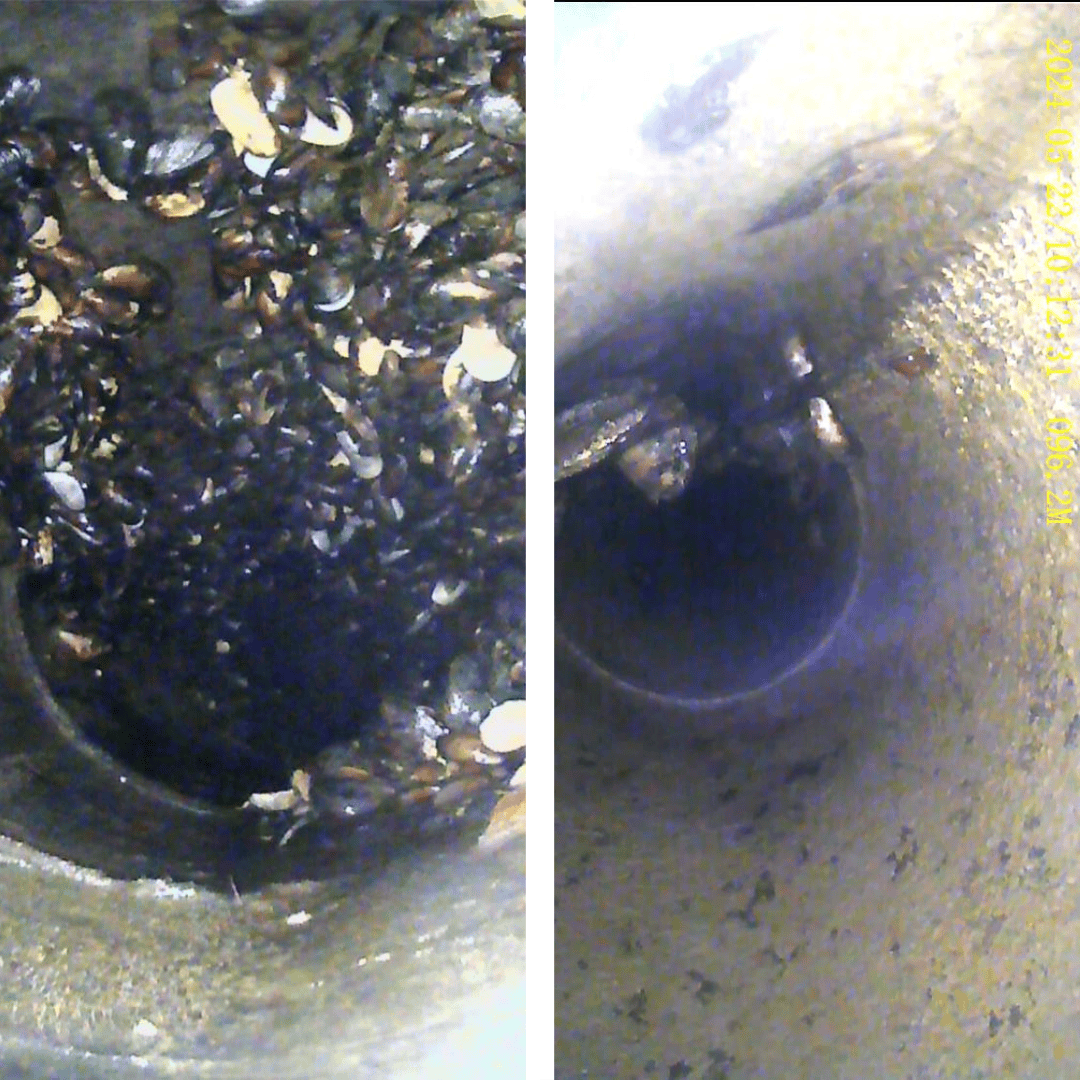
Barnacles and mussels stopped in a Cape Town seawater line
Marine growth from Table Bay Harbour was narrowing the pipe bore, blocking strainers, and forcing repeated jetting. A single HydroFLOW® i Custom unit was installed on one 200mm line feeding Heat Exchanger 4.
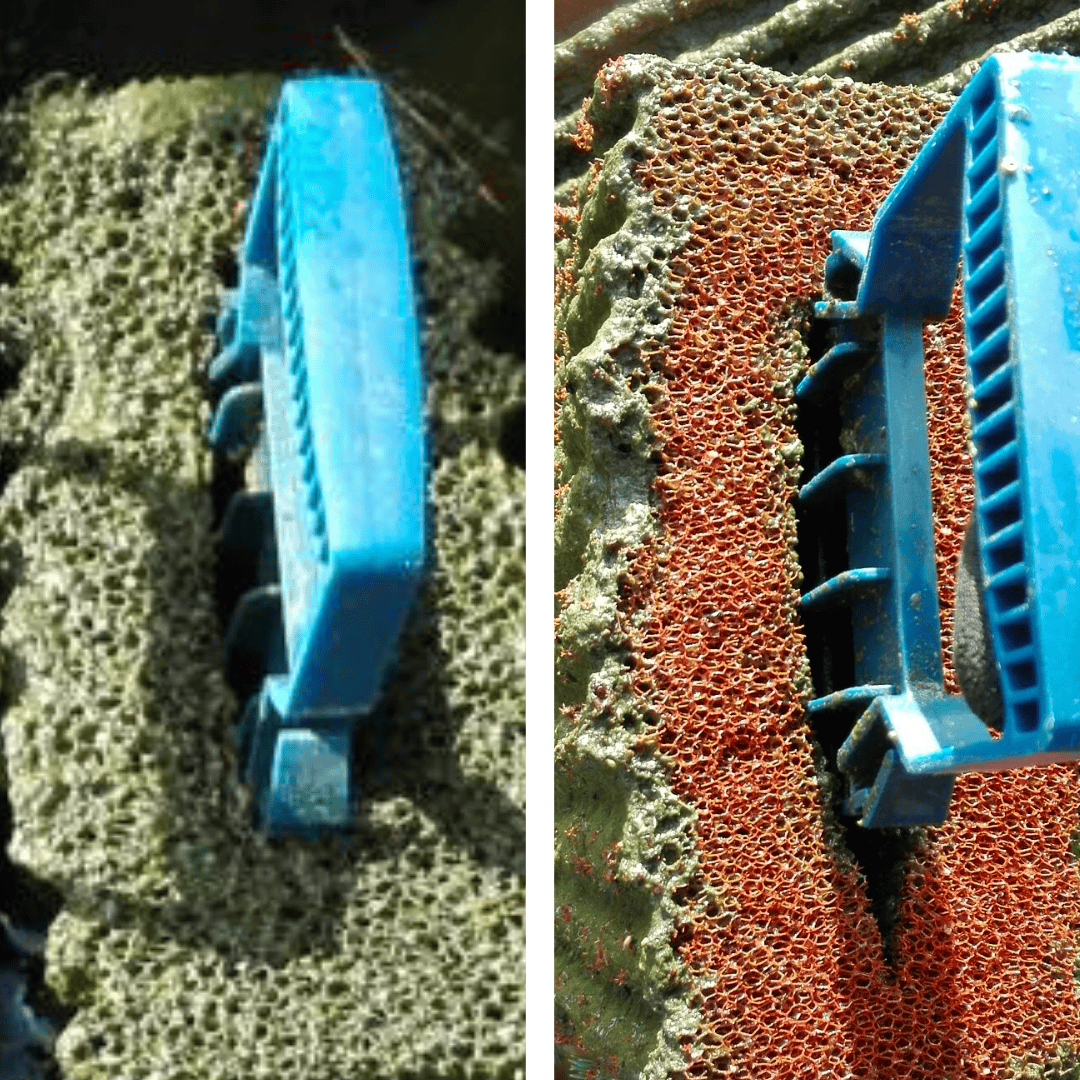
Algae trapped on filter surface in just one week
A private Koi pond with persistent algae and visibility limited to half its 160cm depth. A HydroFLOW® K40 was fitted on the suction side of the filter, ahead of the 8-unit filter bank.
Industries Served
Wherever water flows, HydroFLOW® works.
One technology, countless industries. Find yours.
Proven Technology
Trusted by the companies you trust.
Three decades of deployment. Thousands of installations. Independent validation from institutions that don’t hand out endorsements lightly.
50+
COUNTRIES SERVED
30+
YEARS OF EXPERIENCE
1M+
UNITS INSTALLED
4
INTERNATIONAL CERTIFICATIONS
ISO 9001
ISO 14001
GREEN PRO
SOLAR IMPULSE
Support & FAQ
Frequently Asked Questions
Is this the same as a magnetic water conditioner?
No — and the difference matters. Magnetic conditioners create a passive magnetic field at a single point on the pipe. They only treat water as it passes through that specific spot, they don’t work on still water, and their effect depends heavily on flow rate. HydroFLOW® instead induces an active electric field throughout your entire pipe network using electromagnetic induction — treating every drop of water continuously at 120–150 kHz, regardless of flow. It’s an electric signal, not a magnetic one: that’s the fundamental scientific distinction. Independent testing by British Gas confirmed Hydropath’s approach significantly outperformed competing technologies even in its earliest form.
Will HydroFLOW® work on my pipe material?
Yes, on virtually any pipe material. In metal pipes (copper, steel, iron), the signal travels through the pipe and the water itself. In non-conductive pipes (PVC, GRE, polyethylene), the water carries the signal. It also works through pipe lagging and thermal insulation — no physical contact with the bare pipe is needed.
Is HydroFLOW® a complete water sterilise?
No — and we’re upfront about that. HydroFLOW® is designed to break down biofilm and control biofouling in water systems, not to sterilise contaminated water. It won’t take heavily contaminated water and make it drinkable, and it’s not designed to kill every microorganism passing through. What it does brilliantly is disrupt biofilm — removing the protected base where bacteria hide from chemical and thermal treatments (such as pasteurisation flushes used in commercial buildings to combat Legionella). This is why HydroFLOW® works best as part of a managed treatment strategy, where it dramatically improves the effectiveness of any residual biocide use and keeps systems cleaner for longer.
How does HydroFLOW® compare to a water softener?
Softeners work by exchanging calcium and carbonate minerals with salt in a resin bed, which changes the water’s chemistry — meaning the treated water is no longer suitable for drinking. They also need regular salt refills and maintenance. HydroFLOW® works differently: it doesn’t remove minerals or alter water chemistry at all, so treated water remains drinkable and tastes the same. There’s no salt, no ongoing consumables, and no waste to dispose of. For most applications — especially hotels, hospitals, and any site needing potable water — HydroFLOW® is the simpler, cleaner solution.
Do I need to modify my existing pipework?
No. HydroFLOW® units clamp directly onto your existing pipe — no cutting, welding, or plumbing alterations needed. Installation typically takes under an hour and there’s no system downtime. This is a major advantage in factories and industrial sites where modifying pipework is costly and can cause significant production shutdowns.
How quickly will I see the results?
It depends on the application. Flocculation improvements often appear within hours. Limescale prevention starts immediately, with visible reductions in existing scale typically beginning 4–12 weeks after installation — though complete removal of heavy build-up can take many months, depending on system size, flow rate, and the amount of scale present. Biofouling control usually takes 1–3 months to fully stabilise. One thing worth knowing: during biofilm removal, you may see temporary spikes in bacterial count as fragments detach and are caught by test dips — this is a good sign, not a failure. We recommend keeping existing biocide dosing at full level initially, then reducing gradually as biofilm clears and the system stabilises.
Can I reduce my chemical use, or stop using chemicals entirely?
In most applications HydroFLOW® dramatically reduces chemical dosing — often by 50–100%. Some systems eliminate chemicals entirely; others retain a minimal dose for specific regulatory or operational reasons. Our technical team will assess your system and recommend the right approach.
Ready to see what HydroFLOW® can do for your system?
Three ways to move forward — pick the one that matches where you are in your journey.
Explore our products
Browse our range by application — residential, commercial, or industrial.
EXPLORE PRODUCTS →
Talk to an expert
Get technical assessment of your system and a tailored recommendation,
CONTACT US→
See the proof
Real systems. Real customers. Real results from HydroFLOW® installations worldwide
READ CASE STUDIES →
TRUSTED GLOBALLY
VERIFIED RESULTS
AWARD WINNING TECH
Ready to explore sustainable water treatment?
Get in touch to find out how HydroFLOW® can work for you.

© 2026 Hydropath Technology Ltd. All rights reserved