Naval strainer biofouling on the Seafighter’s ASW system
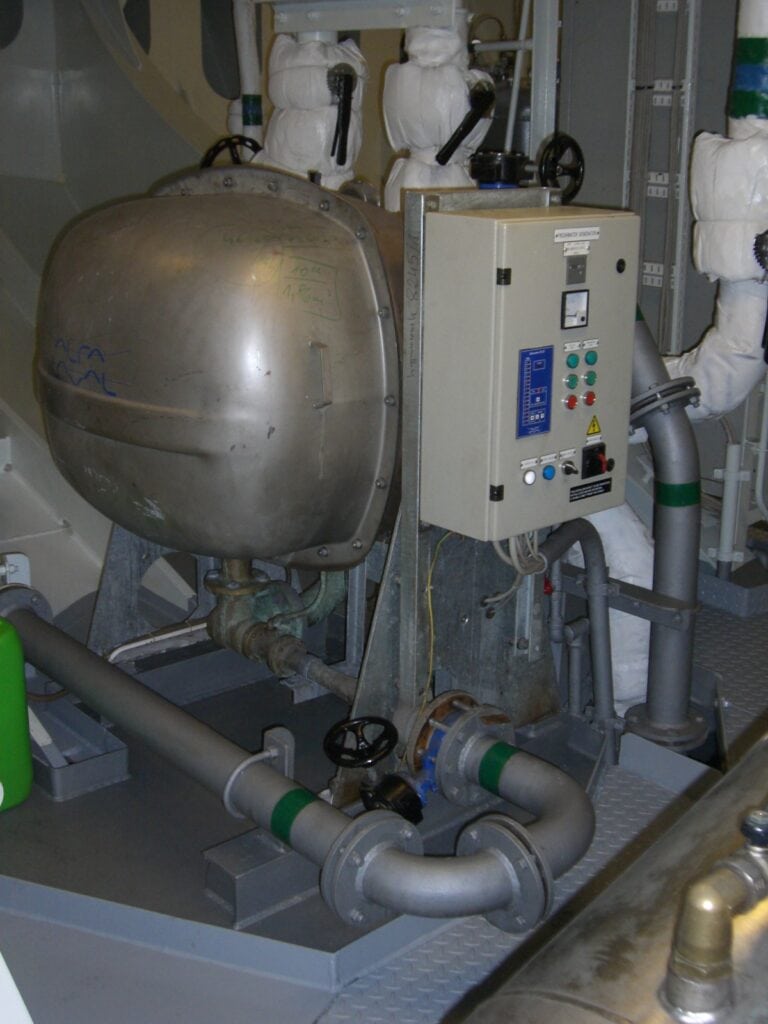
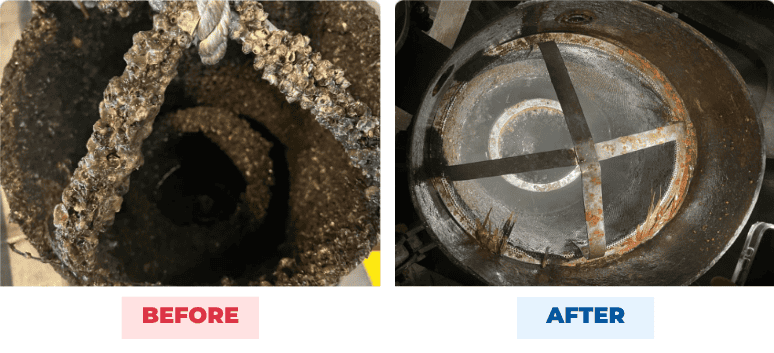
Naval strainer biofouling meant the ASW strainer basket in the auxiliary seawater cooling system of the US Navy’s Seafighter had to be cleaned every two to three months. Biofouling accumulated heavily on the basket, marine growth was visible around the seawater intake, and the cleaning interval was shorter than the crew wanted. A Hydropath Marine HM150 was installed roughly 10 feet from the seawater intake, upstream of the strainer on the discharge side of the ASW pump, and assessed in July 2025. The strainer ran 271 days without cleaning, well past the previous cycle, with noticeably less growth at the seawater intake.
The Challenge
- Naval strainer biofouling forced routine cleaning every two to three months
- Biofouling accumulated heavily on the strainer basket
- Marine growth was visible around the seawater intake
- Cleaning intervals were shorter than the crew wanted
- The unit had to fit the existing auxiliary seawater system without modification
The Solution
- Unit installed: one Hydropath Marine HM150
- Installation point: approximately 10 feet from the seawater intake, upstream of the ASW strainer
- System: auxiliary seawater cooling, discharge side of the ASW pump
- Monitoring period: a full year of evaluation aboard, assessed July 2025
The HM150 was fitted to the existing auxiliary seawater cooling system on the discharge side of the ASW pump, ahead of the strainer, and no chemical treatment was used. The signal disrupts the conditions that let marine organisms attach and grow, so naval strainer biofouling stopped establishing on the basket. At assessment the strainer had run 271 days without cleaning.