Case Study from HYDROPATH Asia
Seawater cooled chiller biofilm across five buildings
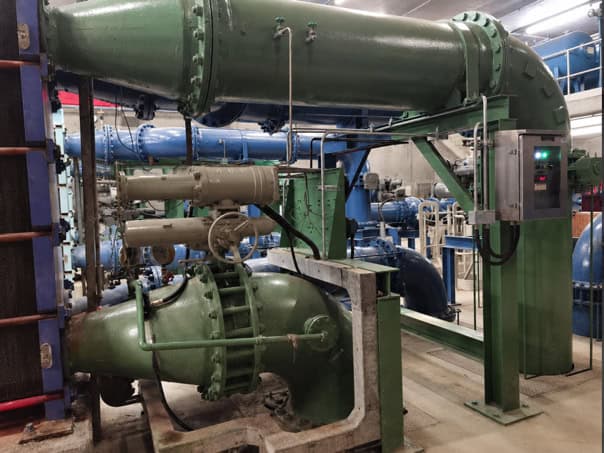
Seawater cooled chiller biofilm remained on the condenser tubes of five Hong Kong commercial buildings, even though all of them ran electro-chlorination and automatic tube cleaning. Hong Kong limits chlorine discharge to 0.2 ppm, so chlorination could not simply be turned up, and annual tube cleaning was the fallback. HydroFLOW® treatment was installed at an initial trial building and then rolled out to four more. The biofilm cleared within two months and chiller COP improved by 10 to 15%, with chlorine discharge staying within the 0.2 ppm limit. The same approach was repeated at each of the four further buildings with consistent results.
The Challenges
- Seawater cooled chiller biofilm remained on condenser tubes despite chlorination
- Annual tube cleaning was required at every building
- Electro-chlorination and automatic tube cleaning were both still in use
- Chlorine discharge was limited to 0.2 ppm, capping the chemical route
- Fouled tubes were holding chiller COP down
The Solution
- Installation point: seawater-cooled chiller plant, one trial building then four more
- Previous treatment: electro-chlorination and automatic tube cleaning
- Water: seawater, with chlorine discharge limited to 0.2 ppm
HydroFLOW® treatment went in at one trial building first, then at four more. The signal disrupts the conditions that let biofilm establish on condenser tubes, so seawater cooled chiller biofilm cleared within two months. Chiller COP rose by 10 to 15% as heat transfer recovered, and the buildings stayed within the 0.2 ppm chlorine discharge limit throughout.