Case Study from Hydropath Asia
Plate heat exchanger macrofouling on Hong Kong seawater cooling
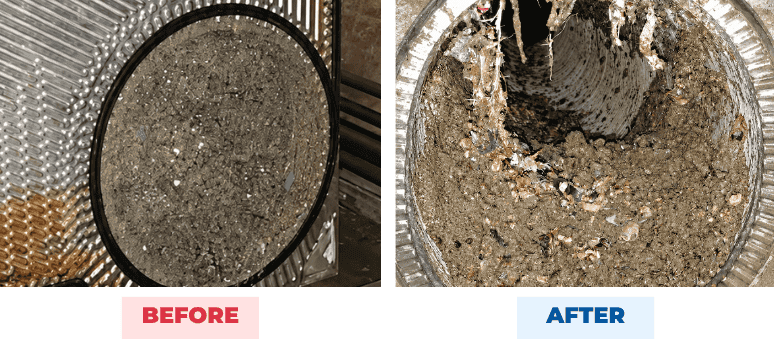
Plate heat exchanger macrofouling was blocking the seawater channels of a Hong Kong building‘s PHEs despite screening and chlorination. Mussels and barnacles restricted flow, biofilm impaired heat rejection, higher differential pressure drove up pumping demand, and discharge limits capped residual chlorine. A HydroFLOW® unit was first fitted at the PHE02 inlet. Once upstream fouling was identified, a custom 24 inch unit was repositioned to the header-pipe outlet to PHE02, with untreated PHE01 as the comparator from 22 February to 30 August 2023. After six months PHE02 remained largely open while PHE01 was blocked to a depth of 3 ft, and PHE02 maintained 14 to 18% higher seawater flow.
The Challenge
- Plate heat exchanger macrofouling blocked seawater channels despite screening and chlorination
- Mussels and barnacles restricted the seawater channels
- Biofilm impaired heat rejection across the PHE plates
- Higher differential pressure increased pumping demand
- Discharge limits restricted how much residual chlorine could be used
The Solution
- Unit installed: HydroFLOW® custom 24 inch
- Installation point: header-pipe outlet to PHE02, moved from the PHE02 inlet
- Trial: untreated PHE01 as comparator, 22 February to 30 August 2023
The trial set treated PHE02 against untreated PHE01 so plate heat exchanger macrofouling could be compared side by side. The unit was first fitted at the PHE02 inlet. When fouling was found upstream, the custom 24 inch unit was moved to the header-pipe outlet to PHE02 to extend treatment across the affected pipework. Both exchangers were then compared at the final inspection.