
Data Centre Water Treatment & Cooling
Cut Water Usage Protect Uptime Chemical-Free Treatment
Data centre water usage is climbing fast as AI and cloud growth push cooling loads higher — and much of that water is lost to scale-driven blowdown in cooling towers and adiabatic systems. HydroFLOW® is chemical-free data centre cooling water treatment that controls scale and biofouling from a single fitting, so sites raise cycles of concentration, cut water use and protect cooling efficiency.
Results from documented case studies; vary by site conditions and baseline operation. View all cooling case studies →
Data Centre Water Usage Is Rising — and Cooling Is Where It Goes
As AI and cloud demand push rack densities higher, a data centre must reject far more heat — and most of that heat leaves through water. Cooling towers, evaporative and adiabatic systems and condenser water loops all consume water, and much of it is lost to scale-driven blowdown: the water dumped to hold dissolved minerals below the point where they bond to surfaces as hard calcium carbonate scale. That's why scale forms fastest on condensers, fill and heat exchangers — and why it returns after every descale, as long as the same water keeps flowing.
Typical signs your cooling water is scaling up:
- Rising energy use as chillers and condensers work harder behind an insulating layer of scale
- Water lost to blowdown to hold dissolved solids below scaling limits
- Scale and fouling on fill, nozzles and heat-exchange surfaces
- More frequent descaling shutdowns and cleaning interventions on a live facility
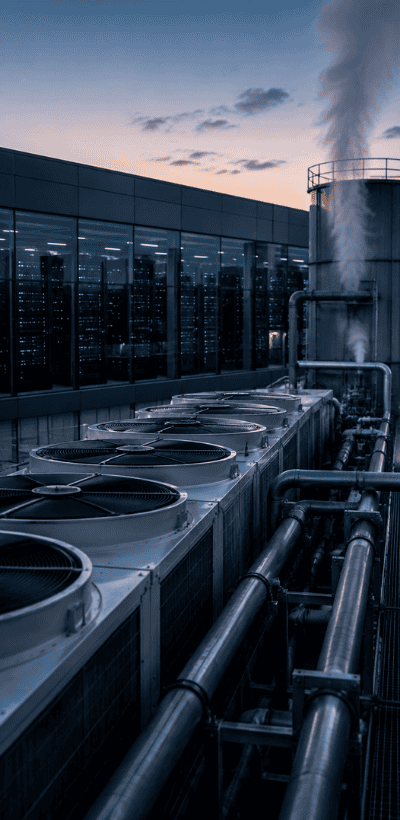
How Much Water Does a Data Centre Actually Use?
A large data centre can use up to 5 million US gallons (around 19 million litres) of water a day — comparable to a town of 10,000–50,000 people — while Google reports its average data centre uses about 550,000 gallons (roughly 2 million litres) daily. Across the industry, cooling water intensity averages around 1.8 litres per kWh of IT energy (WUE), though the most efficient sites achieve under 0.2. How much any one site uses depends on its cooling design, climate and — critically — how its cooling water is managed.
Up to 5M gallons/day
A large data centre can use as much water as a town of 10,000–50,000 people — most of it for evaporative cooling.
~1.8 L/kWh average WUE
Industry-average Water Usage Effectiveness is around 1.8 litres per kWh — best-in-class sites run below 0.2, largely by managing evaporation and blowdown.
84% in water-stressed areas
84% of proposed UK data centres are planned for areas of current or projected water stress by 2040 — putting every litre under scrutiny.
Sources: EESI, Data Centers and Water Consumption · Google, responsible water use at data centers · Global Action Plan (2026), UK data centres and water stress. Figures are operator- and study-reported estimates; individual sites vary.
The True Cost of Untreated Cooling Water
In a data centre, cooling-water problems hit three things that matter most — water usage, energy efficiency and uptime. Left untreated, scale and biofilm compound across every part of the cooling system.
Water Lost to Blowdown
Cooling towers and adiabatic systems dump water to hold dissolved solids below scaling limits — every blowdown cycle throws away water a data centre is now measured on.
Lost Cooling Efficiency
Scale on condensers, chillers and heat exchangers insulates heat-transfer surfaces, so plant burns more energy to reject the same heat — driving up PUE and running cost.
Fouled Adiabatic & Tower Surfaces
Evaporative and adiabatic cooling concentrate minerals fast, scaling pads, nozzles and fill and choking spray and airflow — degrading cooling exactly when it is needed most.
Downtime & Reliability Risk
Descaling, tube cleaning and biofilm in the cooling loop are maintenance and reliability risks in a facility where uptime cannot be compromised.
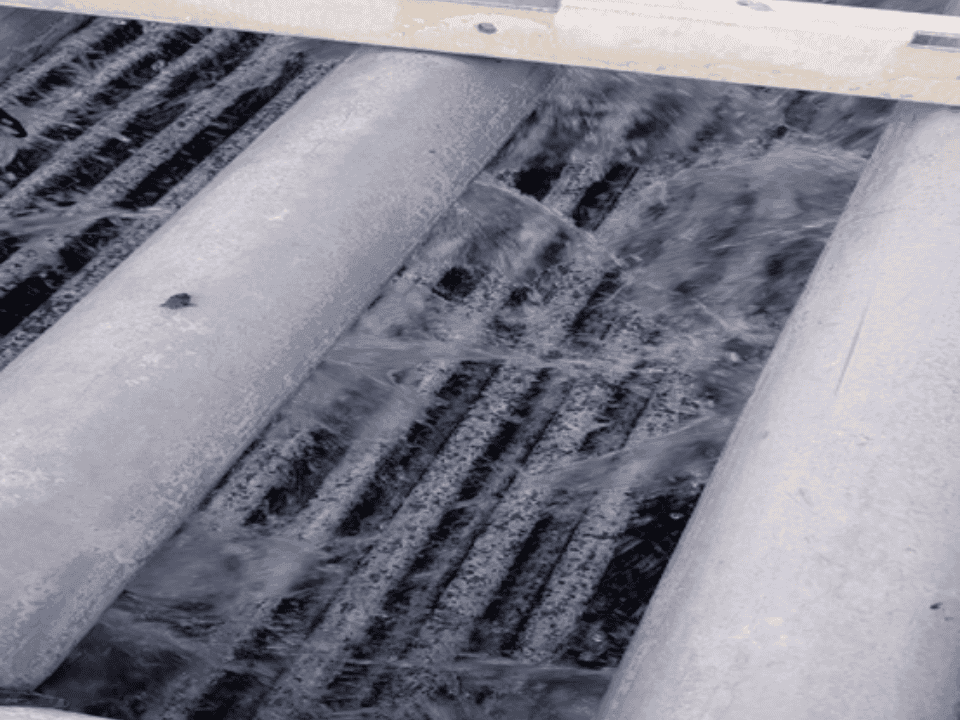
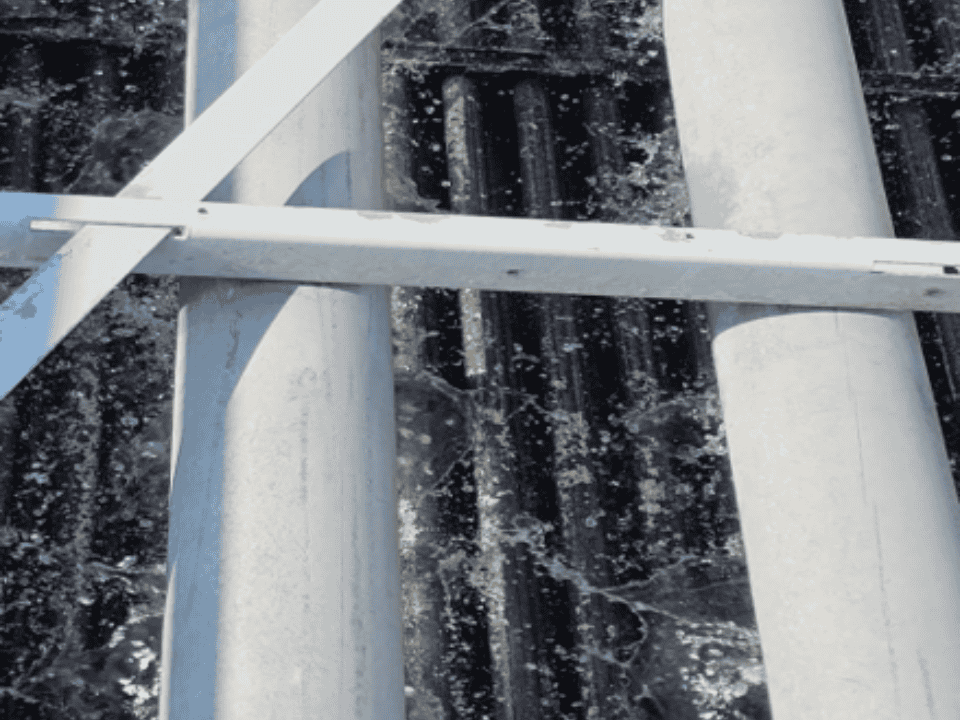
Amsterdam data centre: around 75% water saving with chemical-free cooling after fitting HydroFLOW® to the cooling system. Read the case study →
Where the Savings Add Up.
Scale and biofilm carry a continuous cost across data-centre cooling — water, energy, chemical dosing and uptime. Hydropath addresses six of the most significant recurring costs.
Lower Chemical Costs
Reduce scale inhibitors, biocides and acid dosing. A Texas factory reduced its chemical use by 75%.
Water Savings & Reduced Blow-down
Run higher cycles of concentration and reduce blow-down — a Fortune 100 HQ in Houston cut blow-down by 85%.
Lower Energy Costs
Scale and biofilm insulate condensers and heat exchangers — around 1 mm of scale can reduce heat transfer by about 7%. Cleaner surfaces support efficiency and lower energy use.
Reduced Maintenance & Downtime
Less manual descaling and acid cleaning, with fewer scale-related stoppages — a Philippines injection moulding plant cut acid cleaning from every 3–6 months to once a year.
Extended Equipment Life
Supporting scale and corrosion control helps protect condensers, chillers and heat exchangers — deferring costly repair and replacement.
Fast Return on Investment
Lower chemical, water and energy use builds a quick payback — an Arizona municipal building reported a 5.5-month payback, and a Houston HQ around $73,000 saved a year.
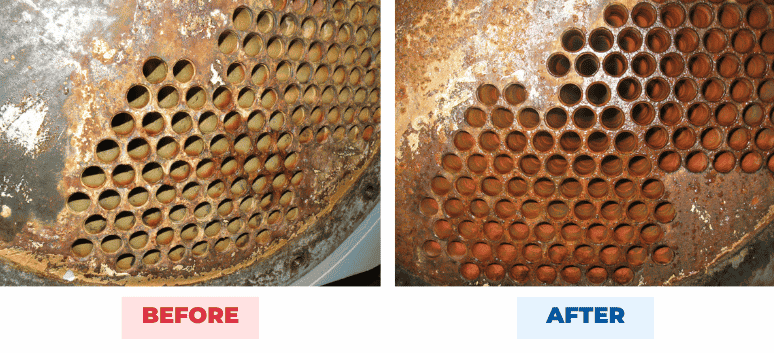
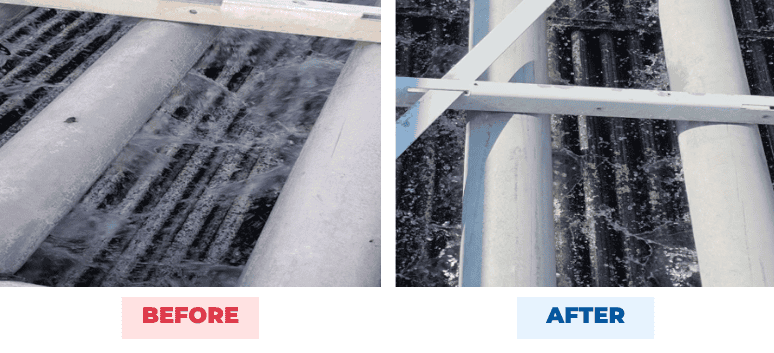
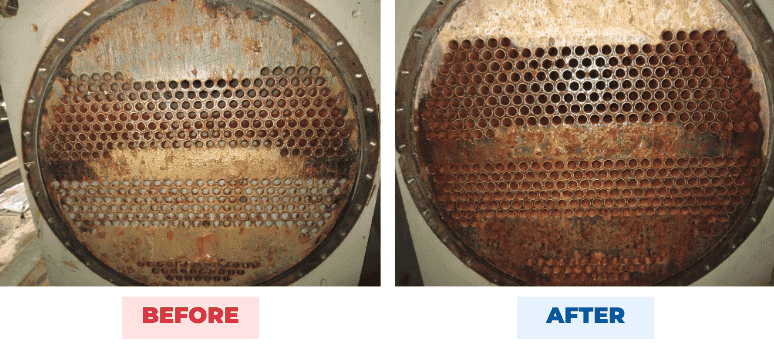
Hong Kong bank server-room cooling: chiller efficiency up 16% and yearly acid cleaning eliminated after fitting HydroFLOW® to the condenser water line.
Hong Kong bank server-room chiller before and afterDon’t take our word for it — test it on your own cooling system.
Every water, blowdown and energy saving on this page is designed to be independently verified using a documented, step-by-step testing protocol run on your own cooling towers, condenser water and adiabatic systems.
Get a Free Cooling Water Assessment
Data Centre Cooling Water Treatment Physical, Not Chemical!
A physical scale inhibitor for cooling towers, condenser water and adiabatic systems, powered by a patented electronic signal
HydroFLOW® induces a patented ~150 kHz signal into the cooling water through the pipe wall. The signal changes how dissolved minerals behave: instead of bonding to condensers, fill and heat exchangers as hard calcium carbonate scale, calcium and magnesium ions form loose clusters in the water. When the water concentrates and becomes supersaturated, those clusters crystallise in suspension — as fine crystals carried away in blowdown rather than fouling surfaces.
The result is scale control at the point where deposits are born — the moment of crystallisation — with no salt, no antiscalant dosing and no plumbing changes. The signal propagates in both directions through the pipework, so one unit protects the whole cooling loop from a single point, working continuously, 24/7 — as a data centre demands.
Learn More About Our TechnologyOne Technology — Lower Water, Higher Efficiency
Across cooling towers, condenser water and adiabatic cooling, one fitting changes the water and energy picture for a data centre.
Treated Water Redissolves Deposits
Because new scale stops forming, the water regains capacity to dissolve minerals — and slowly draws existing calcium carbonate scale back into solution, layer by layer.
Gradual and Safe by Design
Progressive removal avoids the risks of acid descaling — minimising dislodged flakes that can block valves and strainers, with no corroded metal and no system shutdown while it happens.
Proven at Full Industrial Scale
At a major listed real estate management group in Hong Kong, remaining condenser scale was eliminated within 12 months — with no pre-cleaning — on the way to 100+ units across the portfolio.
A Different Approach to Data Centre Cooling Water
How HydroFLOW® compares with the usual ways of protecting cooling and adiabatic systems from hard-water scale.
| HydroFLOW®Physical conditioner — no chemicals | Salt water softener | Antiscalant / chemical dosing | Acid descaling | |
|---|---|---|---|---|
| How it works | Electronic signal crystallises minerals in suspension so they can't bond as scale on cooling surfaces | Removes calcium & magnesium from make-up water, exchanging for sodium | Chemicals interfere with crystal growth in the water | Acid strips deposits after they have formed |
| Effect on water use | Cuts it Higher cycles & reduced blowdown | Adds regeneration water & sodium load | Partial Chemistry limits cycles | None |
| Consumables | None No salt, no chemicals | Regular salt refills + regeneration water | Continuous chemical purchase, storage & handling | Acid + neutralising + labour each clean |
| Removes existing scale | Yes Gradually redissolves deposits | No Prevention only | Partial Depends on programme | Yes But with downtime & risk |
| Downtime to fit | None Installs on the pipe, facility stays live | Cut-in installation + drain + power | Dosing pumps, tanks & monitoring | Cooling offline for each clean |
Swipe sideways to compare all four methods →
Comparison reflects typical products in each category; individual systems vary. Corrosion-control chemistry, pH and any Legionella duties on open cooling systems are separate and should be maintained as required.
Applications
Key applications for data centres
A data centre's water challenge centres on cooling. Each application links to its dedicated treatment page.
Cooling Towers
Controls scale on fill, condensers and pipework so data centre cooling towers run higher cycles of concentration with less blowdown and dosing.
Heat Exchangers
Reduces fouling on plate and shell-and-tube exchangers to protect approach temperatures and the efficiency of the cooling loop.
Limescale & Scale Control
The wider limescale picture — how calcium carbonate scale forms across cooling plant and condenser water, and how it is treated and gradually removed.
Biofouling & Biofilm
Helps disrupt biofilm on cooling surfaces and in the loop, protecting flow, hygiene and heat-transfer efficiency across the system.
Legionella Control
Supports biofilm suppression and a leaner biocide regime on open cooling water and towers — part of a data centre's cooling-water duties.
Chillers & Commercial HVAC
The wider commercial cooling picture — chiller, condenser and chilled water treatment for the mechanical plant that supports a facility.
Process Overview
Simple Installation. No Interruption to Cooling.
Our patented technology retrofits into your existing cooling plant while the facility stays live.
The Fit
The HydroFLOW® unit installs around your existing cooling-tower, condenser or adiabatic pipework — no cutting, no welding, no interruption to cooling. Compatible with any pipe material.
The Signal
A patented electronic signal propagates in both directions through the water, treating the whole cooling loop from a single point — working continuously, 24/7.
The Results
New scale stops forming and existing deposits gradually redissolve. Sites raise cycles of concentration, cut water and blowdown, and hold cooling efficiency as loads rise.
Proven On Site
Real Cooling Systems. Real Results.
Drawn from Hydropath installations and our customers' own feedback across data centre and large-scale commercial cooling.
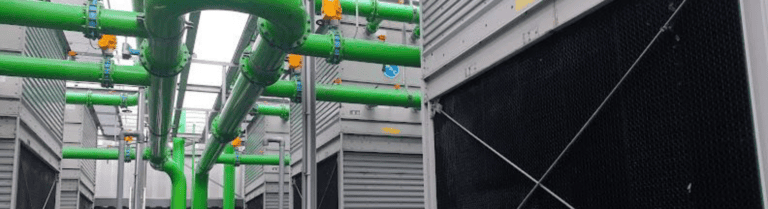
Amsterdam Data Centre: 75% Water Saving, No Chemicals
Six BAC cooling towers at an Amsterdam data centre cut chemical dosing and water use after vortex tech failed.
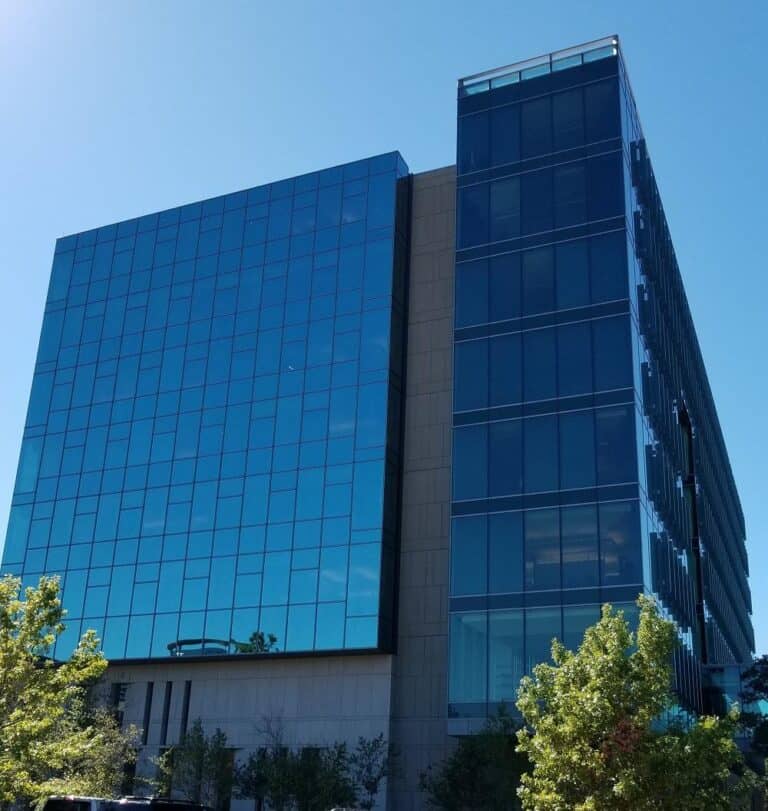
Fortune 100 HQ: 85% Less Blowdown, $73k Saved
A Fortune 100 HQ in Houston cut blowdown 85% and chemicals 75% across its cooling towers and chillers with HydroFLOW units.
Hong Kong Chiller: 16% Efficiency Gain, Scale Reduced
A global bank building in Hong Kong improved chiller efficiency 16% and reduced existing scale on its chiller system.
Support & FAQ
Frequently Asked Questions
Why is data centre water usage rising so fast?
Data centre (data center) water usage is climbing sharply because the compute density behind AI and cloud growth needs far more heat rejection, and much of that heat is rejected through water — in cooling towers, evaporative and adiabatic cooling and condenser water loops. As racks get hotter, operators lean on evaporative and adiabatic cooling to protect energy efficiency, but those methods consume water. Controlling scale and biofouling on that cooling water lets a site run at higher cycles of concentration and cut blowdown, which is one of the most direct ways to reduce the water a data centre draws.
How much water does a data centre use per day?
It varies enormously with size, climate and cooling design. A large data centre can use up to 5 million US gallons (around 19 million litres) a day — comparable to a town of 10,000–50,000 people — while Google reports its average data centre uses about 550,000 gallons (roughly 2 million litres) daily. Air-cooled sites use far less on site but pay for it in energy. A useful yardstick is Water Usage Effectiveness (WUE): the industry average is around 1.8 litres per kWh of IT energy, with best-in-class sites below 0.2. On evaporatively cooled sites, the biggest controllable share of that water is blowdown — which is exactly the water HydroFLOW® helps a site stop wasting.
Is AI water usage really as high as the headlines say?
The honest answer is that the numbers depend heavily on methodology. Per-prompt estimates range from about a third of a millilitre (OpenAI's figure) to roughly half a litre once the water used in electricity generation is included. Two distinctions matter: withdrawal vs consumption (most withdrawn water is returned to source; evaporated water is not), and direct vs indirect use (on-site cooling vs power-station cooling). What is not in dispute is the direction: AI compute is growing quickly, most new capacity relies partly on evaporative or adiabatic cooling, and much of it is being built in water-stressed regions — 84% of proposed UK data centres are planned for areas of current or projected water stress. That makes reducing on-site consumptive use — chiefly blowdown — a priority operators can act on today, which is where HydroFLOW® fits.
How does HydroFLOW® reduce data centre water usage?
HydroFLOW® keeps dissolved minerals in suspension instead of letting them deposit as scale on cooling-tower fill, condensers and heat exchangers. Because scale is no longer the limit on how concentrated the cooling water can get, many sites raise cycles of concentration and reduce blowdown — the single biggest lever on cooling-water consumption. At an Amsterdam data centre, chemical-free cooling with HydroFLOW® delivered around 75% water saving. It works from one fitting on the outside of the pipe, with no chemicals added to the loop.
Can HydroFLOW® be used on adiabatic and evaporative cooling?
Yes. Adiabatic and evaporative cooling concentrate minerals as water evaporates, so scale and biofouling form quickly on pads, nozzles, fill and heat-transfer surfaces. HydroFLOW® conditions the water physically so those minerals stay in suspension, keeping surfaces cleaner, protecting spray and airflow, and supporting higher cycles of concentration with less blowdown. It suits adiabatic cooling, cooling towers and condenser water in a data centre, and installs without cutting into the pipework.
Does it protect cooling efficiency and uptime?
Yes. Scale on condensers, chillers and heat exchangers directly raises the energy needed to reject heat — even 1 mm of scale can cut heat-transfer efficiency by around 7% — and fouled cooling water is a maintenance and reliability risk in a facility where uptime is everything. By keeping heat-transfer surfaces clean and helping suppress biofilm, HydroFLOW® protects cooling efficiency (PUE and WUE) and reduces the descaling and cleaning interventions that put pressure on a live data centre.
Does HydroFLOW® replace data centre cooling water treatment chemicals?
HydroFLOW® targets the scaling function of a chemical programme — the antiscalant and softener load — and reduces or removes it, while also helping suppress biofilm on cooling surfaces. This supports a leaner data center cooling water treatment regime and less chemical handling on site. Corrosion inhibition, pH control and any Legionella duties on open cooling systems are separate and should be maintained as your standards require; HydroFLOW® works alongside them.
Can it be retrofitted to a live data centre without downtime?
Yes. HydroFLOW® installs on the outside of steel, copper or plastic pipework on cooling towers, condenser water, chilled water and adiabatic systems. Because it installs without cutting into the line, it can be fitted while the facility stays live, with no interruption to cooling — important where uptime cannot be compromised. One correctly sized unit conditions the connected loop from a single point and runs continuously, 24/7.
Ready to Cut Your Data Centre’s Water Usage?
Tell us about your cooling towers, adiabatic systems and current dosing and blowdown routine, and our team will recommend the right units and estimate your potential saving on water, energy and chemicals.
Ready to explore sustainable water treatment?
Get in touch to find out how HydroFLOW® can work for you.

© 2026 Hydropath Technology Ltd. All rights reserved