
Boiler & Hot Water Limescale
Hot Water Without the Scale In Your Home or on Your Site Less Energy, Descaling & Downtime
HydroFLOW® treats limescale on the hot water side of boilers, cylinders and calorifiers electronically: no chemicals, no salt, no cut into the pipe. Heating surfaces stay clean, hot water comes through at full flow, and descaling stops coming round so often.
Protecting a combi or cylinder at home? See the residential range →
Results from documented case studies; they vary with water hardness, temperature and use. View all boiler and hot water case studies →
Where Hot Water Scale Forms, and What It Costs
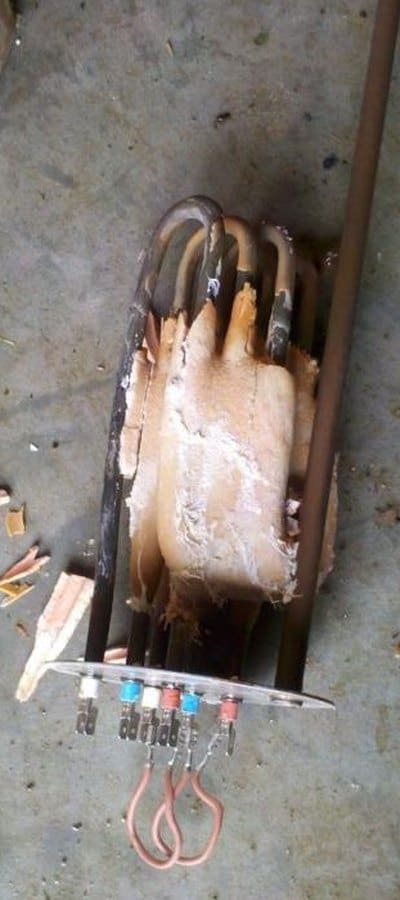
Hard water leaves limescale wherever it is heated, and the hottest surfaces scale first: the plate heat exchanger in a combi boiler, and the coil or immersion elements in a cylinder or calorifier. Scale insulates those surfaces, so the boiler burns more to deliver the same hot water and parts fail early. Four holiday-home cylinders in France shed around 200 kg of scale a year; a Canadian hotel's tanks gained about an inch every six weeks. On a commercial site, scaled storage also struggles to hold the 60°C that Legionella control relies on.
Typical signs your boiler or hot water system is scaling up:
- Rumbling, banging or "kettling" noises when the boiler heats water
- Hot water that runs lukewarm, fluctuates or takes longer to arrive
- Gas or electricity bills creeping up for the same hot water
- White flakes at taps, blocked aerators, showerheads and strainers
- Descaling visits or element replacements on a shortening cycle
- Calorifiers slow to recover and struggling to hold 60°C
Why Hot Water Scale Matters, at Home and on Site
A boiler runs two circuits. The sealed heating circuit recirculates the same water through radiators, where the risk is corrosion and sludge, managed with an inhibitor. The hot water side heats fresh mains water every time a tap runs, bringing in new hardness minerals with every litre. That is where limescale forms: in a combi's plate heat exchanger, a cylinder's coil or element, and a commercial calorifier. Treating one circuit does not treat the other.
Heat is half the world’s energy
Heat makes up almost half of global final energy use and 38% of energy-related CO2 emissions (IEA, 2022 data). In buildings that means space heating, cooking and water heating, and scale taxes the heat-transfer surfaces where that energy is spent.
About a fifth of a home’s heat
Across 45,000 UK homes with gas combi boilers, hot water made up 19% of the heat the boiler supplied, with space heating the rest (UK Government, 2024). Hot water is not a side cost; it is heated from cold every day, all year round.
200 ppm: the UK line
UK Building Regulations guidance asks for the feed to water heaters and the hot water circuit of combination boilers to be treated where mains hardness exceeds 200 ppm, to slow limescale. Check with your installer and boiler maker which methods your warranty accepts.
Sources: IEA, Renewables 2023: Heat · UK Government, Domestic hot-water use (2024) · Domestic Building Services Compliance Guide (England, 2013) · HSE, hot and cold water systems. Figures are agency-reported estimates; individual sites vary.
The True Cost of Hot Water Scale
Scale on the hot water side is paid for in several places at once: energy, descaling visits, replacement parts, complaints about lukewarm water and, on commercial sites, the effort of holding 60°C. Here is where it builds up, at home and on site.
Home Boilers Scaling Up & Blocking Showerheads
A home boiler heats mains water through a small exchanger whose narrow channels scale first, then sheds flakes into showerheads and taps.
Calorifiers & Hot Water Plant Scaling Up
Stored and plate-exchanger hot water scales on every hot surface, slowing recovery and making 60°C harder to hold.
Commercial Water Heaters Needing Constant Cleaning
Tankless and storage water heaters clog at their strainers and exchangers, triggering low-flow alarms and complaints.
Cylinders & Immersion Elements Burning Out
Electric elements sit in the hottest water in the cylinder, so scale builds on them until they overheat and fail.
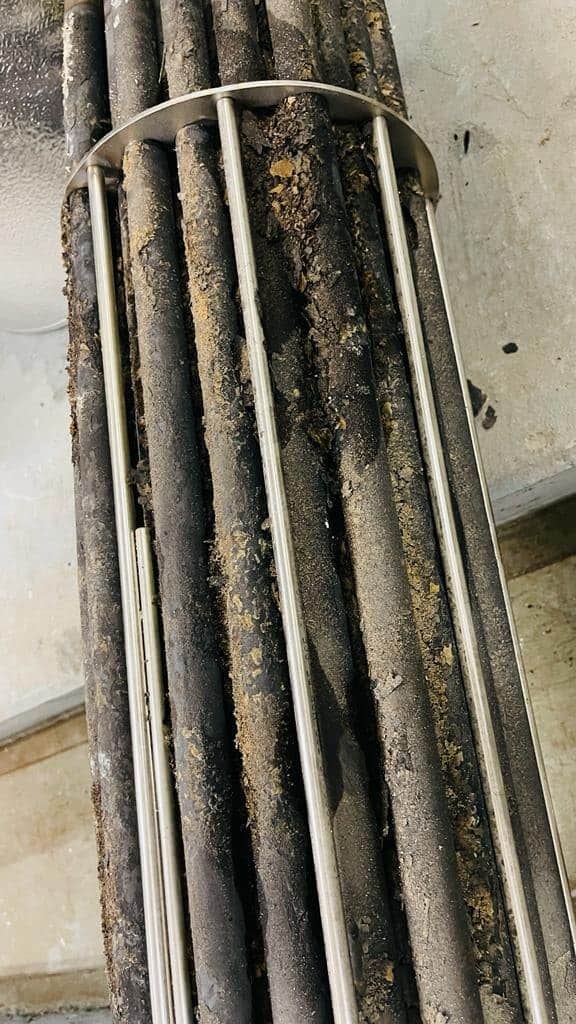
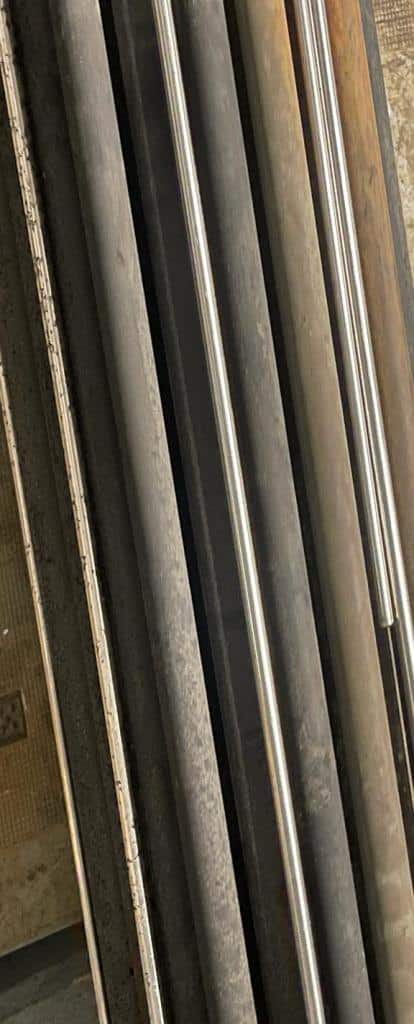
Macau casino hotel: scale was building up on the electric calorifier elements that heat the hot water for a 1,500-room hotel. After a HydroFLOW® P100 trial, the site reported less scale in the protected calorifiers and rolled out 11 units. Read the case study →
Where the Savings Add Up
Scale costs a hot water system every day it is there. These are the six recurring costs that sites have measured coming down.
Fewer Descaling Visits & Tank Cleans
Cleaning intervals stretch when scale stops bonding. A Canadian hotel went six months without cleaning tanks it used to drain every six weeks, and a Jamaican resort ran eight months without craning out a heater for descaling.
Lower Energy for the Same Hot Water
Clean heating surfaces pass heat straight into the water. The French holiday homes estimated their energy savings at over 50% once their cylinder elements stayed clear, and the Jamaican resort's control system showed lower fuel use.
Longer Life for Boilers & Heaters
Parts last when they are not baked in scale. The holiday homes stopped replacing five heaters a year, saving an estimated €1,750, and a US packing plant's ageing water heaters ran a further 14 years.
No Salt, No Softener to Run
A French hospital replaced six salt softeners, and now spends €50 per 1,000 m³ on it, against €1,250 for the softeners. A Santa Fe resort on 923 ppm well water observed less scale on its heater elements without one.
No Acid in the Plant Room
Acid descaling means shutdowns, handling risk and worn seals. A Middle East hospital's heat exchanger has needed no acid clean for over 17 months, where it used to need one every three to four, as confirmed by the site team.
Fast Return on Investment
One fitting, no consumables. The San Antonio hotel estimated its ROI at well under a year, a US convenience chain puts it at 6 to 12 months per store, and Northview REIT calculated a two-year payback on its boiler.
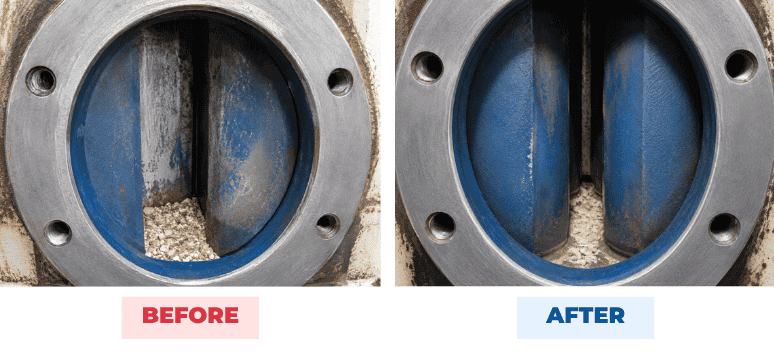
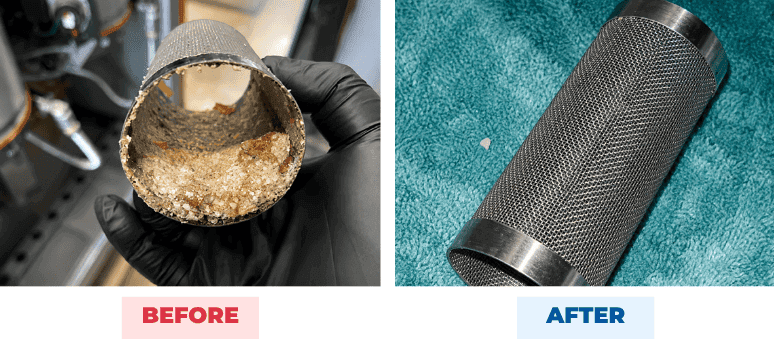
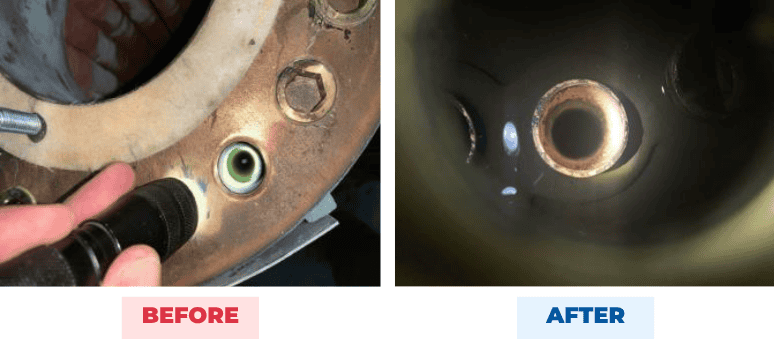
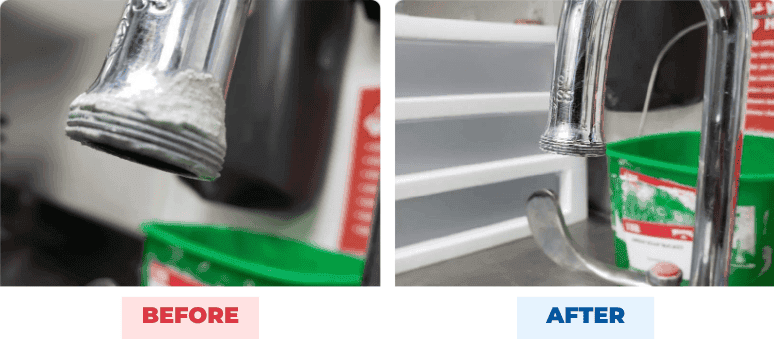
Redwood Inn, Canada: two 80-gallon hot water tanks gained about an inch of scale every six weeks and had to be drained and cleaned. With one HydroFLOW® C100 on the cold feed, neither tank needed routine cleaning for six months, scale fell to about a sixteenth of an inch, and three suites went back into use.
Redwood Inn hot water tank before and afterDon’t take our word for it. Test it on your own hot water.
Every figure on this page comes from a site that measured it: fit a unit, then judge it against your own descaling records, energy bills, element replacements or your engineer's next service report.
Get a Free Hot Water Assessment
Boiler Limescale Treatment Physical, Not Chemical!
An electronic water conditioner for combi boilers, hot water cylinders, calorifiers and commercial water heaters, powered by a patented signal
HydroFLOW® induces a patented ~150 kHz signal into the water through the pipe wall. The signal changes how dissolved calcium and magnesium behave: instead of bonding as hard scale to a plate heat exchanger, or the coil or element in a cylinder or calorifier, they form loose clusters in the water. When the water is heated, those clusters crystallise in suspension, as fine particles that flow out through the taps rather than building up on the hot surface.
The unit goes on the cold feed to wherever the water is heated: the boiler, the cylinder or the calorifier, after any storage tank or pump, because stored and pumped water loses its treatment. From there the signal travels in both directions through the pipework. It works on copper, steel and plastic, and it keeps working on water that stands in the system: holiday homes between guests, schools over the summer, offices at weekends.
It treats the hot water side only. It does not replace the inhibitor in your sealed central heating circuit, and it is not a water softener: nothing is added and nothing is taken out, so the water keeps its minerals and taste, with no salt and no separate drinking tap. Where UK guidance asks for scale treatment above 200 ppm, check with your installer and boiler maker which methods your warranty accepts; we can supply the technical documentation they ask for.
Learn More About Our TechnologyOne Technology — From Combi to Calorifier
The same physical treatment protects a family’s combi boiler and a hospital’s hot water plant, and it works on the scale already there.
Existing Scale Softens and Loosens
Once new scale stops bonding, treated water slowly draws old deposits back into solution, and what remains turns soft and powdery. A Canadian hotel's tanks went from about an inch of scale every six weeks to about a sixteenth of an inch after six months.
Gradual and Safe by Design
No acid in the boiler, no metal thinned by a descale, no system drained down. Expect flakes at taps, aerators, showerheads and heater strainers in the first weeks, and open the cylinder drain at the next service. That is old scale leaving, and it settles.
Inspected After Five Years
At MGEN's Trois-Épis hospital, on water at about 330 ppm, twelve units replaced six salt softeners across 2,550 kW of hot water plant. Five years on, the plate exchanger was free of limescale and there had been no scale-related pipe blockages.
How the Options Compare
How HydroFLOW® compares with the usual ways of dealing with limescale in boilers and hot water systems.
| HydroFLOW®Electronic conditioner, no chemicals | Salt water softener | Polyphosphate / chemical inhibitor | Inline scale reducerElectrolytic or magnetic | Acid descaling | |
|---|---|---|---|---|---|
| How it works | A signal through the pipe wall makes minerals crystallise in suspension, so they flow out instead of bonding to hot surfaces | Swaps calcium and magnesium for sodium by ion exchange | Doses a chemical that slows crystal growth, from a cartridge or dosing pump | A small in-line or around-pipe device on the feed to one boiler or heater | An engineer circulates acid to strip scale after it has formed |
| Listed in UK 200 ppm guidance | Not listed Ask your installer and boiler maker which methods your warranty accepts | Listed | Listed Polyphosphate dosing and chemical inhibitors | Partly Electrolytic reducers are listed; magnetic are not | Not applicable A clean, not a treatment |
| Drinking water & taste | Unchanged Nothing added or removed; minerals and taste stay | Altered Adds sodium; a separate drinking tap is usually advised | Dosed Product in the water; cartridges to keep in date | Varies Magnetic: unchanged. Electrolytic: releases metal ions into the water | Rinsed System flushed before use |
| Works on standing water | Yes The signal keeps treating water that is not flowing, so the first water after a weekend or a holiday is treated | Yes Softened water stays soft in the pipes | Yes While the dose lasts | Magnetic: no Magnetic fields only act on moving water. Electrolytic types act only where the water passes the device | Not applicable |
| Consumables & upkeep | None No salt, no cartridges, no dosing | Salt, regeneration water and servicing | Cartridge or chemical refills, typically every 6 to 12 months | Magnetic: none. Electrolytic: electrodes wear out and need replacing | Acid, labour and a visit every time |
| Removes existing scale | Gradually Old scale softens and loosens over weeks to months | No Prevention only | No Slows new scale only | Varies Mostly prevention claims | Yes With downtime and some metal loss each time |
| Combi to calorifier | Yes Units from 15 mm home pipework to large plant-room mains | Sized Needs space, drain and power; large plant is a project | Mostly small Domestic cartridges; commercial dosing is a contract | Mostly small Sized for single boilers and heaters | Any As a repeat service |
| Downtime to fit | None Installs around the existing pipe; no cutting, no drain-down | Plumbed in, with drain and power | Plumbed in or dosing point fitted | Usually plumbed in on the cold feed | Hot water off for every clean |
Swipe sideways to compare all five methods →
Comparison reflects typical products in each category; individual products vary. HydroFLOW® treats scale on the hot water side. It is not a central heating inhibitor, not a softener and not a disinfectant: the inhibitor in your sealed heating circuit, any softening specified for your site, and your Legionella risk assessment and 60°C regime all stay in place.
Applications
Hot water across homes, hotels and hospitals
Scale on the hot water side connects to heaters, heat exchangers and water safety. Each card links to its own page.
Limescale & Hard Water
How scale forms across a building's water, from taps and showers to process lines, and how it is controlled without salt or chemicals.
Immersion & Electric Heaters
Keeps electric elements in cylinders and water heaters clear of the scale that makes them overheat and burn out.
Plate & Shell-and-Tube Heat Exchangers
Protects the exchangers behind hot water, heating and process circuits, where narrow channels scale and foul fastest.
Legionella & Water Safety
Disrupts the scale and biofilm that shelter Legionella in hot water systems, supporting the 60°C regime, never replacing it.
Hotels & Resorts
Calorifiers, water heaters, laundries and kitchens: hot water that guests notice when it fails, and a Legionella duty on top.
Hospitals & Care Settings
Hot water plant held at healthcare temperatures, where scale, biofilm and water safety meet under the strictest rules.
More on this topic: commercial building water treatment, residential units for homes, HydroFLOW® Pearl for a single home, and steam boilers and steam systems, which have their own page.
Process Overview
Simple Installation. No Hot Water Off.
Our patented technology fits around your existing pipework, at home or in the plant room, while the hot water keeps running.
The Fit
The HydroFLOW® unit installs around your existing pipework: on the cold feed to a combi or cylinder at home, or on the plant-room feed to calorifiers and water heaters on site. No cutting, no draining, no hot water off.
The Signal
A patented signal travels in both directions through the water, treating the hot water system from one point. It works through copper, steel and plastic, and keeps working on water that stands in holiday homes, closed schools and quiet weekends.
The Results
Flow comes back first: a San Antonio hotel's hot water flow began improving within a month. Maintenance records build over months, as six months without a tank clean in Canada shows, and the long view takes years: a French hospital's five-year inspection.
Proven On Site
Real Hot Water Systems. Real Results.
Drawn from Hydropath installations and our customers’ own records, across hospitals, hotels, holiday homes and residential blocks.
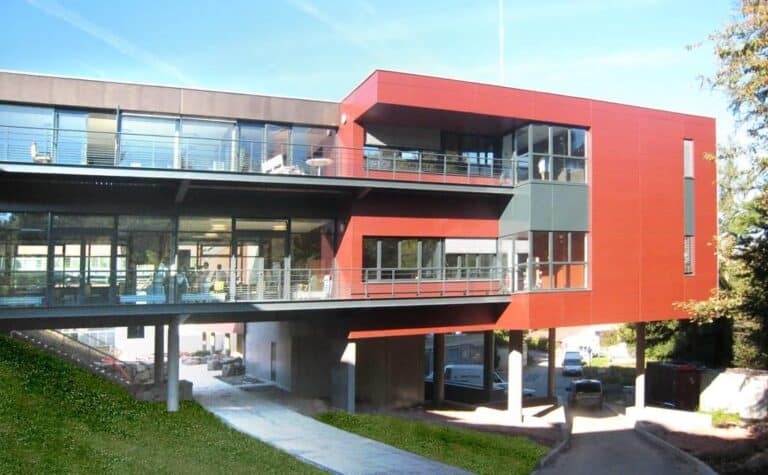
MGEN Trois-Épis: Hospital Hot Water Scale Free for 5 Years
The 206-bed MGEN Trois-Épis rehabilitation centre replaced six salt softeners with 12 HydroFLOW® units and has had five years with no limescale maintenance.
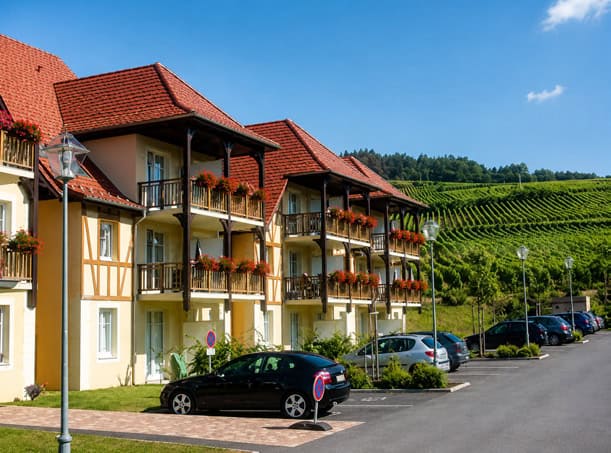
France Holiday Homes: 200 kg of Scale Down to Under 10kg
A French holiday home residence cut hot water cylinder limescale from 200 kg a year to under 10 kg with two HydroFLOW® C60 units, saving €1,750 a year.

Tunisia Home: Boiler Limescale Cut, Showerheads Unblocked
A residential property in Tunisia fitted HydroFLOW® Pearl Plus units on two boiler circuits, controlling limescale and restoring hot water flow.
Support & FAQ
Frequently Asked Questions
What is limescale in a boiler?
Limescale in a boiler is a hard layer of calcium and magnesium carbonate left behind when hard water is heated. It builds fastest on the hottest surfaces, such as a combi boiler's plate heat exchanger, a cylinder's coil or immersion element, or a commercial calorifier. The layer insulates those surfaces, so the boiler uses more energy to heat the same water, flow drops and parts fail sooner. It forms on the hot water side, which takes in fresh mains water every time a tap runs, not in the sealed heating circuit that feeds the radiators.
What are the signs of limescale in a boiler or hot water system?
The common signs are rumbling or kettling noises when the boiler heats water, hot water that runs lukewarm, fluctuates or takes longer to arrive, and energy bills creeping up for the same use. You may also see white flakes at taps and blocked aerators, showerheads or strainers. On commercial sites, calorifiers recover slowly and struggle to hold 60°C, and descaling or element replacement comes round more often. At a Canadian hotel, tanks gained about an inch of scale every six weeks and blocked their own drains.
Why is my boiler kettling, and is it safe to use?
Kettling is the rumbling or whistling sound of water boiling in small pockets on an overheated heat exchanger, like a kettle. Limescale is a common cause in hard water areas because it traps heat on the metal, but sludge in the heating circuit, a failing pump or low pressure can do the same. A boiler that kettles now and then usually keeps working, but it is under strain: if the noise is loud, getting worse, or the boiler locks out, turn it off and call a Gas Safe engineer. Once the cause is fixed, scale treatment on the hot water side helps stop it coming back.
Does hard water cause scaling in boilers?
Yes, on the hot water side. The minerals that make water hard come out of solution faster as it gets hotter, so scale forms where water is heated: exchangers, coils and elements. The harder the water and the higher the temperature, the faster it builds. UK Building Regulations guidance asks for the feed to water heaters and the hot water circuit of combination boilers to be treated where mains hardness exceeds 200 ppm. The sealed central heating circuit is different: it recirculates the same water, so its risk is corrosion and sludge rather than fresh scale.
How do you remove limescale from a boiler?
Heavy scale in a boiler's heat exchanger or a cylinder is usually removed by an engineer with a chemical descaler, which means the hot water is off and the system is flushed afterwards. It works, but the scale starts coming back straight away. HydroFLOW® takes the slower route: once new scale stops bonding, the treated water gradually softens and loosens old deposits over weeks to months. At holiday homes in France, the scale removed from four cylinders fell from around 200 kg a year to under 10 kg, and what remained crumbled away. For a badly scaled boiler, descale first, then treat.
How do you stop limescale in a combi boiler or hot water cylinder?
There are five main options. A salt water softener removes the hardness but adds sodium, so a separate drinking tap is usually advised. Polyphosphate or chemical inhibitor cartridges slow scale and need refilling. Inline scale reducers, electrolytic or magnetic, are small devices on the cold feed. Acid descaling cleans after the damage. HydroFLOW® is an electronic conditioner: it changes how the minerals behave, adds nothing and needs no consumables. The comparison table on this page sets out where each fits. Whichever you choose, check with your installer and boiler maker which methods your warranty accepts.
What is a calorifier, and why does scale in one matter?
A calorifier is a large hot water storage vessel heated by a coil, a plate exchanger or electric elements: the commercial version of a home's hot water cylinder, found in hotels, hospitals, schools and offices. Scale on its heating surface slows recovery after heavy use and makes the stored water harder to hold at 60°C, the temperature Legionella control in hot water relies on. At a 1,500-room hotel in Macau, a trial on its electric calorifiers led to 11 units across the hotel after the site confirmed the scale reduction.
Can I use a water softener with a combi boiler?
Yes. Softened water is fine for a combi's hot water side, and many installers fit one in hard water areas, usually with a separate unsoftened tap for drinking. The trade-offs are salt, space, regeneration water and servicing. HydroFLOW® is the alternative for people who want to keep the minerals in their water: no salt, no drinking tap and nothing to refill. On a larger scale, a French hospital on about 330 ppm water replaced six salt softeners with HydroFLOW® and had no limescale maintenance in the five years that followed.
Do scale reducers and electronic descalers actually work?
Scepticism is fair. Results in this category vary widely by product and site, and many devices are sold with no measured evidence at all. So judge any of them, including ours, by site results with the method named. HydroFLOW® uses a patented ~150 kHz signal rather than a fixed magnet, and the records on this page say how each result was measured: scale weighed at French holiday homes, a five-year inspection at a French hospital, cleaning logs at a Texas hotel. Results depend on hardness, temperature and use, and we will say so if your system is not a good fit.
Does HydroFLOW replace my central heating inhibitor?
No. The inhibitor protects the sealed heating circuit, the water that circulates through your radiators, from corrosion and sludge. HydroFLOW® treats scale on the hot water side, where fresh mains water is heated. They do different jobs, so keep both, and keep your inhibitor topped up at each boiler service as your engineer recommends. It is also not a disinfectant: on commercial sites, your 60°C storage, flushing and Legionella risk assessment stay exactly as they are.
Will old scale come loose after fitting?
Yes, gradually, and that is the system clearing. For the first few weeks expect flakes at taps, aerators and showerheads, and more material in heater strainers and filters. Clean them when they slow, and open the cylinder or calorifier drain at the next service. In old pipework, loosened scale can also reveal weak joints that the scale had been sealing. At a Canadian hotel, drains that once needed a high-pressure hose ran freely within six months.
Does it need a plumber, and will I lose hot water while it's fitted?
The unit installs around the outside of the existing pipe, so there is no cutting, no draining and no time without hot water. Home units go on the cold feed into the boiler or cylinder, after any loft tank, and plug into a socket; many homeowners fit them, or ask their heating engineer at the next service. On commercial sites the unit goes on the plant-room feed while the building runs: a French hospital fitted twelve units in one day without interrupting its water service.
Ready to Get Scale Out of Your Hot Water?
Tell us about your boiler, cylinder or calorifier, your water and what goes wrong first, and our team will recommend the right unit and set out what to expect, including where our assessment is that we cannot help.
Ready to explore sustainable water treatment?
Get in touch to find out how HydroFLOW® can work for you.

© 2026 Hydropath Technology Ltd. All rights reserved