
Limescale Treatment & Scale Control
Cut Energy & Descaling Treat Limescale Without Salf or Acid
HydroFLOW® treats limescale physically, with no salt, no acid and no cut into the pipe, fitted while the plant stays in service. New scale forms as a fine powder that rinses through, and existing deposits come away gradually.
Results from documented case studies; they vary with water hardness, system design and baseline operation. View all limescale case studies →
Limescale treatmentWhat is limescale, and what does it cost?
Limescale is the hard, chalky calcium carbonate deposit that hard water leaves when it is heated, depressurised or evaporates. It builds up on heating elements, boiler tubes, heat exchangers, pipes and nozzles, and you pay for it in three places.
- Energy. Scale insulates heat-transfer surfaces, so heaters and boilers burn more to deliver the same output.
- Downtime. Descaling shutdowns, blocked strainers and nozzles, and heating elements replaced long before their time.
- Acid and chemicals. Descaling acid, softener salt and inhibitor dosing that never ends while the same water keeps flowing.

Read the transcript
Limescale is one of the biggest hidden problems affecting water systems around the world. Whether it's a home, hotel, factory, hospital or commercial building, it quietly reduces efficiency, increases energy consumption and shortens the life of expensive equipment, and many people don't realise how much they're losing until the problem becomes severe.
Limescale is made from naturally occurring minerals found in hard water, primarily calcium and bicarbonate. These minerals are completely harmless while they're dissolved. The problem begins when changes in temperature or pressure, most commonly when the water is heated, cause them to come out of solution and form hard calcium carbonate deposits inside pipes, boiler elements, coils and other hot surfaces, and in cooling towers.
Even a thin layer acts as insulation. Just 2 mm of limescale can reduce heat transfer efficiency by around 14%, forcing systems to work harder and consume more energy. As deposits grow, they restrict water flow and eventually lead to equipment failures, costly maintenance and unplanned downtime. For businesses, these aren't just maintenance issues. They're operating costs.
Most conventional water treatment methods remove hardness minerals from the water or rely on chemical dosing to prevent scale. While effective in some applications, these approaches mean ongoing chemical use, regular maintenance and continuous operating costs.
HydroFLOW takes a completely different approach. Instead of changing the chemistry of the water, HydroFLOW changes where limescale forms. The unit is installed externally around the pipe, so there's no need to cut pipework or interrupt production. Once fitted, it generates an electric field that travels through the water inside the pipe. As calcium and bicarbonate ions pass through this field, they're encouraged to form microscopic clusters while still suspended in the water. When the water is later heated, scale forms from these clusters as a fine, harmless powder that is simply carried away by the normal flow, instead of as hard, insulating deposits on your valuable equipment. The water itself isn't altered. No chemicals are added, nothing is removed, and drinking water quality remains unchanged.
Take one real example. A group of holiday homes in France received hot water from a central boiler room, and every year the heating elements became so heavily scaled they had to be thrown away and replaced. After HydroFLOW was installed, the same elements were inspected a year later, and instead of a solid mass of limescale, there was only a fine layer of powder, most of which simply fell away. Heat transfer was unaffected and the elements kept working efficiently. The site reported a 95% reduction in limescale and around €1,750 saved in maintenance every year.
To summarise, HydroFLOW prevents hard limescale by causing it to form as a harmless powder in the water instead of on surfaces. It works without chemicals, without altering the water, and over time it can even help dissolve existing scale. The result is better efficiency, lower maintenance costs and longer equipment life. To find out what HydroFLOW by Hydropath could do for your systems, get in touch.
What Does Scale Cost Industry and Buildings?
Scale rarely shows up as one line in a budget. It is spread across fuel bills, descaling contracts, replacement elements, acid and salt deliveries, and the hours a line or a plant room is out of service. Where the figures have been added up, they are large, and they fall hardest on the systems that heat water: boilers, water heaters, calorifiers and heat exchangers.
~0.25% of GDP lost to fouling
A long-standing research estimate puts the cost of fouled heat exchangers at about 0.25% of GDP in industrialised countries. It dates from national studies of the 1980s and 1990s and covers all fouling, of which mineral scale is a major part.
Up to 48% of water heater efficiency
A Battelle laboratory study, commissioned by the water-softening industry's research foundation, found hard water can cost water heaters as much as 48% of their efficiency. Tankless heaters failed after 1.6 years of equivalent use on 26 gpg water.
1 to 2.5% of global CO₂
Researchers estimate that fouling accounts for between 1% and 2.5% of the world's carbon dioxide emissions, through the extra fuel burned to push heat through dirty surfaces and the cleaning and replacement that follows.
Sources: ReliaMag, Heat exchanger fouling: energy penalty and cost statistics (summarising Mueller-Steinhagen et al.) · Water Canada, Study links softener to energy use (Battelle for the Water Quality Research Foundation). Research and laboratory estimates; individual sites vary.
Where the Savings Add Up
Limescale carries a continuous cost wherever hard water is heated or moved — across chemical dosing, water, energy, maintenance and equipment life. Hydropath addresses six of the most significant recurring costs.
Less Descaling & Downtime
Cleaning intervals stretch when deposits form in the water instead of on surfaces. A San Antonio hotel now cleans its tankless heaters 75% less often, and a Dutch concrete plant went over a year without its twice-yearly acid clean.
Lower Energy Costs
Clean heat-transfer surfaces need less fuel for the same output. French holiday homes estimated energy savings above 50% on their electric heaters, and a Minnesota boiler's stack temperature fell 24°F as its scale broke away.
Less Acid to Buy & Handle
Fewer cleans means less acid on site. PepsiCo Walkers saves roughly 196 litres of acid solution a year across 49 avoided nozzle cleans, and Tims Dairy halved both its milk-line cleans and the acid used in each.
Longer Equipment Life
Elements and heaters last when scale stops encasing them. A US apple packer kept an ageing heater bank running for a further 14 years, and the French holiday homes stopped replacing five heaters a year.
Flow & Production Kept Moving
Nozzles and spray lines stay open between services. An Ontario steel mill cut spray-line clogging from 65% to 10%, and a Middle East cement plant kept all 24 spray nozzles clear through a one-year test.
Fast Return on Investment
No salt, no acid and no dosing to buy. The Ontario steel mill calculated a three-month payback, the Minnesota truck wash paid back in under six months, and a Florida medical centre reported 16 months.
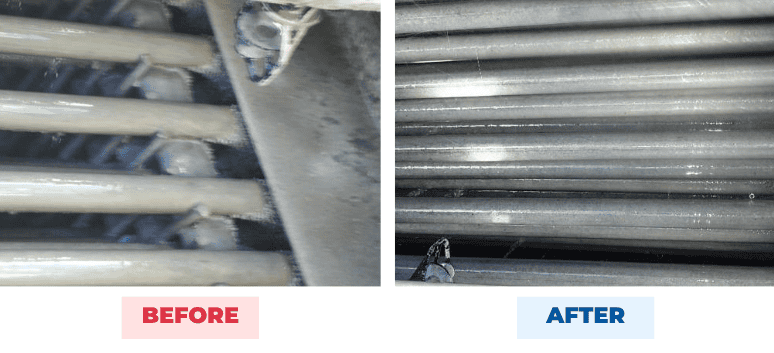
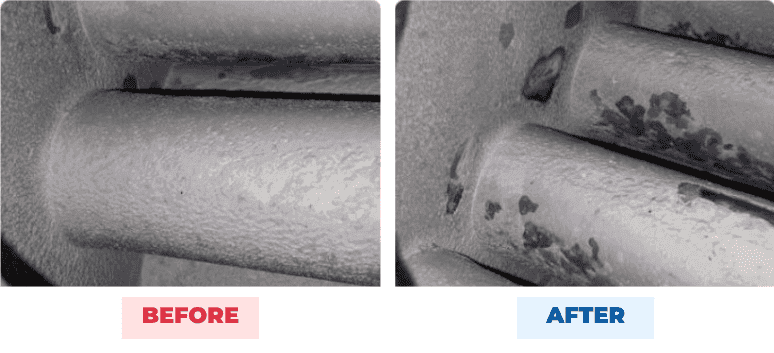
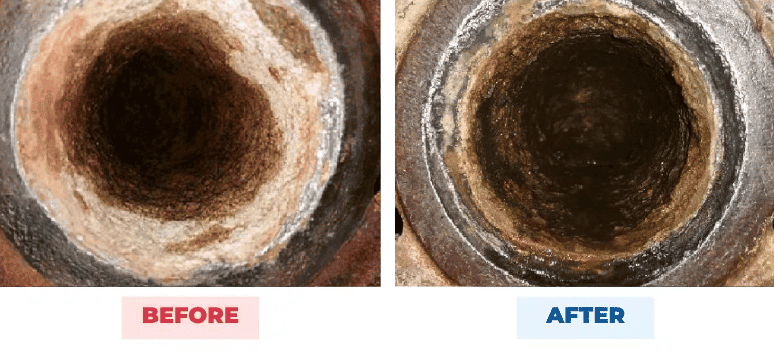
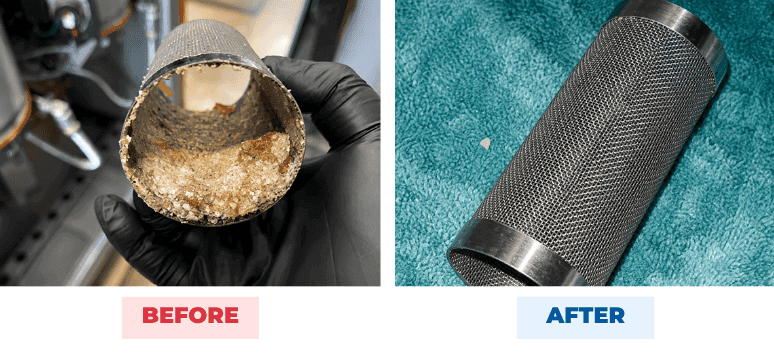
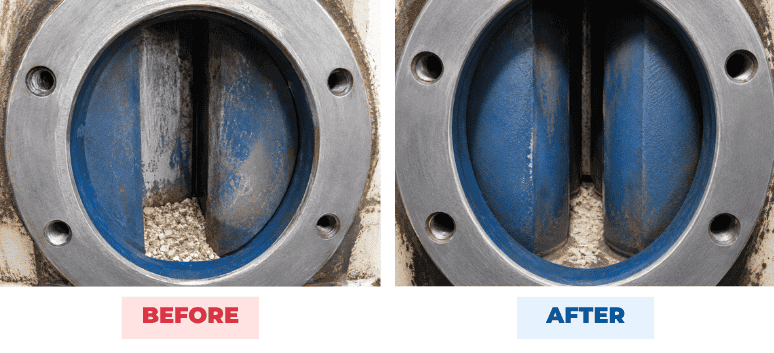
G & G Orchards, Yakima: with descalant, biocide and anti-corrosion dosing all stopped, the BAC condenser tubes went from an eighth of an inch of hard scale to a thirty-second of soft, wipeable film over 12 months.
Condenser tubes before and afterDon’t take our word for it: test it on one system.
Fit a unit on one boiler, heater bank or spray line and measure it against your own records: descaling dates, element changes, fuel use and inspection photos. We will agree the baseline with you before anything goes on the pipe.
Get a Free Scale AssessmentThe True Cost of Hard Water Scale
Left untreated, limescale costs you in energy, cleaning, downtime and early equipment failure, in any system that heats, moves or sprays hard water. Here is where it builds, and what changed at real sites.
Heating Elements & Water Heaters Furring Up
Elements are the hottest surface in the system, so scale bonds there first and burns them out early.
Boilers Burning More Fuel
Scale on boiler tubes sends heat up the flue instead of into the water.
Heat Exchangers & Condensers Losing Duty
Hard scale on tubes and plates pushes approach temperatures up and cleaning intervals down.
Pipes, Spray Lines & Nozzles Blocking
Every small aperture is a place for scale to close the flow, and production stops while it is cleared.
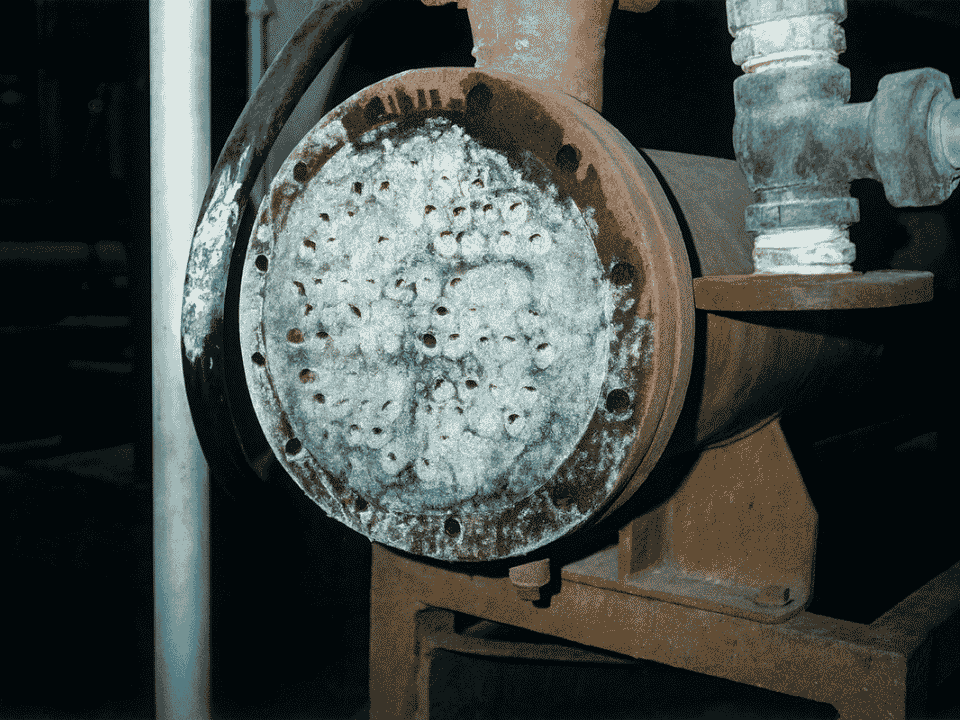
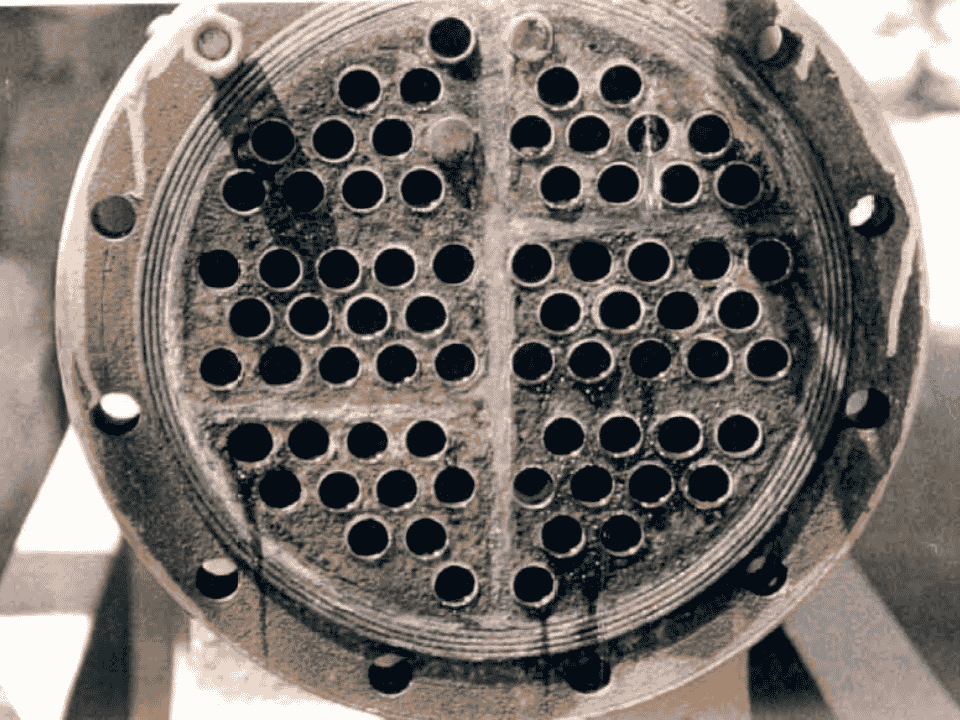
Middle East heat exchanger: scale cleared from blocked tubes, cutting the pressure drop across the exchanger by 75% and improving heat transfer 2.5×. Read the case study →
Not All Scale Is Limescale, and Not All of It Dissolves in Acid
Limescale is calcium carbonate (CaCO₃). Gypsum is calcium sulphate (CaSO₄·2H₂O). Both form when water becomes supersaturated, but limescale dissolves in acid and gypsum does not, which is why acid descaling fails on sulphate scale and removal means mechanical cleaning and downtime.
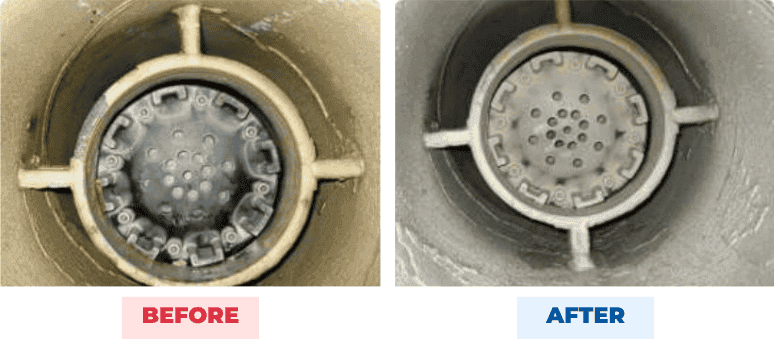
HydroFLOW® acts on the crystallisation step that most scales share, so the same signal is used on gypsum and other mineral scales. The evidence there is thinner than for limescale: at an Italian gypsum mine, a pump on a 700 m pipeline ran through a three-month trial with only a light powder coating found inside.
Calcium carbonate (limescale)
Classic hard-water scale and the main subject of this page: the deposit behind most energy and maintenance losses in boilers, heaters and exchangers.
Calcium sulphate (gypsum)
Hard, needle-like and acid-resistant. Forms where water is concentrated: on reverse osmosis membranes, in mining and process water, and on hot surfaces.
Silica scale
Glassy, stubborn deposits on membranes, cooling systems and high-recovery process water. Ask for an assessment: results depend on the water.
Barium & strontium sulphate
Sparingly soluble sulphate scales common in produced water and high-TDS process streams.
Iron & mixed deposits
Iron oxides and mixed mineral fouling that combine with scale to block flow and foul surfaces.
Struvite
Magnesium ammonium phosphate scale in wastewater, digesters and sludge lines. See the struvite page.
Not sure which scale you have? A water analysis or a sample of the deposit tells us. Ask for a scale assessment →
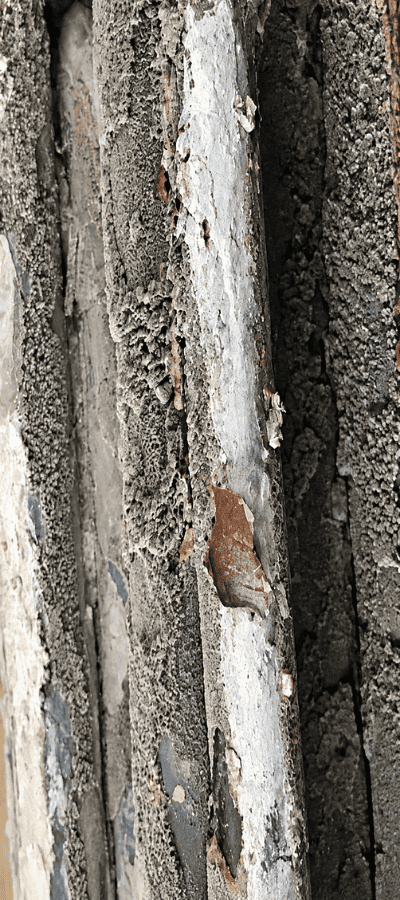
Limescale Treatment Physical, Not Chemical!
A physical scale inhibitor for boilers, water heaters, heat exchangers, pipework and spray systems, powered by a patented electronic signal
HydroFLOW® induces a patented ~150 kHz signal into the water through the pipe wall. The signal changes how dissolved minerals behave: calcium and bicarbonate ions form loose clusters in the water. When the water is heated and becomes supersaturated, crystals grow on those clusters in suspension, as a fine powder carried away by the flow, instead of as hard, insulating scale on elements, tubes and plates.
That is scale treatment at the point where scale is born, with no salt, no dosing and no cut into the pipe. The signal travels in both directions from the fitting point, through copper, steel and plastic alike, and keeps working on water standing in the system over weekends and shutdowns.
It is not softening by another name. Nothing is added and nothing is removed: the calcium stays in the water, the hardness reading does not change and drinking water quality is unaffected. Scale already in the system comes away gradually over weeks and months, so check strainers and filters in the first few months while it clears.
Learn More About Our TechnologyProcess Overview
Simple Installation. Immediate Protection.
Our patented technology integrates seamlessly into your existing operations with zero disruption.
The Fit
The HydroFLOW® unit installs around your existing pipework — typically on the make-up or recirculation line. No cutting, no welding, no shutting the tower down. Compatible with any pipe material.
The Signal
A patented electronic signal propagates in both directions through the water, treating the whole cooling circuit from a single point — working continuously, 24/7.
The Results
Scale is kept in suspension and biofilm is disrupted over time. As the system stays cleaner, blow-down and chemical dosing can be progressively reduced — delivering chemical-light, water- and energy-efficient operation.
Limescale Removal — Without Acid, Without Downtime
Treatment addresses new scale. Most systems also carry years of existing deposits — and depending on the system, treated water can gradually reduce those too.
Treated Water Redissolves Deposits
Once new scale forms in suspension instead of on surfaces, the water regains its capacity to dissolve minerals and slowly draws existing calcium carbonate back into solution. On a Hong Kong retail portfolio's deliberately uncleaned condenser tubes, the remaining scale was gone within 12 months.
Gradual and Safe by Design
No acid on site, no metal thinned by the descale, no drain-down. Expect loosened scale at strainers, filters and low points in the first months while it clears: a Philippine moulding plant fitted a side-stream filter for exactly that, and then went from cleaning every three to six months to once a year.
Measured in a Working Hospital
On water above 380 ppm, a Middle East hospital was shutting its heat exchangers down for an acid clean every three to four months. In the 17 months after fitting, they needed no acid clean and no shutdown for descaling.
How the Options Compare
HydroFLOW® against the usual ways of dealing with limescale in boilers, heaters, exchangers and pipework.
| HydroFLOW®Physical conditioner, no chemicals | Salt water softener | Chemical inhibitor dosingAntiscalants, polyphosphate | Acid descaling | |
|---|---|---|---|---|
| How it works | Electronic signal makes minerals crystallise in suspension, so they rinse through instead of bonding as scale | Ion exchange removes calcium and magnesium, swapping them for sodium | Dosed chemistry slows crystal growth or holds minerals in solution | Acid dissolves deposits after they have formed |
| Effect on the water | None Nothing added or removed; hardness reading and taste unchanged | Altered Raises sodium; brine discharged to drain at every regeneration | Managed Product in the water; dose control and records to keep | None Systems flushed before return to service |
| Scale already in the system | Gradually Treated water draws existing calcium carbonate back into solution over weeks and months | No Prevents new scale downstream only | Partial Depends on product and dose | Yes Fast, with downtime and metal loss at every clean |
| Gypsum & silica | Some sites Used on gypsum at a mine pump; ask for an assessment | Partial Removes calcium, not silica | Yes Product-specific, at a running cost | No Gypsum and silica do not dissolve in acid |
| Consumables & handling | None No salt, no acid, no dosing | Salt deliveries, storage and regeneration water | Continuous chemical purchase, storage and COSHH handling | Acid, neutraliser and labour at every clean |
| Downtime | None to fit Installs around the existing pipe; no cutting, no drain-down | Cut-in installation, drain-down, drainage and power | Injection point, dosing pump and tank | Every clean Plant offline for each descale |
| What to expect early | Check strainers Loosened scale collects at strainers and filters in the first months while it clears | Regular salt top-ups and resin checks | Dose tuning and water testing | Results last until the scale returns |
Swipe sideways to compare all four methods →
Comparison reflects typical products in each category; individual systems vary. HydroFLOW® is not a filter and not a disinfectant: filtration, disinfection, closed-loop corrosion inhibition where specified, and any Legionella control regime all stay in place.
Applications
Where Limescale Hits Hardest
Scale follows heat and hard water into every sector. Each card links to the sector page with its own case studies.
Hotels & Resorts
Water heaters, calorifiers, kitchens and laundries running around the clock on hard water, where a scaled heater means cold showers.
Hospitals & Care Settings
Steam boilers, hot water exchangers and ice makers, where acid handling is a risk and shutdowns are hard to schedule.
Food & Beverage
Spray nozzles, process heaters, washers and heat exchangers, where every descale is lost production.
Manufacturing & Mining
Mould cooling, spray bars, process pipelines and pumps on hard or recycled water, including sulphate scale.
Commercial Buildings
Boilers, calorifiers, chillers and washrooms across offices, retail estates and residential blocks.
Power Plants
Condensers and cooling-water circuits, where hard calcite costs heat transfer and condenser vacuum.
Scale in a specific system? See boiler & hot water limescale, steam boilers, heat exchangers, electric & immersion heaters and cooling towers. Limescale at home? See our residential units.
Proven On Site
Real Sites. Real Results.
Drawn from Hydropath installations and our customers’ own feedback across applications.
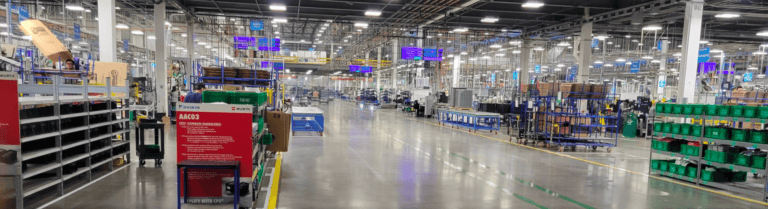
Texas Factory: 75% Chemical Cut, No Scale
HydroFLOW units cut chemicals 75% and enabled high conductivity operation across cooling and washer systems at a Texas factory.
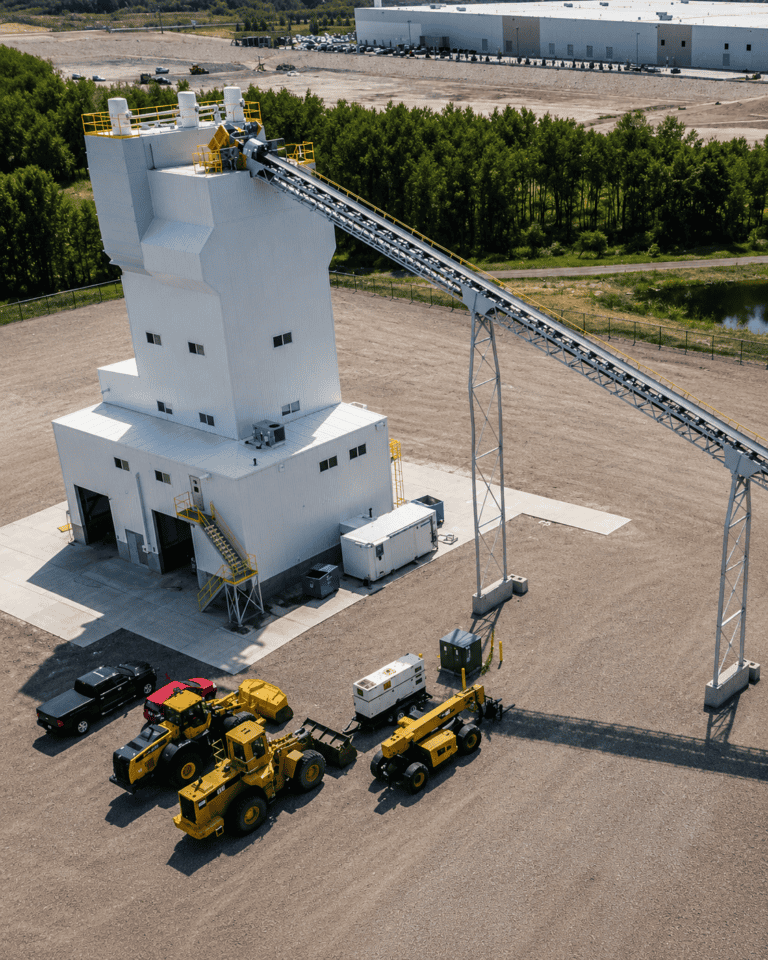
Calgary Concrete Boilers: 6+ Years Protected, Less Chemical
Two HydroFLOW I-120 units protected boiler equipment and cut chemical dosing at Rolling Mix Concrete in Calgary for 6+ years.
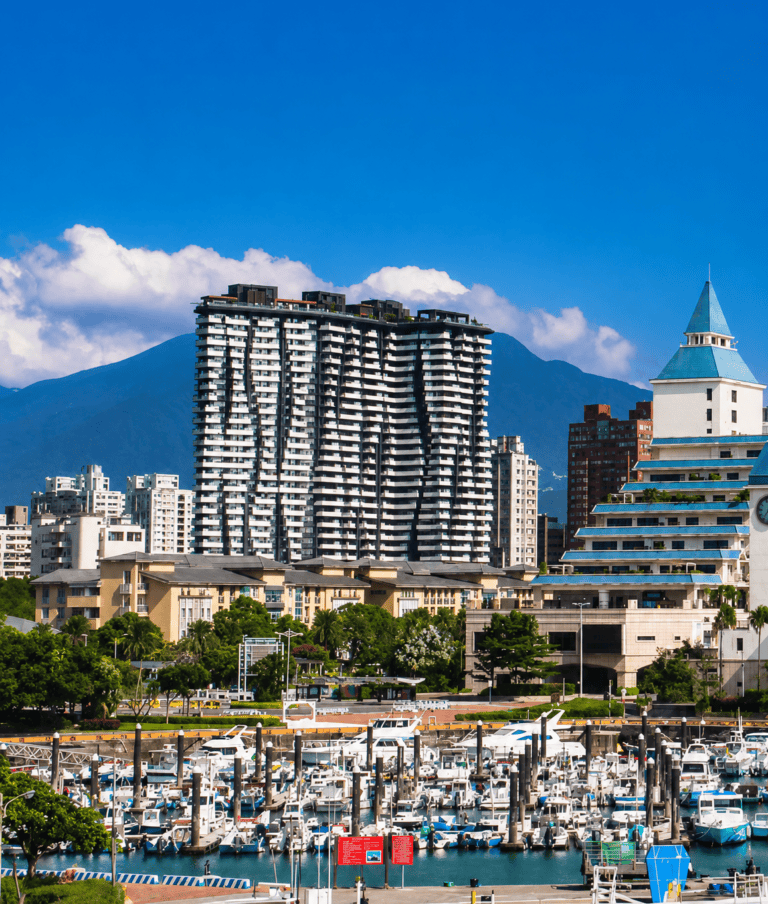
Taiwan Hot Springs: 50% Less Maintenance, Scale Controlled
30+ HydroFLOW units cut maintenance 50% and controlled scale across hot spring apartments and spa facilities in Tamsui, Taiwan.
Support & FAQ
Frequently Asked Questions
What causes limescale?
Limescale is calcium carbonate scale left behind by hard water. Hard water carries dissolved calcium and magnesium minerals; when the water is heated, depressurised or agitated, those minerals come out of solution and bond to surfaces as a hard, chalky deposit. That’s why limescale forms fastest on heating elements and boiler tubes, heat exchangers and anywhere temperature rises or pressure drops — and why hard-water areas see it worst.
How do you treat limescale without a water softener?
HydroFLOW® is a water softener alternative that treats limescale physically rather than chemically. Its electronic signal causes dissolved minerals to form suspended crystals in the water instead of hard scale on surfaces, so the minerals rinse harmlessly through the system. Unlike a salt softener there’s no salt, no regeneration cycle, no waste water and no plumbing changes — the unit installs around the outside of the pipe.
Does HydroFLOW® remove existing limescale in pipes?
Yes — gradually. Treated water becomes slightly aggressive to existing calcium carbonate deposits, so limescale in pipes, boilers and heat exchangers slowly dissolves back into the water and is carried away. At a major listed real estate management group in Hong Kong, remaining condenser scale was eliminated within 12 months with no pre-cleaning. Because removal is progressive, it avoids the risk of dislodged scale flakes blocking valves and strainers that aggressive acid descaling can cause — at an injection moulding plant in the Philippines, acid cleaning fell from every three to six months to once a year.
What is the difference between a water softener and a scale inhibitor?
A water softener removes calcium and magnesium from the water entirely, exchanging them for sodium — it changes the water chemistry, needs regular salt and produces brine waste. A scale inhibitor leaves the healthy minerals in the water but stops them forming hard deposits. HydroFLOW® is a physical scale inhibitor: it conditions the minerals electronically, so you keep drinking-water quality, avoid salt and consumables, and protect the whole system from a single fitting. At a hotel running on 1,000 ppm water in Chandigarh, scale was controlled without softening the supply.
What is gypsum scale and how is it different from limescale?
Gypsum scale is calcium sulphate dihydrate (CaSO₄·2H₂O); limescale is calcium carbonate (CaCO₃). Both are hard mineral scales driven by supersaturation, but the crucial difference is that limescale dissolves in acid and gypsum doesn’t — which is why conventional acid descaling fails on calcium sulphate scale. Gypsum forms wherever water is concentrated: on reverse osmosis membranes near the pressure-vessel exit, in mining and process water, and on hot heat-exchange surfaces.
Can HydroFLOW® control gypsum and calcium sulphate scale?
Yes. HydroFLOW®’s patented electronic signal encourages dissolved minerals to nucleate and crystallise in suspension rather than depositing on surfaces. Because it acts on the crystallisation step common to most scales, the same unit helps with gypsum, silica and mixed mineral deposits as well as limescale. Since gypsum resists acid cleaning, controlling its formation physically is often far more practical than trying to remove it afterwards.
Does it work on silica scale, iron and other deposits?
Calcium carbonate scale is the most common deposit, but the same crystallisation principle helps with other scaling minerals, including silica scale, iron oxides and struvite (magnesium ammonium phosphate) in wastewater systems. See our dedicated struvite and other scaling pages for those applications in detail.
How is HydroFLOW® different from a magnetic or electronic water descaler?
Magnetic descalers act only on the water passing the magnet, and the effect fades quickly downstream. HydroFLOW® is an electronic water descaler of a fundamentally different design: it induces a patented ~150 kHz signal that propagates in both directions along the pipework and through the water itself, treating the entire system continuously from one point. That’s why it’s proven at industrial scale — from hotels and hospitals to power stations — not just on a single appliance.
Ready to Bring Limescale Under Control?
Tell us about your system, your water hardness and your current descaling routine, and our team will recommend the right unit and estimate your annual saving.
Ready to explore sustainable water treatment?
Get in touch to find out how HydroFLOW® can work for you.

© 2026 Hydropath Technology Ltd. All rights reserved